

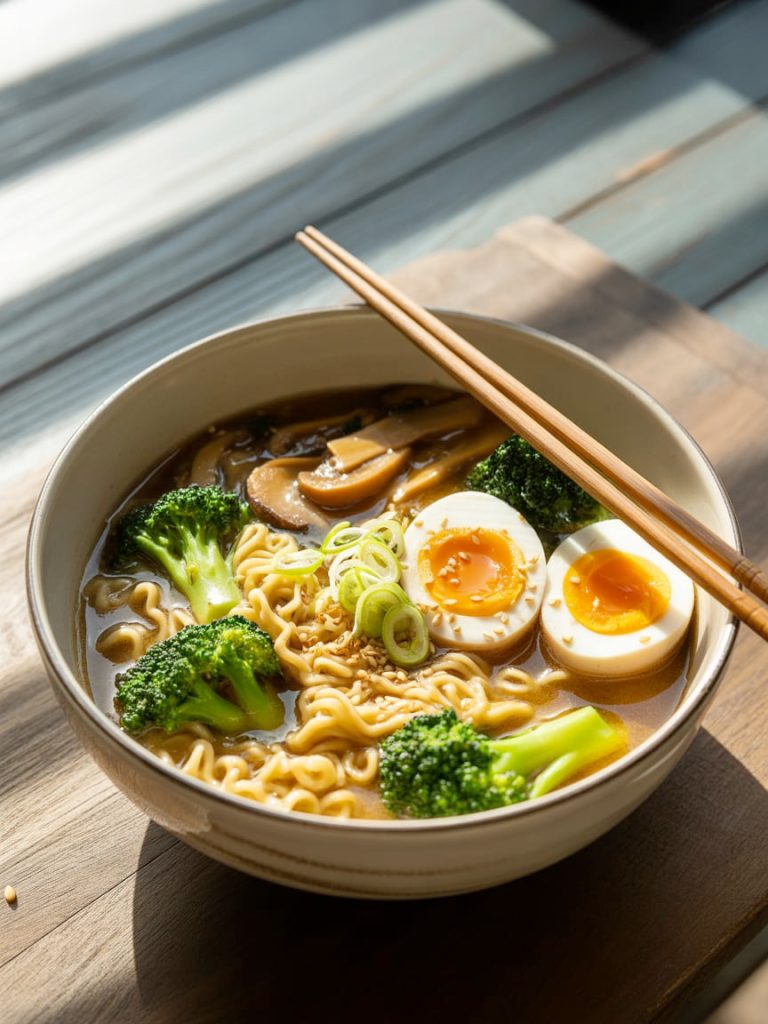

You know those nights when you want something healthy but also actually satisfying and delicious?
I used to think I had to choose between quick weeknight meals and nutritious ones. Then I discovered this broccoli mushroom ramen situation. It takes 20 minutes, uses mostly vegetables, and somehow manages to be more satisfying than takeout ramen that costs three times as much.
The trick is building a really flavorful broth and not overcooking the vegetables. When you get those two things right, you end up with a bowl that’s light but filling, healthy but comforting. It’s become my go-to when I need dinner fast but don’t want to compromise on nutrition.
Why You’ll Love This Broccoli Mushroom Ramen
Ready in 20 minutes flat. From chopping vegetables to slurping noodles, you’re done in the time it takes to watch a TV show. Perfect for busy weeknights when cooking feels like too much effort.
Packed with vegetables and nutrients. This isn’t just noodles in broth—it’s loaded with broccoli and mushrooms, giving you vitamins, fiber, and all the good stuff. You’re basically eating a salad disguised as ramen.
Satisfying meatless protein dinner. The mushrooms add meaty umami, the broth is rich and savory, and if you add an egg or tofu, you’ve got complete protein. You won’t miss the meat at all.
Flavorful and comforting. The broth is packed with garlic, ginger, soy sauce, and sesame oil—all the umami hits you want. It’s the kind of bowl that warms you from the inside out.
Budget-friendly ingredients. Broccoli, mushrooms, and ramen noodles are all cheap. This entire meal costs less than one serving of restaurant ramen.
Perfect for meal prep. Make a big pot on Sunday and you’ve got lunches for days. The broth actually gets better as it sits and the flavors develop.
What Makes This Vegetarian Ramen Special
Here’s what separates good vegetable ramen from the sad, bland versions.
The broth has depth. We’re not just boiling water with soy sauce. Garlic, ginger, sesame oil, and proper seasoning create a broth that’s rich and complex. The mushrooms add extra umami that makes it taste meatier than it is.
Vegetables are cooked just right. Broccoli should be tender-crisp, not mushy. Mushrooms should be golden and flavorful, not rubbery. Timing and technique matter here.
Fresh aromatics make all the difference. Fresh garlic and ginger (not powdered) bring brightness and warmth that dried spices just can’t match.
It’s substantial without being heavy. The combination of noodles, vegetables, and flavorful broth fills you up without that “I ate too much” feeling. It’s satisfying in a clean, energizing way.
Customizable for any diet. Keep it vegetarian, make it vegan, add protein, go low-carb—this base recipe works with whatever dietary needs you have.
Ingredients You’ll Need
For the Broth:
- 4 cups vegetable broth – Use good quality for best flavor. Low-sodium gives you more control over seasoning.
- 2 tablespoons soy sauce – Adds salty, savory depth. Use tamari for gluten-free.
- 1 tablespoon sesame oil – Essential for that nutty, toasted flavor.
- 3 cloves garlic, minced – Fresh garlic is key for aromatics.
- 1 tablespoon fresh ginger, grated – Brings warmth and brightness to the broth.
- 1 teaspoon rice vinegar – Adds a subtle tang that balances the richness.
- 1/2 teaspoon red pepper flakes (optional) – For a little heat.
For the Vegetables and Noodles:
- 2 cups broccoli florets – Cut into bite-sized pieces. Fresh is best, but frozen works too.
- 8 oz mushrooms, sliced – Shiitake, cremini, or button mushrooms all work great.
- 1 tablespoon vegetable or sesame oil – For cooking the vegetables.
- 8 oz ramen noodles – Fresh, dried, or instant (discard the flavor packet). Rice noodles work for gluten-free.
- 2 cups baby spinach or bok choy (optional) – Adds extra greens and nutrients.
For Toppings:
- 2 green onions, sliced – Adds freshness and color.
- 1 tablespoon sesame seeds – For texture and visual appeal.
- Soft-boiled eggs or fried tofu (optional) – For added protein.
- Sriracha or chili oil – If you want extra heat.
- Fresh cilantro – For those who love it.
How to Make Broccoli Mushroom Ramen (Step-by-Step)
Step 1: Prepare the Vegetables
Cut the broccoli into small, bite-sized florets. Try to keep them roughly the same size so they cook evenly.
Clean the mushrooms by wiping them with a damp paper towel. Slice them about 1/4 inch thick.
Mince the garlic and grate the fresh ginger. Having these aromatics ready to go makes the cooking process smooth.
If you’re using bok choy, chop it into bite-sized pieces, separating the stems from the leaves (stems cook longer).
Step 2: Build the Flavorful Broth
In a large pot, heat the vegetable broth over medium-high heat until it comes to a gentle simmer.
Add the soy sauce, sesame oil, minced garlic, grated ginger, rice vinegar, and red pepper flakes if using. Stir everything together.
Let the broth simmer for about 5 minutes so the aromatics can infuse their flavor into the liquid. Your kitchen should smell amazing right about now.
Taste the broth and adjust seasoning. It should be savory and well-seasoned with good depth of flavor. Add more soy sauce if needed.
Step 3: Cook the Mushrooms and Broccoli
While the broth simmers, heat the vegetable or sesame oil in a separate skillet over medium-high heat.
Add the sliced mushrooms and cook for 3-4 minutes without stirring too much. You want them to get some golden-brown color.
Add the broccoli florets to the skillet with the mushrooms. Stir and cook for another 2-3 minutes until the broccoli is bright green and tender-crisp.
Season the vegetables with a pinch of salt and pepper. They should be cooked but still have some bite—not mushy.
Step 4: Add the Noodles
Add the ramen noodles to the simmering broth and cook according to package directions—usually 3-4 minutes for dried noodles, less for fresh.
Stir occasionally to prevent the noodles from sticking together.
In the last minute of cooking, add the baby spinach or bok choy leaves directly to the broth if you’re using them. They’ll wilt quickly.
The noodles should be tender but still have some chew. Don’t overcook them or they’ll get mushy.
Step 5: Finish and Serve
Add the cooked mushrooms and broccoli to the pot with the noodles and broth. Stir gently to combine everything.
Divide the ramen between bowls, making sure each bowl gets a good mix of noodles, broth, and vegetables.
Top with sliced green onions, sesame seeds, and any other toppings you’re using. If you want protein, add a soft-boiled egg or some crispy tofu on top.
Drizzle with sriracha or chili oil if you like heat. Serve immediately while everything is hot and the noodles are at their best texture.
Serving Suggestions
This broccoli mushroom ramen is versatile and works for different occasions:
As a complete meal – This is hearty enough to be dinner on its own. The noodles and vegetables make it filling and satisfying without being heavy.
For lunch meal prep – Make a big batch and store the broth and noodles separately. Reheat and assemble when you’re ready to eat for quick weekday lunches.
With protein on top – Add a soft-boiled egg, pan-fried tofu, or even some edamame for extra protein to make it more substantial.
As part of an Asian dinner spread – Serve alongside vegetable spring rolls, edamame, or a simple cucumber salad for a complete Asian-inspired meal.
For a light dinner – When you want something nourishing but not too heavy, this hits the spot perfectly. It’s satisfying without making you feel overly full.
With extra vegetables – Add corn, bean sprouts, shredded carrots, or snap peas for even more veggie goodness.
Storage and Reheating Tips
Refrigerator: Store the broth and noodles separately if possible. The broth keeps for up to 5 days, but noodles get soggy if stored in liquid. Keep them in separate airtight containers.
Freezing: The broth freezes well for up to 2 months! Portion it into containers so you can thaw just what you need. Don’t freeze the noodles or vegetables—they don’t hold up well. Just cook fresh ones when you reheat the broth.
Reheating broth: Warm the broth gently on the stovetop over medium heat. If it seems concentrated, add a splash of water or fresh broth to thin it out.
Reheating with noodles: If you stored them together, reheat gently and expect the noodles to have absorbed some broth. Add extra liquid to loosen everything up.
Best practice for meal prep: Store broth, vegetables, and noodles all separately. When ready to eat, reheat the broth, add fresh or reheated vegetables, and cook fresh noodles. This gives you the best texture.
Quick assembly: If you meal prep the broth and have cooked vegetables ready, you can have a fresh bowl of ramen in under 10 minutes by just cooking new noodles.
Recipe Variations and Substitutions
Add Protein (Tofu or Eggs)
Pan-fry cubed extra-firm tofu until crispy and golden, then add on top. Soft-boil eggs (6-7 minutes) and halve them for a classic ramen topping. Add edamame directly to the broth for easy plant protein. Scramble an egg into the hot broth for egg drop ramen style.
Make It Spicy
Add gochugaru (Korean chili flakes) or sriracha to the broth. Include sliced fresh jalapeños or Thai chilies. Top with spicy chili crisp or chili oil. Stir in a spoonful of chili garlic sauce for extra kick.
Different Vegetable Combinations
Try snap peas instead of or with broccoli. Add shredded carrots and cabbage for more color. Include baby corn and water chestnuts for crunch. Throw in bell peppers for sweetness. Bok choy is traditional and adds great texture.
Miso Broccoli Mushroom Ramen
Whisk 2 tablespoons of miso paste into the broth for deeper umami flavor. This makes it richer and more complex. White miso is milder, red miso is stronger—choose based on your preference.
Creamy Version
Add 1/2 cup coconut milk or cashew cream to the broth for a creamy, richer texture. This transforms it into something more indulgent while keeping it plant-based.
Make It a Main Dish
Double the vegetables and add multiple protein sources (tofu AND eggs). Use thicker noodles like udon for a heartier meal. Add a second serving of noodles if you’re extra hungry. Include more substantial vegetables like sweet potato or kabocha squash.
Low-Carb Option
Skip the noodles entirely and double the vegetables. Use shirataki noodles (konjac noodles) which are extremely low in carbs. Spiralized zucchini “noodles” work too, though they’re less traditional.
Final Thoughts
So there you have it—the vegetarian ramen that proves meatless meals can be just as satisfying as anything with meat.
I love how this recipe shows that eating more vegetables doesn’t mean sacrificing flavor or feeling deprived. The broth is rich, the vegetables are flavorful, and the whole bowl comes together so quickly that it’s actually easier than ordering takeout.
Make this once and you’ll understand why I keep coming back to it. It’s just too good and too easy not to.
Happy cooking!
Kip
Broccoli Mushroom Ramen (Easy Vegetarian Dinner in 20 Minutes!)
Description
This broccoli mushroom ramen is a quick, satisfying vegetarian dinner that comes together in just 20 minutes. Tender broccoli, savory mushrooms, and chewy noodles swim in a flavorful umami-rich broth. It's healthy, budget-friendly, and proves that meatless meals can be incredibly delicious and filling.
Ingredients
For the Broth:
For the Vegetables and Noodles:
For Toppings:
Instructions
-
Cut broccoli into bite-sized florets. Clean and slice mushrooms. Mince garlic and grate ginger.
-
In large pot, heat vegetable broth to a simmer. Add soy sauce, sesame oil, garlic, ginger, rice vinegar, and red pepper flakes. Simmer 5 minutes to infuse flavors.
-
While broth simmers, heat oil in skillet over medium-high heat. Cook mushrooms 3-4 minutes until golden. Add broccoli and cook 2-3 minutes until tender-crisp. Season with salt and pepper.
-
Add ramen noodles to simmering broth and cook according to package directions (3-4 minutes). In last minute, add spinach or bok choy if using.
-
Add cooked mushrooms and broccoli to pot with noodles and broth. Stir gently.
-
Divide between bowls. Top with green onions, sesame seeds, and optional protein and chili oil. Serve immediately.
Note
- Store broth and noodles separately for meal prep
- Use tamari for gluten-free version with rice noodles
- Add 2 tablespoons miso paste for deeper umami flavor
- Don't overcook broccoli—it should be tender-crisp, not mushy
- Frozen broccoli works but add it in last 2 minutes of cooking
- Double the vegetables for a more filling meal
- Broth freezes well for up to 2 months