

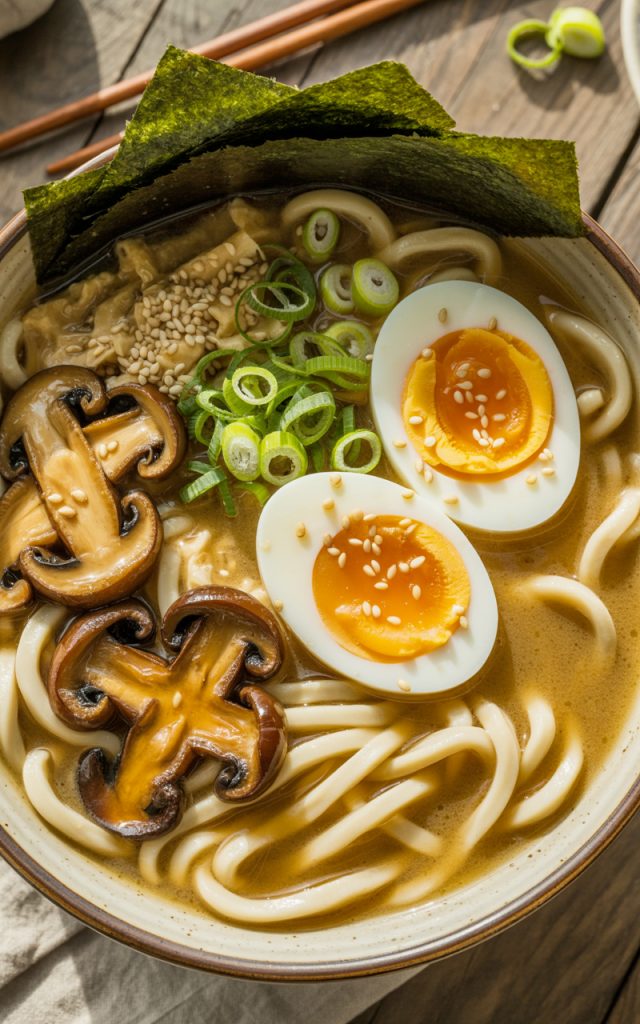

You know those days when you need something warm, satisfying, and ridiculously comforting but don’t have hours to spend in the kitchen? Yeah, this miso udon noodle soup is your new best friend.
I stumbled upon this recipe on one of those chilly Kentucky evenings when I was craving something that felt like a hug in a bowl. The combination of rich miso broth, chewy udon noodles, and those sweet-savory teriyaki mushrooms? Chef’s kiss. And the best part? It’s ready in about 20 minutes, which means you can go from “I’m starving” to “this is amazing” faster than you can order takeout.
Trust me, once you make this, it’s going on permanent rotation in your kitchen.
Why You’ll Love This Miso Udon Noodle Soup
Quick & Easy: Seriously, 20 minutes from start to finish. No complicated techniques, no fancy equipment—just you, a pot, and some seriously good ingredients.
Umami Bomb: The miso paste brings that deep, savory flavor that makes your taste buds do a happy dance. Add in the teriyaki mushrooms, and you’ve got layers of deliciousness.
Totally Customizable: Vegetarian? Vegan? Want to add chicken or shrimp? This recipe is your playground. Make it exactly how you want it.
Budget-Friendly: Most ingredients are pantry staples or super affordable at any grocery store. No need to hunt down expensive specialty items.
One-Pot Wonder: Minimal dishes, maximum flavor. My kind of cooking, honestly.
Comfort Food That’s Actually Healthy: Packed with nutrients from the miso, mushrooms, and veggies—comfort food you can feel good about eating.
Ingredients You’ll Need
For the Teriyaki Mushrooms:
- 8 oz mixed mushrooms (shiitake, cremini, or baby bella work great)
- 2 tablespoons soy sauce (or tamari for gluten-free)
- 1 tablespoon mirin (sweet rice wine—find it in the Asian aisle)
- 1 tablespoon brown sugar
- 1 teaspoon sesame oil
- 2 cloves garlic, minced
For the Miso Broth:
- 4 cups vegetable broth (or chicken/dashi for more depth)
- 3 tablespoons miso paste (white or red—your choice!)
- 1 tablespoon soy sauce
- 1 teaspoon grated fresh ginger
- 1 tablespoon mirin
For the Soup:
- 7 oz fresh or frozen udon noodles (about 2 servings)
- 2 cups baby spinach or bok choy
- 2 green onions, sliced
- 1 soft-boiled egg per serving (optional but highly recommended)
- Nori sheets, cut into strips (optional)
- Sesame seeds for garnish
- Chili oil or sriracha if you like heat
Key Notes:
Miso Paste: White miso is milder and slightly sweet; red miso is bolder and saltier. I usually go with white for a more delicate flavor, but use what you’ve got!
Udon Noodles: Fresh is always better, but frozen works perfectly. You can even use dried udon in a pinch—just cook according to package directions.
Mushrooms: Any variety works here. Shiitake adds the most authentic Japanese flavor, but button mushrooms are totally fine too.
Make it Vegan: Skip the egg and use vegetable broth. Done!
Step-by-Step Instructions
Step 1: Prepare the Teriyaki Mushrooms
Clean and slice your mushrooms into thick pieces—don’t make them too thin or they’ll get soggy. Heat a large skillet or wok over medium-high heat with the sesame oil.
Toss in your mushrooms and cook for about 3-4 minutes without stirring too much. You want them to get a nice golden color. Add the minced garlic and cook for another 30 seconds until fragrant.
Mix together the soy sauce, mirin, and brown sugar in a small bowl, then pour it over the mushrooms. Let everything caramelize for 2-3 minutes, stirring occasionally. The mushrooms should look glossy and smell incredible. Set them aside—try not to eat them all before the soup is ready. 🙂
Step 2: Make the Miso Broth
In a medium pot, bring your vegetable broth to a gentle simmer over medium heat. Add the grated ginger, soy sauce, and mirin.
Here’s the important part: never boil miso paste. It kills the beneficial probiotics and can make it taste bitter. Instead, scoop about half a cup of the warm broth into a small bowl, add your miso paste, and whisk until it’s completely dissolved. Then pour it back into the pot and stir gently.
Taste your broth. Need more saltiness? Add a bit more soy sauce. Want it richer? Stir in another tablespoon of miso. This is your soup—make it sing!
Step 3: Cook the Udon Noodles
If you’re using fresh or frozen udon, they cook super fast—usually just 1-2 minutes in boiling water. Follow the package directions, but don’t overcook them. You want them tender but still chewy (that’s what makes udon so satisfying).
Drain the noodles and rinse them briefly under cool water to stop the cooking. This keeps them from getting mushy in the hot broth.
Step 4: Assemble Your Soup
Divide the cooked udon noodles between two serving bowls. Add a handful of fresh spinach or bok choy to each bowl.
Ladle the hot miso broth over the noodles and greens. The heat will wilt the spinach perfectly—no need to cook it separately.
Top each bowl with a generous portion of those gorgeous teriyaki mushrooms. This is where the magic happens.
Step 5: Add the Finishing Touches
Now for the fun part—toppings! Add sliced green onions, a soft-boiled egg (if using), strips of nori, and a sprinkle of sesame seeds.
Want some heat? Drizzle on chili oil or add a squirt of sriracha. FYI, a little goes a long way.
Grab your chopsticks (or a fork—no judgment here) and dig in while it’s hot!
Serving Suggestions
This miso udon soup is pretty much a complete meal on its own, but here are some ideas to make it even better:
Traditional Toppings: Soft-boiled eggs, nori, green onions, sesame seeds, bamboo shoots, corn, and fish cake (narutomaki) if you’re feeling fancy.
Protein Additions: Grilled chicken, seared tofu, shrimp, or thinly sliced beef turn this into an even heartier meal. Just cook your protein separately and add it on top.
Side Dishes: Serve with Japanese-style pickles (tsukemono), edamame, or crispy vegetable gyoza for a full spread.
Make it a Meal Prep Bowl: Pack the noodles, mushrooms, and toppings separately from the broth. When you’re ready to eat, just heat the broth and assemble. Perfect for work lunches!
Spice Lovers: Add kimchi, gochugaru (Korean chili flakes), or a spoonful of spicy miso paste for an extra kick.
Storage Tips
Refrigerator: Store the broth, noodles, and toppings separately in airtight containers for up to 3 days. The noodles can get soggy if left in the broth, so keep them apart.
Reheating: Warm the broth on the stovetop over medium heat—don’t boil it! Briefly dip the noodles in hot water to warm them up, then assemble your soup fresh.
Freezing: The miso broth freezes beautifully for up to 2 months. I don’t recommend freezing the cooked noodles though—they get weird and mushy. Just make fresh noodles when you’re ready to eat.
Teriyaki Mushrooms: These keep well in the fridge for up to 5 days and actually taste better the next day once the flavors meld. You can also freeze them for up to a month.
Pro Tip: Make a big batch of the miso broth and freeze it in portions. Then you can have this soup ready in literally 5 minutes whenever a craving hits.
Final Thoughts
There’s something magical about a bowl of miso udon that just makes everything feel right in the world. Maybe it’s the rich, savory broth or those perfectly chewy noodles, or maybe it’s just knowing you made something this delicious in less time than it takes to watch an episode of your favorite show.
This recipe has been my go-to on busy weeknights when I want real food without the stress. And honestly? It’s become one of those dishes my family requests on repeat. The teriyaki mushrooms alone are worth making—I’ve caught myself sneaking them straight from the pan more times than I’d like to admit.
Give this recipe a try and let me know what you think. Experiment with toppings, adjust the flavors to your taste, and make it your own.
Thanks for cooking with me. Now go make yourself that cozy bowl of comfort!
With gratitude,
Kip
Miso Udon Noodle Soup with Teriyaki Mushrooms (Ready in 20 Minutes!)
Description
This miso udon noodle soup combines rich umami broth with chewy noodles and caramelized teriyaki mushrooms for the ultimate cozy meal. Ready in 20 minutes!
Ingredients
Teriyaki Mushrooms:
Miso Broth:
Assembly:
Instructions
-
Cook the mushrooms: Heat sesame oil in a skillet over medium-high heat. Add mushrooms and cook 3-4 minutes until golden. Add garlic and cook 30 seconds. Mix soy sauce, mirin, and brown sugar, pour over mushrooms, and cook 2-3 minutes until caramelized. Set aside.
-
Make the broth: Bring vegetable broth to a gentle simmer. Add ginger, soy sauce, and mirin. Remove half a cup of broth, whisk in miso paste until dissolved, then return to pot. Do not boil.
-
Cook the noodles: Prepare udon according to package directions (usually 1-2 minutes). Drain and rinse briefly.
-
Assemble: Divide noodles and spinach between bowls. Ladle hot broth over top. Add teriyaki mushrooms, green onions, soft-boiled egg, nori, sesame seeds, and chili oil if desired.
-
Serve immediately and enjoy!