

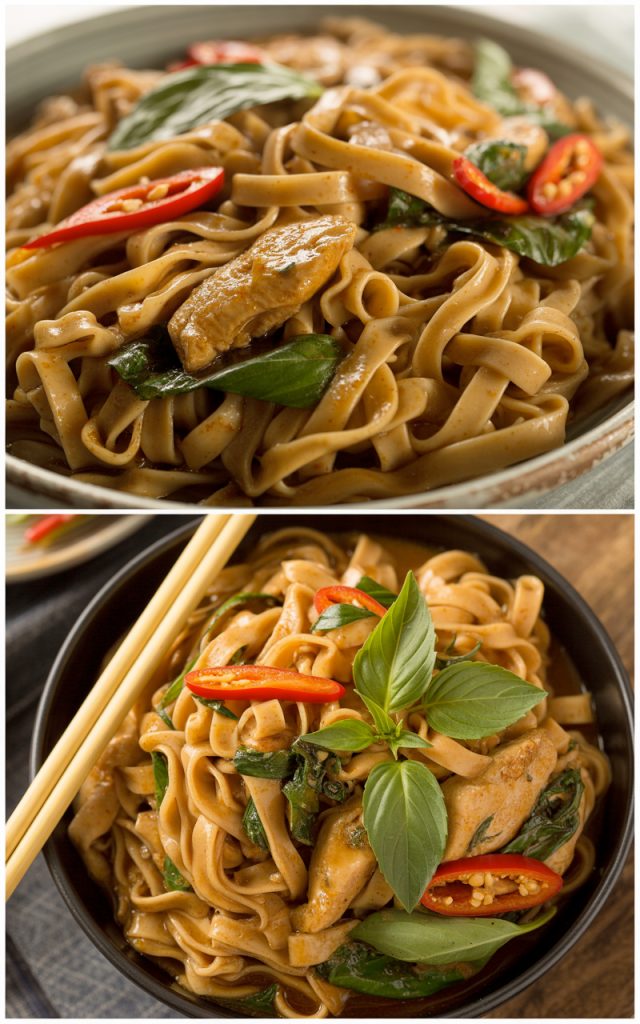

Ever had one of those days where you need something so flavor-packed it practically slaps you in the face? That’s exactly what Thai drunken noodles are for.
I first tried these at a tiny street food stall in Louisville’s NuLu district—you know, one of those places with plastic chairs and the most incredible smells wafting out. One bite and I was absolutely hooked. The combination of chewy wide noodles, fiery Thai chilies, and that distinctive punch of holy basil? Mind. Blown. I went home that night determined to recreate it, and after a few tries, I nailed it.
Here’s the best part: these noodles come together in about 15 minutes. No joke. That’s faster than getting pizza delivered, and way more satisfying. Plus, they’re called “drunken” noodles but there’s zero alcohol involved—just intoxicatingly good flavors that’ll have you coming back for more.
Why You’ll Love These Thai Drunken Noodles
Lightning Fast: Fifteen minutes from start to finish. That’s it. Perfect for those nights when you’re starving and need real food NOW. Most of the time is just waiting for your wok to heat up.
Flavor Explosion: These noodles don’t mess around. Bold soy sauce, savory oyster sauce, funky fish sauce, and fresh Thai chilies create this incredible umami bomb that’s spicy, sweet, and absolutely addictive.
No Alcohol Needed: Despite the name, there’s not a drop of booze in here. The “drunken” part supposedly comes from this being the perfect late-night food after a night out. IMO, it’s perfect anytime.
Customizable Heat: Love spicy food? Add more chilies. Prefer mild? Use just one or skip them entirely. You’re in control of the fire level, which is exactly how it should be.
One-Wok Wonder: Everything cooks in one pan, which means minimal cleanup. After a long day, that alone is worth celebrating.
Street Food Authenticity: This is the real deal—the same drunken noodles you’d find at any good Thai street food stall. No watered-down Americanized version here. Just bold, authentic Thai flavors that transport you straight to Bangkok.
Ingredients You’ll Need
For the Noodles:
- 8 oz wide rice noodles (also called pad kee mao noodles or ho fun)
- 2 tablespoons vegetable oil
- 8 oz chicken breast or thighs, thinly sliced (or protein of choice)
- 2-3 Thai bird’s eye chilies, sliced (adjust to your heat tolerance)
- 4 cloves garlic, minced
- 1 small onion, sliced
- 1 red bell pepper, sliced into strips
- 1 cup Thai basil leaves (regular basil works in a pinch, but Thai basil is best)
- 2 cups fresh greens (bok choy, Chinese broccoli, or baby spinach)
For the Sauce:
- 2 tablespoons soy sauce (or dark soy for deeper color)
- 1 tablespoon oyster sauce
- 1 tablespoon fish sauce (the secret to authentic flavor!)
- 1 tablespoon brown sugar
- 1 teaspoon dark soy sauce (for color and depth)
- 1 tablespoon water
Optional Garnishes:
- Lime wedges
- Extra Thai basil
- Sliced red chilies
- Crushed peanuts
Key Notes:
Rice Noodles: Fresh wide rice noodles are ideal, but dried work perfectly too. If using dried, soak them in hot water for 15-20 minutes until pliable but still firm. Don’t overcook them—they’ll finish cooking in the wok.
Thai Basil: This is NOT the same as Italian sweet basil. Thai basil has a distinctive anise-like flavor with hints of licorice and mint. Find it at Asian markets or well-stocked grocery stores. It makes a huge difference in authenticity.
Fish Sauce: I know it smells funky straight from the bottle, but trust me—it’s what gives these noodles that authentic Thai flavor. Don’t skip it! Vegetarians can use mushroom sauce instead.
Thai Chilies: These little guys are HOT. One or two gives a nice kick, three or four is for spice lovers. Can’t find Thai chilies? Serrano peppers work great too.
Protein Options: Chicken is traditional, but shrimp, beef, pork, or tofu all work beautifully. Just adjust cooking times accordingly.
Step-by-Step Instructions
Step 1: Prep the Noodles
If you’re using dried rice noodles, get them soaking in hot water right now. They need 15-20 minutes to become pliable. You want them soft enough to bend but still firm—not fully cooked. They’ll finish cooking in the wok.
Fresh noodles? Just separate them gently with your hands and set aside. Sometimes they stick together, so a quick rinse under warm water helps.
Step 2: Make the Sauce
Whisk together the soy sauce, oyster sauce, fish sauce, brown sugar, dark soy sauce, and water in a small bowl. Give it a taste—it should be salty, slightly sweet, and funky in the best way possible. Set it aside.
This sauce is what makes or breaks drunken noodles. The balance of salty, sweet, and umami is crucial, so don’t skip the tasting step!
Step 3: Get Your Wok Screaming Hot
Crank your burner to high and heat up your wok or large skillet. You want it really hot—almost smoking. This is essential for that authentic “wok hei” (breath of the wok) flavor that makes restaurant stir-fries taste so good.
Add a tablespoon of oil and swirl it around to coat the wok. The oil should shimmer immediately.
Step 4: Cook the Protein
Toss in your sliced chicken (or whatever protein you’re using) and spread it out in a single layer. Let it sear without moving it for about 60 seconds—you want some nice color on it.
Stir-fry for another 2-3 minutes until the chicken is just cooked through. It doesn’t need to be perfect yet; it’ll continue cooking when you add everything else. Remove it to a plate and set aside.
Step 5: Stir-Fry the Aromatics and Vegetables
Add another tablespoon of oil to the wok. Throw in the minced garlic and sliced Thai chilies. Stir-fry for about 30 seconds until incredibly fragrant. Your kitchen should smell amazing right now.
Add the sliced onion and bell pepper. Stir-fry for 2 minutes until they start to soften but still have a crunch. Then add your greens (bok choy, Chinese broccoli, or spinach) and cook for another minute until wilted.
Step 6: Add the Noodles and Sauce
Drain your soaked noodles well—excess water will make everything soggy. Add them to the wok along with your cooked chicken.
Pour the sauce over everything and start tossing. Use two spatulas or a spatula and tongs to toss and fold the noodles, making sure every strand gets coated in that gorgeous sauce. This takes about 2-3 minutes. The noodles should be tender and glossy.
If the noodles seem dry, add a splash of water. If they’re too wet, just keep cooking over high heat to evaporate excess moisture.
Step 7: Add the Thai Basil
Turn off the heat. This is important—you add the Thai basil AFTER turning off the heat. Toss in a big handful of Thai basil leaves and fold them through the noodles. The residual heat will wilt them perfectly while preserving their distinctive flavor and aroma.
The smell right now? Absolutely incredible. That’s how you know you’ve nailed it.
Step 8: Serve Immediately
Transfer to serving plates or bowls. Garnish with extra Thai basil, lime wedges, and sliced chilies if you’re feeling brave. Serve hot and enjoy every spicy, savory bite!
These noodles are best eaten immediately while they’re still piping hot and the noodles have that perfect chewy texture.
Serving Suggestions
Drunken noodles are pretty much a complete meal on their own, but here are some ideas to round things out:
Traditional Thai Sides: Serve with a simple cucumber salad dressed with rice vinegar, sugar, and crushed peanuts. The cool, crunchy cucumber is the perfect contrast to the spicy noodles. Thai-style fried eggs with crispy edges are another classic pairing.
Protein Swaps: While chicken is traditional, try it with shrimp (cook for just 2-3 minutes), thinly sliced beef (flank steak works great), pork (use pork tenderloin or ground pork), or crispy tofu for a vegetarian version. Each protein brings its own vibe to the dish.
Spice Level Adjustments: For mild drunken noodles, use just one Thai chili or even skip them entirely—the sauce still delivers tons of flavor. For medium heat, use 2-3 chilies. For “I want to feel alive” levels of spice, use 5-6 chilies and add red pepper flakes. You can also serve extra sliced chilies on the side so everyone can customize their heat level.
Make It a Feast: Pair with Thai spring rolls, chicken satay with peanut sauce, or tom yum soup for a full Thai dinner spread. Mango sticky rice for dessert? Now we’re talking.
Drink Pairings: Thai iced tea is the classic choice—the sweetness balances the heat perfectly. Thai iced coffee works great too. For adults, a cold beer or a crisp Riesling complements the spicy flavors beautifully.
Leftovers Remix: Turn leftover drunken noodles into a frittata by mixing with beaten eggs and cooking in a skillet. Or wrap them in spring roll wrappers and pan-fry for amazing crispy noodle rolls.
Storage Tips
Best Fresh: I’ll be honest—drunken noodles are absolutely best eaten right after cooking. The noodles have the perfect chewy texture, the basil is aromatic, and everything just tastes better. But life happens, and sometimes you need leftovers.
Refrigerator: Store in an airtight container for up to 2 days. The noodles will continue to absorb sauce and soften, so they won’t be quite as good as fresh. They’re still tasty, just different.
Reheating: Here’s the trick—add a splash of water or chicken broth and reheat in a skillet or wok over medium-high heat, tossing constantly. The microwave works but tends to make the noodles gummy. If reheating in the microwave, do it in 30-second intervals, stirring between each one, and add a little water to prevent drying out.
Don’t Freeze: I really don’t recommend freezing drunken noodles. The rice noodles get mushy and weird when thawed, and the vegetables lose their texture. Just make what you’ll eat in a day or two.
Meal Prep Strategy: If you want to prep ahead, cook and store the sauce, sliced vegetables, and protein separately. Then when you’re ready to eat, just cook fresh noodles and stir-fry everything together. Takes 10 minutes and tastes way better than reheated leftovers.
Pro Tip: If you know you’ll have leftovers, slightly undercook the noodles initially. They’ll finish cooking when you reheat them and won’t turn to mush.
Final Thoughts
There’s something about drunken noodles that just hits different. Maybe it’s the way the wide noodles soak up all that savory sauce, or the punch of heat from those Thai chilies, or the way fresh basil perfumes everything at the end. Whatever it is, this dish has become one of my absolute favorites to make.
The first time I made these at home, I was honestly shocked at how close they tasted to the real thing—you know, the stuff you get from that tiny Thai place with the plastic chairs and fluorescent lighting that somehow makes the best food you’ve ever eaten. Turns out, with the right ingredients and a hot wok, you can totally nail it at home.
My family requests these constantly now. They’re quick enough for weeknights, impressive enough for guests, and so packed with flavor that everyone leaves happy. The best part? Watching people take that first bite and their eyes light up. That’s the magic of good food.
Give these drunken noodles a shot. Start with a moderate amount of chilies until you know your heat tolerance, and don’t skip the Thai basil. Trust me on this one.
Thanks for cooking with me. Now get in that kitchen and make some magic happen!
With gratitude,
Kip
Thai Drunken Noodles (Pad Kee Mao) – Bold, Spicy, Ready in 15 Minutes!
Description
These Thai drunken noodles deliver bold, spicy flavors with chewy rice noodles, tender chicken, and aromatic Thai basil. Better than takeout and ready in minutes!
Ingredients
Noodles and Protein:
Sauce:
Garnish:
Instructions
-
Prepare noodles: If using dried noodles, soak in hot water for 15-20 minutes until pliable but still firm. Drain well. Fresh noodles just need separating.
-
Make the sauce: Whisk together soy sauce, oyster sauce, fish sauce, brown sugar, dark soy sauce, and water. Set aside.
-
Heat wok: Heat wok or large skillet over high heat until smoking hot. Add 1 tablespoon oil.
-
Cook chicken: Add sliced chicken in a single layer. Sear for 60 seconds, then stir-fry 2-3 minutes until just cooked. Remove to a plate.
-
Stir-fry aromatics: Add remaining oil to wok. Add garlic and chilies, cook 30 seconds. Add onion and bell pepper, stir-fry 2 minutes. Add greens, cook 1 minute until wilted.
-
Combine everything: Add drained noodles and cooked chicken back to wok. Pour sauce over everything. Toss and fold constantly for 2-3 minutes until noodles are tender and glossy.
-
Add basil: Turn off heat. Add Thai basil leaves and toss to wilt them with residual heat.
-
Serve: Transfer to plates immediately. Garnish with lime wedges, extra basil, and sliced chilies. Serve hot!