

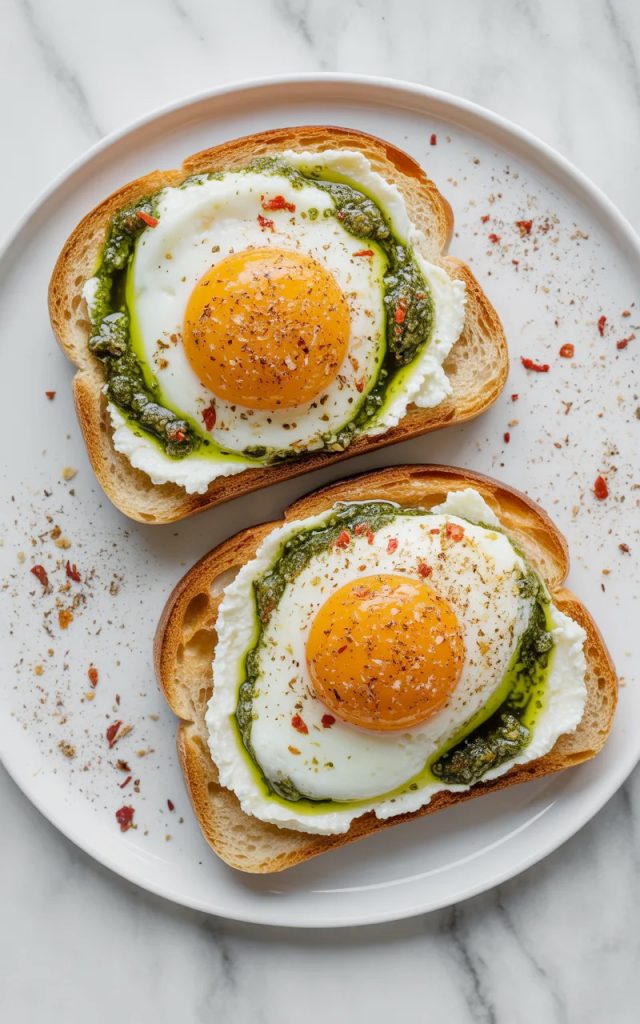

I am going to be completely honest with you. When pesto eggs started going viral a few years back I was skeptical in the way that I am always skeptical of food trends. Not dismissive exactly, but measured.
I have seen a lot of things go viral on the internet that turned out to be more photogenic than they were actually good to eat, and I was not about to rearrange my morning routine for something that might just be a pretty picture.
Then I actually made them. And I stood at my stove eating one directly off the pan before it even made it to a plate, and I thought — okay. Okay, I get it.
Here is what nobody told me before I tried it. Frying an egg in pesto is not just a novelty swap. It fundamentally changes the flavor of the egg in a way that butter never does.
The pesto heats in the pan and blooms — the basil, the garlic, the olive oil, the parmesan all become more intense and more aromatic in the heat, and all of that flavor transfers directly into the egg whites as they cook. The result is an egg that tastes like it has been seasoned from the inside out with the best possible combination of ingredients.
Over ricotta toast with red pepper flakes and cracked black pepper, it is one of the most complete and satisfying ten-minute breakfasts I have ever eaten. The hype was completely justified. I am not even a little embarrassed about how often I make these now.
Why You’ll Love This Recipe
- The technique is a genuine revelation. Frying eggs in pesto instead of butter or oil is not a gimmick. The pesto heats and blooms in the pan, infusing the egg whites with herby, garlicky, nutty basil flavor as they cook. Every bite of the finished egg has that flavor built in rather than sitting on the surface, and the difference is immediately and unmistakably apparent.
- It is ready in ten minutes from a cold kitchen. Two minutes to prep, eight minutes to cook. This is not a recipe that requires planning or advance preparation — it is the recipe you make on a Tuesday morning when you have almost nothing in the fridge and still want something that tastes genuinely good.
- The ricotta base transforms the toast. Plain toast is fine. Toast spread with a generous layer of creamy, slightly tangy ricotta that mingles with the pesto and egg yolk as you eat is an entirely different experience. The ricotta adds a richness and a fresh dairy note that ties everything together and elevates the whole dish significantly.
- The ingredient list is practically nothing. Bread, eggs, pesto, ricotta. That is the whole recipe. Four main ingredients that come together in one pan and produce a breakfast that tastes like you put in significantly more effort and thought than you actually did.
- It is endlessly customizable. The base combination is perfect as written but it also serves as a framework. Add cherry tomatoes, sliced avocado, smoked salmon, or a handful of arugula. Swap the ricotta for cream cheese or goat cheese. Use homemade pesto when basil is in season and good quality store-bought the rest of the year. This recipe adapts without complaint in any direction you take it.
Ingredients with Key Notes
For the Pesto Eggs and Toast:
- 2 thick slices sourdough bread
- 2 large eggs
- 2 tablespoons basil pesto
- 4 tablespoons ricotta cheese
- Red pepper flakes to taste
- Cracked black pepper
- Flaky salt
Key Notes:
Pesto — The pesto is the foundation of the entire recipe and its quality matters significantly. A good quality store-bought pesto works perfectly well and is what most people reach for on a weekday morning — look for one that lists basil and olive oil as the primary ingredients and avoid anything with a lot of added fillers or artificial ingredients. Homemade basil pesto is genuinely transformative here if you have the time and the basil — the brightness and freshness of homemade pesto is noticeably superior to store-bought and makes this already excellent recipe even better. Two tablespoons per serving is the right amount — enough to fully coat the pan and infuse the egg but not so much that the pesto overwhelms the egg or burns excessively around the edges.
Ricotta — Whole milk ricotta is the right call here — it is creamier, richer, and spreads more smoothly than part-skim ricotta. The texture should be thick and creamy, not watery. If your ricotta seems watery or thin, strain it through a fine mesh sieve for 10-15 minutes before using to drain off the excess liquid. A generous, slightly thick layer of ricotta on the toast is part of what makes this dish so satisfying — do not go thin on it. If ricotta is unavailable, whipped cream cheese is a solid substitute with a slightly tangier, denser result. Goat cheese creates a more pungent, earthier version that is also excellent.
Bread — Thick sliced sourdough is the ideal bread for this recipe. The sourdough flavor works beautifully with the basil pesto and ricotta, the thick slice provides enough structure to hold up under the generous ricotta and egg without getting soggy, and it toasts to a gorgeous golden crust that adds a satisfying crunch. Toast it in a toaster, under the broiler, or in a dry skillet — all three methods work. The bread needs to be properly toasted with a firm crust rather than just warmed through — the crunch of the toast against the creamy ricotta and soft egg is a key textural component.
Eggs — Two eggs for two slices of toast is the standard serving. Fry them in the pesto over medium-low heat to give the whites time to set properly without the pesto burning. The pesto has olive oil and parmesan that can scorch if the heat is too high — medium-low is the temperature that gives you a properly cooked egg white and a still-runny yolk without burning the pesto. If your eggs are straight from the fridge, let them sit at room temperature for 10 minutes before cracking — cold eggs take longer to set and the pesto has more time to burn while waiting for the white to cook.
Red Pepper Flakes — Do not skip the red pepper flakes. The gentle heat and slightly fruity spice of the red pepper flakes cuts through the richness of the ricotta and the oil in the pesto and adds a dimension that makes the whole dish feel complete rather than flat. Start with a light pinch and add more to taste — a little goes a long way on a dish this simple.
Flaky Salt — A pinch of flaky salt over the finished toast right before eating adds a textural crunch and a brightness that brings all the flavors into sharp focus. The pop of salt against the creamy ricotta and the rich egg yolk is one of those finishing touches that seems minor but makes a genuinely noticeable difference.
Step-by-Step Instructions
Step 1 — Toast the Bread
Toast the sourdough slices until they are properly golden and have a firm, crispy crust. A toaster works perfectly. For a more deeply golden result, toast in a dry skillet over medium-high heat for 2-3 minutes per side, or under the broiler for 2-3 minutes watching carefully.
The toast should be done and ready before you start cooking the eggs so assembly happens quickly and everything is served warm. Set the finished toast aside on your serving plate and move immediately to the pesto eggs.
Step 2 — Heat the Pesto
Add two tablespoons of basil pesto to a small non-stick skillet over medium-low heat. Spread the pesto across the bottom of the pan using a spatula or the back of a spoon. Let it heat for about 30-45 seconds until it is warm and fragrant and the oil begins to separate slightly and sizzle gently around the edges.
You will smell exactly when the pesto is ready — the basil, garlic, and parmesan bloom beautifully in the heat and the kitchen will smell incredible. Do not rush this step and do not crank the heat — medium-low is the temperature that blooms the pesto without scorching it.
Step 3 — Fry the Eggs in the Pesto
Crack both eggs directly into the pesto in the pan. The egg whites will immediately begin absorbing the pesto and turning a slightly green-tinged color as they cook — this is exactly what you want and exactly what makes these eggs so special.
Cook the eggs over medium-low heat, covering the pan with a lid for the last 60-90 seconds if you want the tops of the whites to set without flipping. Without the lid, cook for 3-4 minutes until the whites are fully set and opaque and the yolks are still runny and bright golden. Baste the tops of the eggs with the pesto oil pooling around them by tilting the pan and spooning the hot pesto oil over the top of the whites — this helps set the whites over the yolk without flipping and adds more pesto flavor to the finished egg.
Season with a crack of black pepper while still in the pan.
For a fully set yolk, cook for an additional 1-2 minutes or cover the pan for 2 minutes. For a runny yolk — which is the ideal for this dish — the 3-4 minute range without a lid is the sweet spot.
Step 4 — Spread the Ricotta on Toast
While the eggs are in their final minute of cooking, spread a generous layer of whole milk ricotta over each slice of toasted sourdough. Use the back of a spoon to spread it all the way to the edges and into an even layer about a quarter inch thick. The ricotta should be generous enough that it is the first thing you taste when you bite into the toast — not a thin scrape but a proper layer.
Step 5 — Assemble and Finish
Carefully slide one pesto-fried egg from the pan onto each ricotta-covered toast slice, keeping the yolk intact. Spoon any remaining pesto and pesto oil from the pan directly over the top of each egg — do not leave any of that flavored oil in the pan, it all belongs on the toast.
Scatter red pepper flakes generously over each toast. Add a final crack of black pepper and a small pinch of flaky salt. Serve immediately while the toast is still warm and crispy and the yolk is still runny.
Serving Suggestions
These toasts are a complete and fully satisfying breakfast entirely on their own — the combination of the ricotta, pesto egg, and sourdough covers protein, fat, and carbohydrates in a way that keeps you full and energized well into the morning.
Halved cherry tomatoes scattered over the top of the finished toast add a bright, slightly acidic freshness that cuts through the richness of the ricotta and the pesto beautifully. If you have good cherry tomatoes, this addition elevates the dish visually and flavor-wise with almost zero extra effort.
A small handful of fresh arugula laid over the ricotta before the egg goes on top adds a peppery bite and a fresh green element that makes the dish feel more substantial and more complete. The slight bitterness of arugula works particularly well against the richness of the pesto and ricotta.
For a more indulgent version, lay two or three thin slices of smoked salmon over the ricotta before adding the egg. The combination of smoked salmon, ricotta, pesto eggs, and red pepper flakes is genuinely spectacular and turns a simple weekday breakfast into something that belongs on a weekend brunch menu.
A drizzle of good quality extra virgin olive oil over the finished toast right before serving adds a fruity, peppery richness that takes everything up a final notch. If you have a really good finishing olive oil, this is the dish to use it on.
Storage Tips
Best Eaten Immediately — Pesto eggs on toast are at their absolute best the moment they come off the stove and onto the plate. The contrast between the crispy toast, the creamy ricotta, the pesto-infused egg white, and the runny golden yolk is at its most perfect when everything is still warm and freshly made. This is not a meal prep recipe — it is a make-it-and-eat-it recipe, and the ten-minute preparation time makes that entirely reasonable.
Storing Pesto — If you are using homemade pesto, store it in an airtight container in the fridge for up to 5 days with a thin layer of olive oil pressed over the surface to prevent browning. For longer storage, freeze pesto in ice cube trays and transfer the frozen cubes to a freezer bag — they keep for up to 3 months and thaw in about 10 minutes at room temperature. Having pesto cubes in the freezer means this recipe is available to you any morning of the week with zero additional shopping.
Storing Ricotta — Store opened ricotta in an airtight container in the fridge for up to 5 days. If the ricotta becomes watery after a few days, drain it through a fine mesh sieve before using — the flavor and texture are unaffected by a small amount of liquid separation.
Pesto as a Make-Ahead — If you make a big batch of homemade pesto on a Sunday, you have everything you need for pesto eggs on any morning of the following week. The active morning preparation time is genuinely under five minutes when the pesto is already made and the ricotta is already in the fridge.
Closing
Sometimes the best recipes are the ones that arrive with a little skepticism attached and then immediately prove every doubt wrong. Pesto eggs are that recipe for me — the one I resisted, tried anyway, and then made again three days later and have been making every week since.
Ten minutes. Four main ingredients. A technique swap so simple it barely qualifies as a technique. A breakfast that tastes like someone who really cares about food made it specifically for you.
Make these tomorrow morning. Use good pesto, be generous with the ricotta, keep the heat low, and do not skip the red pepper flakes. And when you stand at your stove eating the first one before it makes it to the plate — because you will — just know that I completely understand.
Drop a comment below and tell me what you added on top. I want to hear about the cherry tomato versions, the smoked salmon versions, and the versions you invented that I have not thought of yet.
Happy cooking.
— Kip
Pesto Eggs and Toast — The 10-Minute Breakfast That Broke the Internet for Good Reason
Description
Pesto eggs take one simple technique swap — frying eggs in basil pesto instead of butter or oil — and turn a plain breakfast into something genuinely extraordinary. The pesto heats in the pan and infuses the egg whites with herby, garlicky, nutty basil flavor as they cook. Served over thick toast spread generously with creamy ricotta and finished with red pepper flakes and cracked black pepper, this is a ten-minute breakfast that tastes like it came from a very good cafe and costs almost nothing to make at home.
Ingredients
Instructions
-
Toast sourdough slices until deeply golden and crispy. Set aside on serving plates.
-
Add pesto to a small non-stick skillet over medium-low heat. Spread across the pan and heat for 30-45 seconds until fragrant and sizzling gently.
-
Crack both eggs directly into the pesto. Cook over medium-low heat for 3-4 minutes, basting the tops with the pesto oil, until whites are fully set and yolks are still runny. Season with black pepper.
-
While eggs finish cooking, spread a generous layer of ricotta over each toast slice.
-
Slide one pesto egg onto each ricotta toast. Spoon remaining pesto oil from the pan over the eggs. Top with red pepper flakes, cracked black pepper, and flaky salt. Serve immediately.