

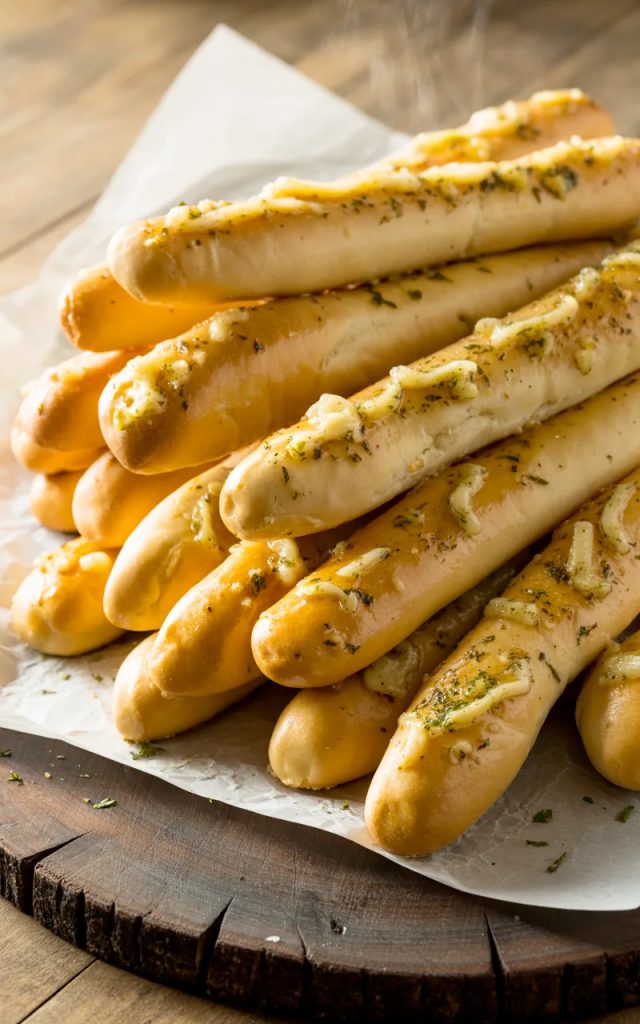

If you have ever been to Olive Garden you know the breadsticks are not just a side item — they are an event. They arrive at the table warm, glistening with garlic butter, dusted with herbs, and soft enough to pull apart with your hands without any resistance.
And the legendary unlimited policy means that the moment the basket gets low someone brings another one before you have had time to feel guilty about the first round. They are objectively one of the great comfort foods in American restaurant history.
The thing is, making them at home is genuinely not that complicated. Once you understand that a great breadstick is built on a simple enriched dough — flour, yeast, a little sugar, butter, salt and water — the rest is just technique and timing.
The magic happens in two places: a proper rise that gives the breadsticks their signature soft, pillowy texture, and that garlic butter topping applied the moment they come out of the oven while the heat helps it sink into every surface of the bread.
I have tested this recipe more times than I care to admit trying to get it exactly right and this version is the one I keep coming back to. The dough is straightforward, the rise time is manageable, and the result is a breadstick that holds its own against the restaurant version in every way that matters. Soft, buttery, garlicky, and warm — exactly what a great breadstick should be.
Why you’ll love this recipe
- Tastes exactly like the restaurant version. The combination of the enriched dough, the proper rise and that garlic butter herb topping gets you remarkably close to the original. Close enough that people will absolutely ask where you got them from.
- Soft and pillowy every single time. The dough technique and the right flour-to-liquid ratio give these breadsticks that signature soft, chewy, pull-apart texture that makes them so addictive.
- Ready in under an hour. Including the rise time. That is faster than getting in the car, driving to Olive Garden, waiting for a table and getting your first basket.
- Incredibly cheap to make. A batch of twelve breadsticks costs about four to six dollars in ingredients. The math on this one is very compelling.
- Kid friendly and universally loved. Warm garlic butter bread is one of the most crowd-pleasing foods on earth. There is no version of this where the people you serve them to are not happy.
- Freezer friendly. These breadsticks freeze beautifully both baked and unbaked making them an excellent make-ahead option for dinner parties, holiday gatherings or just having warm breadsticks available on demand.
Ingredients with key notes
For the breadstick dough
- 1 cup warm water (105–110°F) — The temperature of the water is critical for activating the yeast properly. Too cold and the yeast will not activate. Too hot and it will kill the yeast. Use a kitchen thermometer if you have one — if you do not, the water should feel comfortably warm on your wrist, like a warm bath, not hot.
- 2.25 tsp active dry yeast (one standard packet) — Make sure your yeast is fresh and not expired. Old or dead yeast will not give you the rise you need and you will end up with dense, flat breadsticks. Proof the yeast before adding other ingredients to confirm it is active and alive.
- 2 tbsp granulated sugar — Feeds the yeast during proofing and rising and adds a very subtle sweetness to the dough that is characteristic of the Olive Garden breadstick flavor. Do not skip or reduce it.
- 3 cups all-purpose flour, plus more for kneading — Measured by spooning into the measuring cup and leveling off. Start with 3 cups and add more as needed if the dough is too sticky to work with — add only a tablespoon at a time. Too much flour is the most common reason homemade breadsticks turn out dense rather than soft.
- 1.5 tsp salt — Essential for flavor. Under-salted breadstick dough tastes flat and bland regardless of how good the topping is.
- 3 tbsp unsalted butter, softened — Incorporated into the dough to add richness and tenderness. Softened butter blends into the dough much more evenly than cold butter. This is what gives the breadsticks their slightly rich flavor compared to a basic lean bread dough.
For the garlic butter topping
- 4 tbsp unsalted butter, melted — The base of the topping. Use real butter — not margarine, not a substitute. The flavor of real butter against the freshly baked bread is what makes this topping so good.
- 1 tsp garlic powder — The primary flavor driver of the topping. Garlic powder rather than fresh garlic gives you that even, consistent garlic flavor across every part of every breadstick without any harsh raw garlic bite.
- 1/2 tsp salt — Sprinkled over the buttered breadsticks for that slightly salty, savory finish that is signature to the Olive Garden version.
- 1/2 tsp dried parsley — For the classic green herb flecks across the surface. Italian seasoning can be substituted for a slightly more complex herb profile.
- 1/4 tsp onion powder — Adds a subtle savory depth to the topping that rounds out the garlic flavor without being identifiable on its own.
Step-by-step instructions
Step 1 — Proof the yeast
In a large mixing bowl or the bowl of a stand mixer combine the warm water, granulated sugar and active dry yeast. Stir gently and let the mixture sit for 5–10 minutes until it becomes foamy and fragrant. This is called proofing and it confirms that your yeast is alive and active before you commit the rest of your ingredients. If the mixture does not foam after 10 minutes your yeast is dead — start over with fresh yeast before proceeding. Do not skip this step.
Step 2 — Make the dough
Add the softened butter and salt to the proofed yeast mixture. Add the flour one cup at a time mixing between each addition. If using a stand mixer use the dough hook attachment on medium-low speed. If mixing by hand use a wooden spoon until the dough comes together then switch to your hands. The dough should come together into a soft, slightly tacky ball that pulls away from the sides of the bowl. If it is too sticky add flour one tablespoon at a time. If it is too stiff add warm water one tablespoon at a time.
Step 3 — Knead the dough
Turn the dough out onto a lightly floured surface and knead for 6–8 minutes until it is smooth, elastic and slightly tacky but not sticky. To test if it is properly kneaded stretch a small piece between your fingers — it should stretch thin enough to see light through without tearing. This is called the windowpane test and it tells you the gluten is properly developed. If using a stand mixer knead with the dough hook on medium speed for 5–6 minutes.
Step 4 — First rise
Shape the kneaded dough into a smooth ball and place it in a lightly oiled bowl, turning it once to coat all sides with oil. Cover the bowl with a clean kitchen towel or plastic wrap and place it in a warm, draft-free spot. Let the dough rise for 30–45 minutes until it has roughly doubled in size. A warm oven with just the oven light on works well as a proofing environment. A cold kitchen will slow the rise significantly so find the warmest spot available.
Step 5 — Shape the breadsticks
Preheat your oven to 400°F (200°C) and line two baking sheets with parchment paper. Punch down the risen dough gently to release the gas. Turn it out onto a lightly floured surface and divide it into 12 equal pieces — a bench scraper or sharp knife makes this easy and clean. Roll each piece into a log about 7–8 inches long and roughly 3/4 inch thick, working from the center outward with light even pressure. Place the shaped breadsticks on the prepared baking sheets spacing them about 2 inches apart.
Step 6 — Second rise
Cover the shaped breadsticks loosely with a clean kitchen towel and let them rest and rise for 10–15 minutes. They will puff up noticeably during this time. This second short rise gives the breadsticks their final light, pillowy texture. Do not skip it even if you are in a hurry — 15 minutes makes a significant difference in the final result.
Step 7 — Bake until golden
Bake at 400°F for 12–15 minutes until the breadsticks are evenly golden across the top and bottom. They should sound hollow when tapped on the bottom. Do not overbake — these breadsticks go from perfectly golden to too dark fairly quickly at this temperature so start checking at the 12-minute mark. The tops should be a warm golden color, not deep brown.
Step 8 — Make and apply the garlic butter topping
While the breadsticks are baking melt the butter in a small saucepan or microwave safe bowl. Stir in the garlic powder, salt, dried parsley and onion powder until combined. The moment the breadsticks come out of the oven brush the garlic butter mixture generously over every surface of every breadstick while they are still piping hot. The heat helps the butter soak into the bread slightly rather than just sitting on the surface. Be generous — do not ration the garlic butter. Every breadstick should glisten.
Step 9 — Serve immediately
Pile the breadsticks in a basket or on a board lined with parchment paper and serve immediately while still warm. These breadsticks are at their absolute peak in the first 20 minutes out of the oven — soft, warm, buttery and impossible to stop eating.
Serving suggestions
- With marinara sauce for dipping. The classic combination. A warm bowl of marinara sauce on the side for dipping transforms these breadsticks from a side item into a proper appetizer. Nobody at the table will complain.
- Alongside a bowl of pasta. Serve these with a big bowl of spaghetti bolognese, fettuccine alfredo or cacio e pepe for a full Italian-inspired dinner that covers every comfort food base simultaneously.
- With a Caesar salad. A crisp Caesar salad alongside a basket of these warm garlic butter breadsticks is a genuinely perfect lunch or light dinner combination.
- With soup. These breadsticks are incredible for dunking into a bowl of tomato soup, minestrone or any creamy pasta-style soup. The soft bread soaks up the broth beautifully.
- As a party appetizer spread. Set out a basket of these alongside small bowls of marinara, garlic aioli and a simple herb dipping oil. Instant crowd pleaser that costs almost nothing to put together.
- With a cheese board. Arrange these breadsticks alongside a selection of Italian cheeses — burrata, fresh mozzarella, aged parmesan — with some prosciutto and olives for an antipasto-style spread that feels genuinely impressive.
Storage tips
At room temperature
Store leftover breadsticks in an airtight bag or container at room temperature for up to 2 days. They will soften slightly as they sit but the flavor stays excellent. Avoid refrigerating them — refrigeration dries out bread quickly and makes the texture noticeably worse.
Reheating
Reheat breadsticks in the oven at 350°F for 5–7 minutes until warmed through and slightly crisped on the outside. An air fryer at 350°F for 3–4 minutes is even better — it revives the exterior texture while keeping the inside soft. Before reheating brush with a little extra melted butter to refresh the garlic butter coating. The microwave works in a pinch but wrapping in a slightly damp paper towel prevents them from drying out.
Freezing baked breadsticks
Freeze completely cooled baked breadsticks in a single layer on a baking sheet until solid then transfer to a freezer-safe bag for up to 2 months. Reheat from frozen in the oven at 350°F for 10–12 minutes. Add a fresh brush of garlic butter after reheating to bring them back to life.
Freezing unbaked dough
Shape the breadsticks and freeze them on a baking sheet before the second rise. Once solid transfer to a freezer bag and freeze for up to 1 month. When ready to bake place the frozen breadsticks on a parchment-lined baking sheet, cover loosely and let thaw and rise at room temperature for 1–2 hours before baking as directed. This is an excellent option for having fresh breadsticks with very little day-of effort.
A quick word before you go
These homemade Olive Garden breadsticks are one of those recipes that genuinely surprises people the first time they make them. The expectation going in is that something this good must be complicated and then the reality of how straightforward it actually is hits and you realize you have been unnecessarily depriving yourself of fresh warm homemade breadsticks your entire adult life.
The yeast dough is less intimidating than it sounds, the rise time gives you a natural break to do something else, and the garlic butter topping takes about two minutes to put together. The result is a basket of warm, pillowy, garlicky breadsticks that cost almost nothing to make and taste better than anything you can get at a restaurant because you made them yourself and you can eat them literally the moment they come out of the oven.
Make a batch this weekend and let me know how they turned out. Leave a comment below or tag me on Pinterest with your breadstick photos — I genuinely love seeing them. Happy baking. 🙂
— Kip
Olive Garden breadsticks recipe — soft, buttery and better than the restaurant
Description
These homemade Olive Garden breadsticks are the kind of recipe that makes you question why you ever waited to be seated at a restaurant just to get a basket of these. Soft and pillowy on the inside with a slightly chewy exterior, brushed generously with a warm garlic butter and herb topping the moment they come out of the oven — they are everything the restaurant version promises to be and then some. Made from scratch with simple pantry ingredients and ready in under an hour including rise time, this is the copycat recipe that actually delivers. Make them once and you will never look at a restaurant breadstick the same way again.
Ingredients
Breadstick dough
Garlic butter topping
Instructions
-
Combine warm water, sugar and yeast. Let sit 5–10 minutes until foamy.
-
Add softened butter and salt to the yeast mixture. Add flour one cup at a time and mix until a soft dough forms.
-
Knead for 6–8 minutes until smooth and elastic.
-
Place in an oiled bowl, cover and let rise 30–45 minutes until doubled.
-
Preheat oven to 400°F. Punch down dough and divide into 12 equal pieces. Roll each into a 7–8 inch log.
-
Place on parchment-lined baking sheets. Cover and let rise 10–15 minutes.
-
Bake 12–15 minutes until evenly golden.
-
Mix melted butter with garlic powder, salt, parsley and onion powder. Brush generously over hot breadsticks immediately out of the oven.
-
Serve warm immediately.