

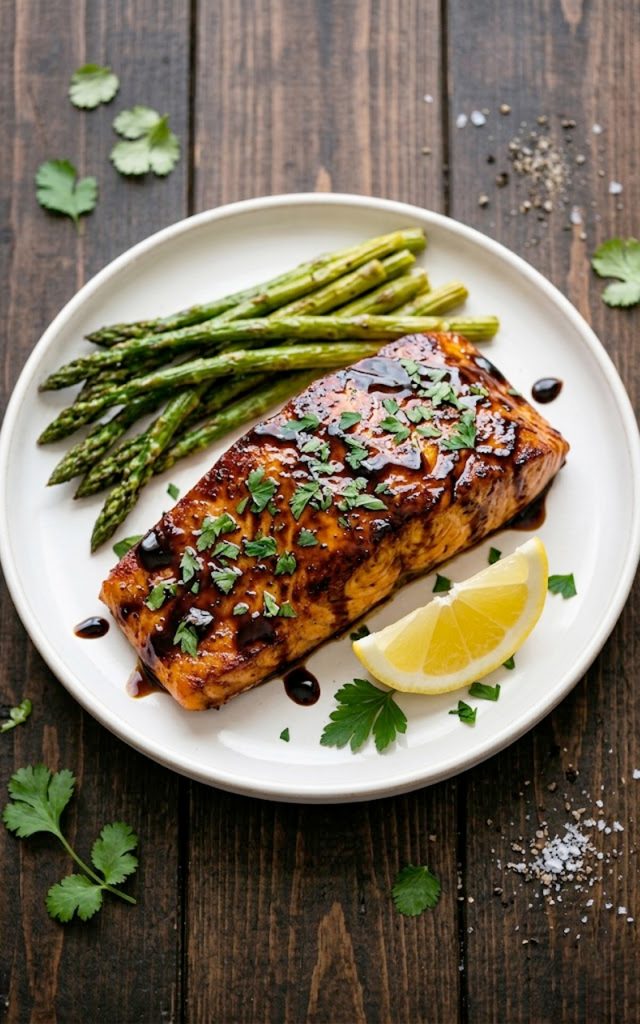

I’ll be real with you — for a long time, salmon was just something I made because I knew I was supposed to eat it. You know the feeling. You buy the fillets, you season them with salt and pepper, you cook them, and you eat them because they’re healthy. Not because you’re excited about them. That was me for longer than I’d like to admit.
Then I started making this balsamic glazed salmon and everything changed. That glaze — sweet, tangy, slightly sticky, and deeply caramelized over the surface of the fish — turned a perfectly fine piece of salmon into something I genuinely look forward to eating. My family stopped treating salmon night like a health obligation and started requesting it. That shift alone tells you everything you need to know about this recipe.
And here’s what makes it even better — this is a 20-minute recipe from start to finish. The glaze comes together in one small saucepan, the salmon sears in a hot skillet, and when those two things meet on the plate, the result looks and tastes like something from a proper restaurant. Simple ingredients, minimal effort, maximum payoff. Let’s get into it.
Why you’ll love this recipe
- It’s ready in 20 minutes flat. This is a full, impressive dinner that comes together faster than most people can decide what to order for takeout. On a busy weeknight, that kind of speed matters.
- That balsamic glaze is genuinely something special. It reduces down into a thick, glossy sauce that caramelizes over the salmon and creates this sweet-tangy-savory combination that is hard to stop eating. It sounds simple because it is — but the flavor punches way above its weight.
- The salmon stays tender and juicy. Getting salmon right can feel intimidating, but the technique here is straightforward and reliable. A hot pan, the right timing, and that glaze going on at the end is all you need for perfectly cooked fish every single time.
- It’s incredibly healthy without tasting like health food. High protein, low carb, gluten free, dairy free — this salmon checks every box without making a single compromise on flavor. You feel good eating it and you feel good after eating it.
- It works for any occasion. Quick Tuesday night dinner? Done. Impressing guests at a dinner party? Absolutely. Meal prepping for the week? This salmon reheats better than most people expect. It adapts to whatever you need it to be.
- The ingredient list is short and simple. Everything in this recipe lives in a standard pantry or a quick grocery run. No specialty ingredients, no complicated techniques, no stress.
Ingredients with key notes
For the salmon
- 4 salmon fillets, about 6 oz each — Skin-on fillets work best here. The skin acts as a natural barrier between the fish and the hot pan, helping the salmon cook evenly without drying out. If you prefer skinless, that works too — just be a little more careful with the heat.
- Salt and black pepper to taste — Season generously on both sides. Salmon needs a confident hand with the seasoning.
- 1 tablespoon olive oil — For searing. Make sure the pan is properly hot before the salmon goes in — this is the single most important thing you can do for a good sear.
- 1 tablespoon butter — Added to the pan alongside the olive oil. The butter browns slightly and adds a richness to the sear that olive oil alone cannot replicate.
For the balsamic glaze
- 1/2 cup balsamic vinegar — Use a decent quality balsamic here. It doesn’t have to be expensive, but a better vinegar makes a noticeably better glaze. Cheap balsamic can taste sharp and one-dimensional when reduced.
- 2 tablespoons honey — This balances the acidity of the balsamic and helps the glaze develop that gorgeous sticky, caramelized consistency.
- 2 cloves garlic, minced — Adds depth and a subtle savory note to the glaze that keeps it from being purely sweet.
- 1 teaspoon Dijon mustard — This is the ingredient most people leave out and shouldn’t. It emulsifies the glaze and adds a subtle complexity that makes it taste layered and intentional rather than just sweet and sour.
- 1/4 teaspoon red pepper flakes — Optional but recommended. Just a small amount adds a gentle warmth that cuts through the sweetness of the glaze beautifully.
For garnish
- Fresh parsley or chives, finely chopped — For color and freshness. The bright green against the dark caramelized glaze makes the plate look polished and intentional.
- Lemon wedges — A squeeze of fresh lemon over the finished salmon brightens everything up and cuts through the richness of the glaze in the best possible way.
Step-by-step instructions
Step 1: Make the balsamic glaze
Combine the balsamic vinegar, honey, minced garlic, Dijon mustard, and red pepper flakes in a small saucepan over medium heat. Stir to combine and bring it to a gentle simmer. Let it cook for 8-10 minutes, stirring occasionally, until the glaze reduces by about half and coats the back of a spoon. It will look thinner than you expect in the pan — it thickens further as it cools, so don’t over-reduce it. Remove from heat and set aside. Reserve about 2 tablespoons of the glaze in a separate small bowl for drizzling at the end.
Step 2: Prep the salmon
While the glaze reduces, pat the salmon fillets completely dry with paper towels. This step is non-negotiable — moisture on the surface of the fish will cause it to steam instead of sear and you’ll lose that beautiful golden crust. Season both sides generously with salt and black pepper.
Step 3: Sear the salmon
Heat olive oil and butter in a large skillet — preferably cast iron or stainless steel — over medium-high heat until the butter is melted and just starting to foam. Place the salmon fillets skin-side down in the pan. Press them gently with a spatula for the first 30 seconds to prevent the skin from curling up. Cook for 4-5 minutes without moving them — let the skin get crispy and golden. The salmon will start to turn opaque from the bottom up. You can watch the color change travel up the side of the fillet to judge doneness.
Step 4: Flip and glaze
Flip the salmon fillets carefully and cook for another 2-3 minutes on the flesh side. In the last minute of cooking, spoon the balsamic glaze generously over each fillet. The glaze will hit the hot pan and start to caramelize almost immediately — this is exactly what you want. It will sizzle, darken slightly, and stick to the surface of the salmon in a gorgeous lacquered layer. Don’t walk away during this step.
Step 5: Rest and serve
Remove the salmon from the pan and let it rest on a plate for 2 minutes before serving. Drizzle with the reserved glaze, scatter fresh parsley or chives on top, and add a lemon wedge on the side. Serve immediately while the glaze is still glossy and the salmon is at its best.
Serving suggestions
This salmon is versatile enough to pair with almost any side, but here are the combinations that work best:
- Serve over a bed of steamed white or brown rice and spoon a little extra balsamic glaze over the rice as well. The glaze soaks into the rice and makes every bite flavorful all the way through.
- Pair with roasted asparagus or green beans for a classic combination that balances the richness of the salmon and the sweetness of the glaze with something fresh and slightly bitter.
- Serve alongside creamy mashed potatoes for a more indulgent plate that still feels elevated and restaurant-worthy.
- Flake the salmon over a fresh arugula salad with shaved parmesan, cherry tomatoes, and a drizzle of extra balsamic glaze. The peppery arugula pairs beautifully with the sweet glaze.
- Serve with roasted baby potatoes tossed in olive oil, garlic, and rosemary. Simple, hearty, and a perfect match for the bold flavors of the glaze.
- Add a side of steamed broccoli or broccolini — the slight bitterness of the broccoli is a natural counterpart to the sweetness of the balsamic and keeps the whole plate balanced.
Storage tips
Refrigerator: Store leftover salmon in an airtight container in the fridge for up to 3 days. The balsamic glaze firms up slightly when cold but loosens again once the salmon is reheated.
Freezer: Cooked salmon can be frozen for up to 2 months in a freezer-safe container. The texture changes slightly after freezing — it becomes a little more flaky — but it still tastes great in salads, grain bowls, or pasta dishes after thawing.
Reheating: The best way to reheat this salmon is gently in a covered skillet over low heat with a tiny splash of water or broth for about 3-4 minutes. This keeps it from drying out. The microwave works but use 50% power in short 30-second intervals and stop as soon as it’s warmed through — overheating salmon in the microwave is a fast track to a dry, rubbery result.
Make-ahead tip: The balsamic glaze can be made up to 3 days ahead and stored in a sealed jar in the fridge. When you’re ready to cook, just reheat it gently in a small saucepan or in the microwave for 20 seconds. This cuts your active cooking time down to about 10 minutes on the night.
Closing
Salmon deserves better than salt, pepper, and resignation. This balsamic glazed salmon is proof that with the right glaze and a hot pan, a simple piece of fish can become one of the most satisfying things on your weekly dinner table.
Five ingredients in the glaze, twenty minutes of your time, and a plate that looks and tastes genuinely special. That is the kind of cooking I am here for — and I hope it becomes the kind of cooking you look forward to too. If you make this one, drop a comment below and tell me how it went. And if you served it over arugula or paired it with something unexpected — I really want to hear about it 🙂
With gratitude, Kip
Balsamic glazed salmon — the super easy recipe that makes salmon night something special
Description
This balsamic glazed salmon features tender, perfectly seared salmon fillets finished with a rich balsamic glaze that caramelizes beautifully over the surface of the fish. The glaze is simple — balsamic vinegar, honey, garlic, and a touch of Dijon — but the flavor it delivers is anything but. Ready in under 20 minutes, healthy, and impressive enough for guests. This is the recipe that makes salmon night something to actually look forward to.
Ingredients
Salmon:
Balsamic glaze:
Garnish:
Instructions
-
Combine balsamic vinegar, honey, minced garlic, Dijon mustard, and red pepper flakes in a small saucepan over medium heat. Simmer for 8-10 minutes until reduced by half and slightly thickened. Reserve 2 tablespoons for finishing.
-
Pat salmon fillets completely dry with paper towels. Season both sides generously with salt and black pepper.
-
Heat olive oil and butter in a large skillet over medium-high heat. Place salmon skin-side down and press gently for 30 seconds. Cook for 4-5 minutes without moving until the skin is golden and crispy.
-
Flip the salmon and cook for 2-3 minutes on the flesh side. In the last minute, spoon balsamic glaze generously over each fillet and let it caramelize in the pan.
-
Remove from heat and rest for 2 minutes. Drizzle with reserved glaze, garnish with fresh herbs, and serve with lemon wedges.