

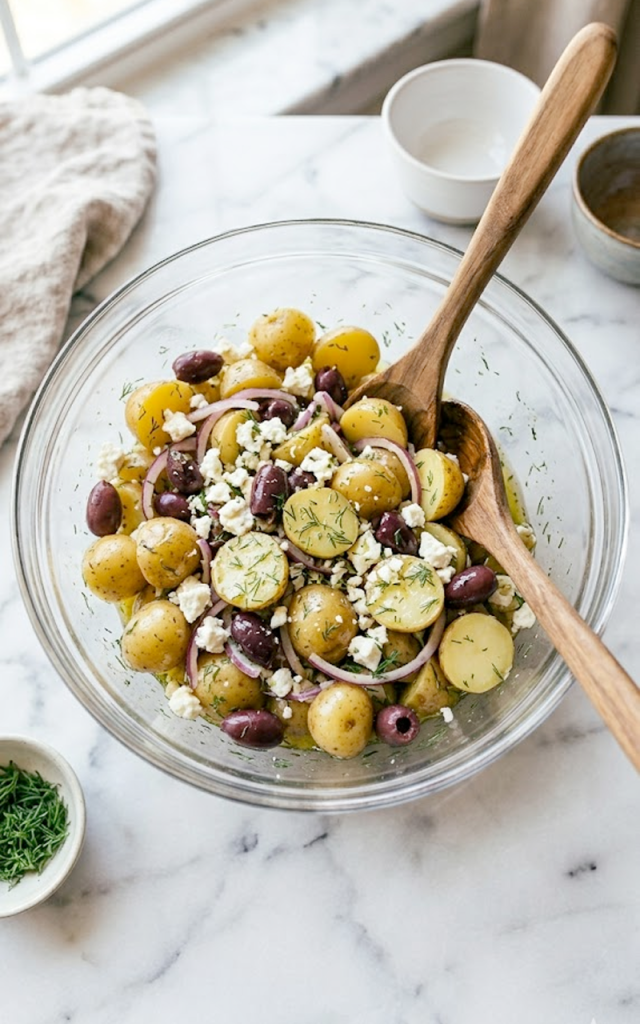

Let’s be honest about something. Most potato salads are just potatoes drowning in mayo with a little mustard thrown in to pretend there’s complexity. And look, I’m not here to disrespect mayo — it has its place.
But when I first made this Greek olive potato salad, I realized I had been settling for a much less interesting version of what potato salad could actually be.
This one is different. Instead of a heavy creamy dressing, you get a bright lemon and olive oil vinaigrette that soaks into the warm potatoes and infuses every bite with flavor.
Then you add Kalamata olives for that briny depth, crumbled feta for creaminess and salt, thinly sliced red onion for a little sharpness, and a generous handful of fresh dill that ties everything together. The result is a potato salad that actually tastes like something — bold, fresh, and layered in a way that makes people go back for thirds.
I brought this to a cookout last summer and it disappeared before the burgers were even off the grill. Someone asked me for the recipe three separate times that afternoon.
That’s the kind of dish this is. Simple to make, impossible to ignore, and genuinely better than anything mayo-based has ever been at a summer table. Let’s get into it.
Why you’ll love this recipe
- No mayo, no regrets — the lemon olive oil dressing is lighter, brighter, and far more interesting than any creamy dressing. Your potato salad game changes permanently after this.
- Bold Mediterranean flavors in every bite — Kalamata olives, feta, fresh dill, and lemon work together in a way that makes every forkful taste intentional and complex.
- Serves warm or cold — this salad is genuinely delicious at any temperature. Serve it warm right after tossing or cold straight from the fridge the next day. Both versions are excellent.
- Ready in 30 minutes — boil the potatoes, make the dressing, toss everything together. That is the whole recipe.
- Naturally gluten free and vegetarian — no substitutions required. This dish works for almost every guest at the table without any modifications.
- It gets better overnight — the dressing absorbs deeper into the potatoes as it sits. If anything, the leftovers taste even better than the fresh batch. IMO that is a rare and beautiful quality in a side dish.
Ingredients with key notes
For the salad:
- 2 lbs baby yellow potatoes — Baby yellow potatoes are the ideal choice here. They have a naturally buttery flavor, a thin skin you don’t need to peel, and a waxy texture that holds its shape after boiling instead of turning into mush. If you can’t find baby yellows, small red potatoes or fingerlings work as solid substitutes. Avoid russet potatoes entirely — they are too starchy and fall apart.
- 1/2 cup Kalamata olives, pitted and halved — Kalamata olives bring a deep, briny, slightly fruity flavor that is completely different from regular black olives. Do not substitute with canned black olives — they are bland and watery and will not give you the same result. Buy them from the olive bar at your grocery store if you can, as jarred Kalamatas tend to be slightly softer.
- 1/2 cup crumbled feta cheese — Use block feta packed in brine and crumble it yourself. Pre-crumbled feta is drier, saltier, and less creamy than fresh block feta. The brine-packed version has a creamier texture and a more balanced, milky flavor that works beautifully in this salad.
- 1/2 medium red onion, very thinly sliced — The thin slicing is important. You want the onion to be delicate enough to soften slightly in the dressing rather than dominating every bite. Use a mandoline if you have one. If raw red onion is too sharp for your taste, soak the slices in cold water for 10 minutes before adding them to the salad — this mellows the bite significantly.
- 1/4 cup fresh dill, roughly chopped — Fresh dill is non-negotiable in this recipe. Dried dill does not deliver the same bright, grassy, slightly anise-like flavor that makes this salad taste distinctly Greek. If you genuinely cannot find fresh dill, fresh parsley or fresh mint are the next best options — though the flavor profile will shift noticeably.
- 2 tbsp fresh parsley, chopped — Adds a clean herby note that rounds out the dill and keeps the herb flavor from becoming one-dimensional.
- 1/4 tsp red chili flakes — Optional but recommended. A small amount of heat in the background makes all the other flavors brighter without making the dish spicy.
For the lemon herb dressing:
- 1/4 cup good quality extra virgin olive oil — This dressing is simple enough that the quality of your olive oil actually matters. Use something you would be happy to taste on its own. A grassy, slightly peppery olive oil works particularly well here.
- 3 tbsp fresh lemon juice — Always fresh, never bottled. Bottled lemon juice has a flat, slightly metallic flavor that dulls the dressing. Two medium lemons should give you exactly what you need.
- 1 tsp lemon zest — The zest contains the essential oils of the lemon and adds a more intense citrus fragrance than the juice alone. Use a microplane and zest the lemon before you juice it.
- 2 cloves garlic, minced or grated — Raw garlic in the dressing gives it a sharp, punchy bite. If you prefer a gentler garlic flavor, grate it on a microplane rather than mincing — it incorporates more smoothly into the dressing and distributes more evenly.
- 1 tsp dried oregano — Oregano is a classic Greek herb that belongs in this dressing. It holds up well even in dried form because the robust flavor survives without fresh leaves. Use Greek dried oregano if you can find it — it’s more fragrant than regular dried oregano.
- 1/2 tsp Dijon mustard — Acts as an emulsifier to help the olive oil and lemon juice come together into a cohesive dressing rather than separating immediately. It also adds a subtle depth without being detectable as mustard in the finished dish.
- Salt and black pepper to taste — Season the dressing well. Taste it before adding it to the potatoes and adjust accordingly. Remember that the feta and olives both contribute salt to the finished salad, so keep that in mind when seasoning the dressing.
Step-by-step instructions
Step 1: Cook the potatoes
Place the baby potatoes in a large pot and cover with cold water by about an inch. Add a generous pinch of salt to the water — the potatoes should cook in well-seasoned water just like pasta. Bring to a boil over high heat then reduce to a steady simmer. Cook for 15-18 minutes until the potatoes are completely tender when pierced with a fork or knife. You want them fully cooked through with no resistance in the center. Drain the potatoes and let them sit in the colander for 2-3 minutes to allow the steam to escape. While the potatoes are still warm, slice them in half. Warm potatoes absorb dressing dramatically better than cold ones — this step makes a real difference in the final flavor.
Step 2: Make the lemon herb dressing
While the potatoes cook, combine the extra virgin olive oil, fresh lemon juice, lemon zest, minced garlic, dried oregano, Dijon mustard, salt, and black pepper in a small jar or bowl. Whisk or shake vigorously until fully emulsified and combined. Taste the dressing on its own and adjust seasoning as needed. It should taste bright, garlicky, and well-seasoned. If it tastes flat, add a pinch more salt. If it tastes too sharp, add a small drizzle more olive oil.
Step 3: Dress the warm potatoes
Transfer the halved warm potatoes to a large mixing bowl. Pour about two-thirds of the dressing over the warm potatoes immediately and toss gently to coat. The warm potatoes will absorb the dressing as they cool, which is exactly what you want. Let the dressed potatoes sit for 5-10 minutes at this stage so the flavors can begin to develop before you add the remaining ingredients.
Step 4: Add the remaining ingredients
Add the halved Kalamata olives, crumbled feta, thinly sliced red onion, fresh dill, fresh parsley, and red chili flakes to the bowl. Pour the remaining dressing over everything and toss gently to combine. Be careful not to overmix — you want the feta to stay in recognizable crumbles rather than being mashed into the dressing. A gentle fold with a large spoon is the right technique here.
Step 5: Taste and adjust
Taste the salad before serving. Does it need more lemon? More salt? More dill? This is your moment to make it perfect. Keep in mind that the olives and feta both bring saltiness, so be conservative with additional salt and taste as you go. If the salad tastes a little flat, a small extra squeeze of fresh lemon juice wakes everything up immediately.
Step 6: Serve or chill
Serve the salad immediately at room temperature for the warmest, most vibrant version of this dish. Alternatively, cover and refrigerate for at least 30 minutes to let the flavors develop further — this is the better option if you’re making it ahead for a gathering. Before serving from the fridge, give it a gentle toss and taste again — cold temperatures dull seasoning slightly so you may want to add a touch more lemon juice or a drizzle of fresh olive oil right before it hits the table.
Serving suggestions
This Greek olive potato salad is one of the most versatile side dishes you can bring to any table:
- At a summer cookout — This is the dish that replaces the mayo potato salad permanently. Serve it alongside grilled chicken, burgers, or sausages and watch it disappear faster than anything else on the table.
- With grilled fish or shrimp — The lemon herb dressing and Mediterranean flavors pair incredibly well with simply grilled fish like salmon, sea bass, or grilled shrimp. This combination feels like a proper restaurant meal without the effort.
- As part of a mezze spread — Serve it alongside hummus, warm pita bread, tzatziki, stuffed grape leaves, and roasted red peppers for a full Mediterranean spread that works for entertaining.
- As a light lunch on its own — A generous bowl of this salad with some warm crusty bread on the side is a completely satisfying lunch. The feta and potatoes together are filling enough to carry you through the afternoon.
- Alongside roasted chicken — A simple roasted chicken with this salad on the side is one of those effortlessly good dinner combinations that feels both casual and impressive at the same time.
- As meal prep — This salad holds up exceptionally well in the fridge for 3-4 days. Make a big batch on Sunday and use it as a side throughout the week. It genuinely gets more flavorful as it sits.
Storage tips
Refrigerator: Store the potato salad in an airtight container in the refrigerator for up to 4 days. The flavors deepen and improve as it sits, making it one of the rare dishes that is genuinely better on day two than day one.
Before serving from cold: Take the salad out of the refrigerator 15-20 minutes before serving to take the chill off. Cold temperatures mute the flavors, so bringing it slightly closer to room temperature before serving makes a noticeable difference. Add a small drizzle of fresh olive oil and a squeeze of lemon juice and toss gently before putting it on the table.
Freezer: Do not freeze this salad. The potatoes become grainy and waterlogged after freezing and thawing, the feta crumbles break down completely, and the fresh herbs turn dark and unpleasant. This is a make-fresh-and-refrigerate recipe only.
Make-ahead tip: This salad is an excellent make-ahead dish for gatherings. You can make it fully assembled up to 24 hours in advance and refrigerate it overnight. The potatoes absorb even more dressing overnight and the flavors meld beautifully. Hold back a small handful of fresh dill and a little extra feta to scatter over the top right before serving — it makes the presentation look fresh even if the salad was made the day before.
Keeping the feta fresh: If you plan to store leftovers for more than a day, consider keeping a small amount of crumbled feta separate and adding it fresh each time you serve. Feta that sits in the dressing for multiple days softens considerably and loses its texture, though the flavor remains good.
Let’s wrap this up
If you have been making the same mayo potato salad for years out of habit rather than genuine love for it, this Greek olive potato salad is the recipe that changes things. It is brighter, bolder, more interesting, and honestly just better in almost every way — and I say that as someone who respects a good classic.
The lemon herb dressing, the Kalamata olives, the fresh dill, the crumbled feta — every element earns its place in this bowl. Nothing is there just for the sake of it. And the fact that it gets better overnight, holds up beautifully for meal prep, and works at everything from a backyard cookout to a dinner party makes it one of the most genuinely useful recipes you can add to your rotation.
Make it once and I am confident it becomes your go-to potato salad from here on out. And when someone at your next cookout asks you for the recipe — and they will — feel free to send them to Recipes By Kip. 🙂
With gratitude, Kip
Greek olive potato salad that skips the mayo and delivers so much more flavor
Description
This Greek olive potato salad ditches the mayo entirely in favor of a bold lemon and olive oil dressing that soaks into tender baby potatoes. Loaded with Kalamata olives, crumbled feta, thinly sliced red onion, and fresh dill, it's a vibrant, flavor-packed side dish that works for cookouts, meal prep, and everything in between. Ready in 30 minutes and naturally gluten free.
Ingredients
For the salad:
For the lemon herb dressing:
Instructions
-
Place potatoes in a large pot, cover with cold salted water. Bring to a boil then simmer for 15-18 minutes until completely tender. Drain and halve while still warm.
-
Whisk together all dressing ingredients in a small bowl or jar until fully combined. Taste and adjust seasoning.
-
Pour two-thirds of the dressing over the warm halved potatoes and toss gently. Let sit for 5-10 minutes.
-
Add Kalamata olives, crumbled feta, red onion, fresh dill, parsley, and chili flakes. Pour remaining dressing over everything and fold gently to combine.
-
Taste and adjust seasoning with additional lemon juice, salt, or pepper as needed.
-
Serve immediately at room temperature or refrigerate for at least 30 minutes for deeper flavor development. Add a fresh drizzle of olive oil and a squeeze of lemon before serving from cold.