


There is something about the French approach to cooking that I have always found quietly instructive. Not the complicated stuff — not the multi-day sauces or the techniques that require culinary school — but the underlying philosophy that the best food usually comes from treating simple ingredients with a lot of care and very little fuss.
Baked French eggs are a perfect example of that philosophy in action. One egg. A spoonful of cream. A little freshly grated cheese. A moderate oven and about twelve minutes.
What comes out is silky, custardy, and elegant in a way that genuinely surprises people who watch you make them. They look like something you ordered at a weekend brunch spot and they taste like someone who really knows what they are doing prepared them specifically for you.
The reality is that they are one of the easiest things you can make for breakfast, completely foolproof once you understand the timing, and endlessly adaptable to whatever flavors you want to take them in.
I started making these on quiet Sunday mornings for myself and ended up making them every time I have guests because they never fail to impress without ever requiring me to actually work very hard. That combination is rare and worth paying attention to.
Why You’ll Love This Recipe
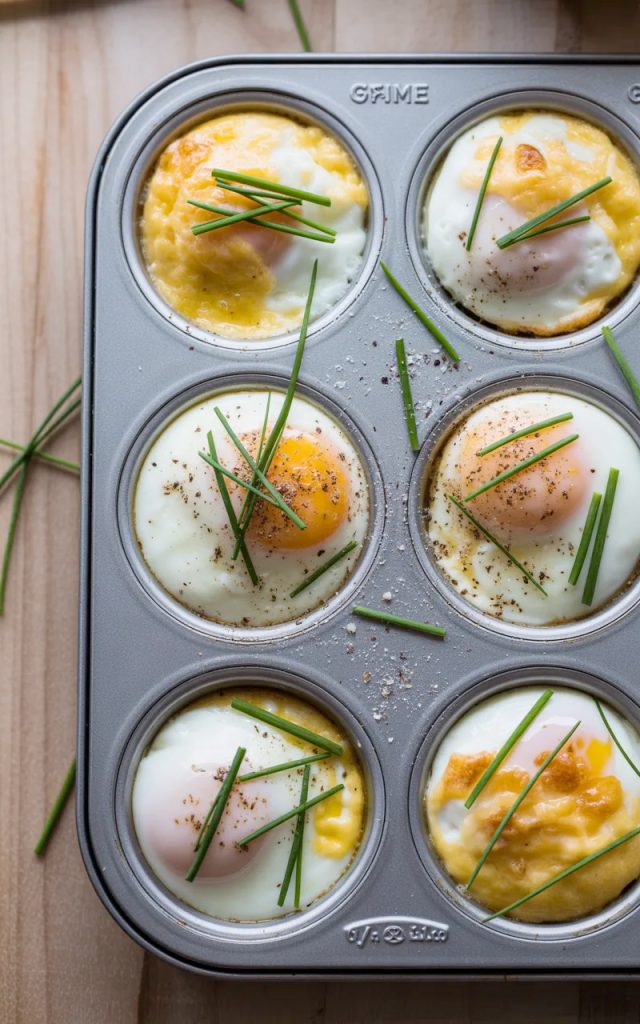
- The presentation is stunning with almost zero effort. Individual baked eggs in a muffin tin look elegant and intentional on the table. Slide them out onto plates, scatter fresh chives, add a crack of pepper, and you have a breakfast that looks like it required technique and attention when it actually required neither.
- The texture is unlike any other egg preparation. The combination of cream and gentle oven heat produces an egg white that is silky and custardy rather than rubbery, with a yolk that is soft, slightly runny, and deeply rich. It is a texture that is genuinely difficult to achieve any other way and once you experience it you will understand immediately why this is a French classic.
- It is ready in under 20 minutes. Five minutes of prep, twelve minutes in the oven, three minutes to rest and plate. Twenty minutes from a cold kitchen to an elegant plated breakfast that looks like you tried.
- It is naturally gluten free, low carb, and keto friendly. No bread, no flour, no grains of any kind in the base recipe. The egg, cream, and cheese combination is naturally compatible with a wide range of dietary needs without any modifications or substitutions.
- It scales effortlessly for a crowd. A standard muffin tin makes six eggs at once. A twelve cup tin makes twelve. The recipe is completely linear — just multiply the ingredients by the number of eggs you need and the cooking time stays exactly the same. This is one of the most stress-free ways to feed a brunch table of any size.
Ingredients with Key Notes
For the Baked French Eggs:
- 6 large eggs
- 6 tablespoons heavy cream (1 tablespoon per egg)
- 6 tablespoons freshly grated parmesan or gruyere cheese
- 1 tablespoon butter, softened, for greasing
- Salt and black pepper to taste
- Fresh chives, thinly sliced, for garnish
Optional Add-Ins:
- Crumbled cooked bacon or diced ham (1 teaspoon per cup)
- Sun-dried tomatoes, finely diced
- Sauteed mushrooms, finely chopped
- Fresh herbs mixed into the cream — thyme, tarragon, or chervil
- A pinch of smoked paprika or cayenne over the top before baking
Key Notes:
Eggs — One large egg per muffin cup is the standard ratio. The egg needs to fit comfortably in the cup with enough room for the cream to surround it without overflowing. If you are using particularly large or extra-large eggs, be aware that the white may overflow slightly in a standard muffin tin — this is fine and does not affect the result, just the appearance. Room temperature eggs bake more evenly than cold eggs straight from the refrigerator, so take them out about 15 minutes before you plan to bake.
Heavy Cream — One tablespoon of heavy cream per egg is the magic ratio. The cream does two things — it creates a barrier between the egg white and the hot tin that prevents the white from becoming rubbery and overcooked at the edges, and it adds a richness and silkiness to the finished egg that you simply cannot get from baking eggs dry. Do not substitute with milk or half and half — they do not have enough fat content to produce the same silky result and tend to make the whites watery rather than custardy.
Cheese — Freshly grated parmesan is my first choice for its salty, nutty depth and its ability to form a beautiful light golden crust on top of the egg during baking. Gruyere is a more melting, creamier alternative with a nuttier flavor that produces a slightly more gooey, indulgent result. A mix of both is genuinely excellent. Whatever cheese you choose, grate it fresh — the pre-grated versions do not melt as cleanly or brown as beautifully.
Butter for Greasing — Greasing the muffin tin generously with softened butter rather than cooking spray serves two purposes. It prevents sticking, obviously, but it also adds flavor to the outside of the egg as it bakes — a subtle butteriness on the exterior of each egg that cooking spray simply does not provide. Get into the corners and up the sides of each cup — any ungreased surface is a potential sticking point.
Fresh Chives — The fresh chives scattered over the finished eggs right before serving are not decorative afterthoughts — they add a genuine brightness and mild onion freshness that cuts through the richness of the cream and cheese and completes the flavor of the dish. Fresh tarragon is a more classically French alternative that gives the eggs an elegant anise note. Either way, use fresh herbs rather than dried — the difference in flavor and visual impact is significant.
Step-by-Step Instructions
Step 1 — Preheat the Oven and Prep the Muffin Tin
Preheat your oven to 375 degrees F (190 degrees C). Position the rack in the center of the oven.
Using your fingers or a pastry brush, generously coat each muffin cup with softened butter, covering the bottom and sides completely. Be thorough — any ungreased spot will cause sticking and make it difficult to remove the eggs cleanly after baking. If you want extra insurance against sticking, cut small circles of parchment paper for the bottom of each cup in addition to the butter.
Step 2 — Add the Cream
Spoon one tablespoon of heavy cream into the bottom of each buttered muffin cup. The cream should sit in a thin layer at the bottom of the cup. This cream layer is what creates the silky, custardy base for the egg and prevents the white from becoming tough and rubbery as it bakes.
Step 3 — Add the Cheese
Sprinkle one tablespoon of freshly grated parmesan or gruyere into each cup over the cream. The cheese will melt into the cream during baking and form a savory, slightly golden layer between the cream and the egg white that adds flavor and richness to every bite.
If you are adding any optional add-ins — crumbled bacon, diced ham, sun-dried tomatoes, or sauteed mushrooms — add a small teaspoon of your chosen add-in on top of the cheese at this stage, before the egg goes in.
Step 4 — Crack in the Eggs
Crack one egg carefully into each muffin cup, trying to keep the yolk intact and centered. The cleanest technique is to crack the egg into a small bowl first and then gently slide it into the muffin cup — this gives you control and prevents any shell fragments from ending up in the cup.
Season each egg generously with salt and a good crack of black pepper. Add a pinch of smoked paprika or cayenne if you want a hint of warmth and color.
Step 5 — Bake
Place the muffin tin in the preheated oven and bake for 10-14 minutes depending on how you like your yolks. The timing window is important to understand before you start:
For a soft, runny yolk with fully set whites — 10-11 minutes. The whites will be just barely set and opaque, the yolk still very soft and runny. This is the most French and the most luxurious result.
For a jammy, partially set yolk — 12-13 minutes. Whites fully set, yolk soft in the center but not runny. This is the sweet spot that most people prefer.
For a fully set yolk — 14 minutes. Fully cooked through but still custardy from the cream.
Ovens vary significantly in temperature accuracy, so check at the 10 minute mark by gently shaking the tin — the whites should be opaque and still, the yolk should still jiggle slightly if you want it soft.
Step 6 — Rest, Remove, and Serve
Remove the tin from the oven and let it rest for 2 minutes. This brief rest allows the eggs to finish setting slightly from residual heat and makes them significantly easier to remove from the tin without breaking.
Run a thin flexible knife or small offset spatula around the edge of each cup to loosen the egg. Use a spoon to carefully scoop each egg out onto individual plates or a serving platter.
Scatter fresh thinly sliced chives generously over each egg, add a final crack of black pepper, and serve immediately with toasted bread or alongside whatever accompaniment you have chosen.
Serving Suggestions
The most natural and most classic accompaniment to baked French eggs is good toasted bread for scooping and dipping. A thick slice of sourdough toasted in butter, a toasted baguette slice, or a buttery croissant torn into pieces alongside the egg is the kind of pairing that makes complete and immediate sense. The yolk and cream create a natural sauce that the bread was made to soak up.
For a more complete and elegant brunch plate, serve the baked eggs alongside a simple green salad dressed with a light lemon vinaigrette. The brightness and acidity of the dressed greens against the rich, creamy egg is a classic French bistro pairing that feels effortlessly sophisticated.
Smoked salmon placed beside or slightly underneath the egg before serving elevates this recipe from a simple weekday breakfast into something genuinely special. The saltiness and silkiness of good smoked salmon against the custardy egg and cream is one of those combinations that makes people put down their fork for a moment and pay attention.
For a weekend brunch spread, arrange the eggs on a large platter with scattered fresh herbs, a few extra grinds of black pepper, and small ramekins of accompaniments — sour cream, hot sauce, extra chives — on the side. It is a presentation that looks entirely intentional and impressive and requires almost no additional effort beyond what you have already done.
Storage Tips
Best Eaten Fresh — Baked French eggs are genuinely at their best the moment they come out of the oven and are plated. The silky custardy texture and the soft yolk are at their peak when warm, and no storage or reheating method fully preserves that experience. If you are making these for guests, time the baking so the eggs come out of the oven as everyone sits down.
Reheating — If you have leftover baked eggs, reheat them very gently. Place them in a small oven-safe dish, cover loosely with foil, and warm in a 300 degree F oven for 5-7 minutes. Avoid the microwave — it makes the egg white rubbery and the yolk chalky. The reheated result is acceptable but noticeably different from fresh.
Make Ahead Prep — The most useful make ahead step for this recipe is prepping the muffin tin the night before. Butter the cups, add the cream and cheese, cover tightly with plastic wrap, and refrigerate overnight. In the morning, remove from the fridge while the oven preheats, crack the eggs in, and bake. The active morning time drops to about 5 minutes.
For a Crowd — If you are baking two full muffin tins at once, rotate the tins halfway through baking to ensure even heat distribution. Add 1-2 minutes to the total baking time when working with a fully loaded oven.
Closing
Baked French eggs are the recipe I reach for when I want breakfast to feel like a moment rather than just a meal. They take almost no time, require almost no skill, and produce something that genuinely makes people stop and appreciate what is in front of them.
That silky custardy white, that soft yolk, that golden cheese on top and the fresh chives scattered across the plate — it is a combination that looks and tastes like someone thought carefully about what they were doing, even when they mostly just buttered a muffin tin and set a timer.
Make these on a slow Sunday morning. Make them for the next time you have people over for brunch. Make them on a Tuesday when you need something that feels like it was worth the effort of getting out of bed. They will deliver every single time.
Drop a comment below and tell me what add-ins you tried. I want to hear about the bacon versions, the smoked salmon versions, and especially the wildcard combinations I have not thought of yet.
Happy cooking.
— Kip
Baked French Eggs — Elegant, Creamy and Ready in 20 Minutes
Description
Baked French eggs take individual eggs cracked into a butter and cream lined muffin tin, topped with freshly grated parmesan or gruyere and a crack of black pepper, and baked at low heat until the whites are just set and the yolks are still soft and slightly runny. The result is a silky, custardy, deeply satisfying egg that looks and tastes like something a French bistro chef spent time on — but comes together in under 20 minutes with almost no active effort.
Ingredients
Instructions
-
Preheat oven to 375 degrees F. Generously butter each cup of a standard 6-cup muffin tin.
-
Add 1 tablespoon heavy cream to each cup.
-
Add 1 tablespoon grated cheese to each cup over the cream.
-
Carefully crack one egg into each cup keeping the yolk intact. Season with salt and pepper.
-
Bake 10-14 minutes until whites are set to your preference. Check at 10 minutes for soft yolks, 12-13 for jammy, 14 for fully set.
-
Rest 2 minutes, loosen edges with a thin knife, scoop onto plates, garnish with fresh chives and black pepper. Serve immediately.