
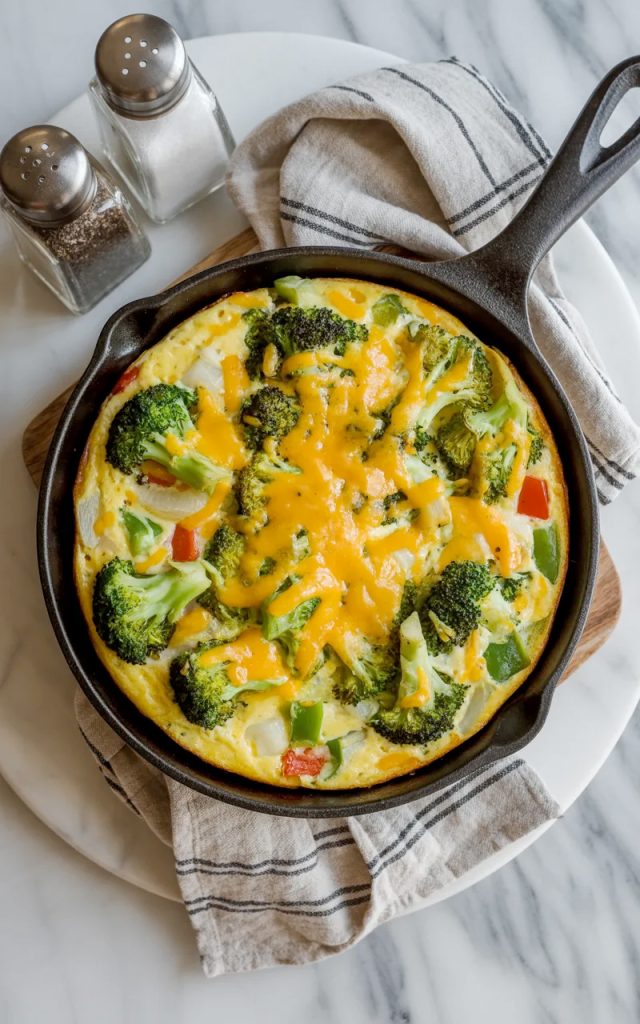
I used to think frittatas were one of those fancy brunch things that required some kind of culinary degree to pull off. The kind of dish you order at a restaurant and assume is way too complicated to make at home. Spoiler: I was completely wrong.
The first time I made a frittata, it was a Thursday evening, my fridge was half empty, and I had exactly zero interest in going grocery shopping. A handful of vegetables, some eggs, a block of cheese, and one cast iron skillet later — I had the most satisfying meal I had made all week. It took 30 minutes. I felt like a genius.
That was the moment frittatas permanently earned a spot in my regular rotation. Whether I am pulling it together for a lazy weekend brunch, prepping meals for the week, or just trying to use up whatever vegetables are sitting in my crisper drawer, this recipe never lets me down. And once you try it, it won't let you down either.
For the Frittata:
Key Notes:
Eggs — This is the foundation of the whole dish, so use the best quality eggs you can get. Pasture-raised or farm fresh eggs have richer yolks and a noticeably better flavor. Eight eggs gives you a frittata with great substance and structure — enough to hold up all those vegetables without falling apart.
Milk — A small amount of whole milk whisked into the eggs adds just enough creaminess and helps the frittata stay tender rather than rubbery. Do not overdo it though. Too much liquid and your frittata will struggle to set properly. Stick to 1/4 cup.
Vegetables — Broccoli, red bell pepper, green bell pepper, and onion are what I use here, but honestly, this is where you get to be creative. Zucchini, mushrooms, spinach, sun-dried tomatoes, asparagus — almost anything works. Just make sure you saute your vegetables first to cook out excess moisture. Skipping this step is the number one reason frittatas turn out watery.
Cheese — Shredded cheddar melts beautifully and gives you those golden, slightly crispy edges on top. That said, feta, gruyere, mozzarella, and pepper jack all work incredibly well depending on what flavor profile you're going for. IMO, feta and spinach is one of the best combinations you can make in a frittata.
Cast Iron Skillet — A 10 to 12 inch oven-safe skillet is essential here. Cast iron is ideal because it retains heat evenly and gives you a beautifully set bottom and edges. If you don't have cast iron, any oven-safe skillet will work — just make sure the handle can handle 400 degrees F before it goes in the oven.
Step 1 — Preheat Your Oven
Set your oven to 400 degrees F (200 degrees C) and let it fully preheat before the frittata goes in. A properly preheated oven is what gives you that gorgeous golden top. Don't rush this step.
Step 2 — Whisk the Egg Mixture
Crack all 8 eggs into a large bowl. Add the milk, garlic powder, salt, and black pepper. Whisk everything together vigorously until the mixture is fully combined and slightly frothy. The air you incorporate here is what makes the frittata light and fluffy rather than dense. Set the bowl aside.
Step 3 — Saute the Vegetables
Heat the olive oil in your cast iron skillet over medium heat. Add the diced onion first and cook for about 3 minutes until it softens and turns translucent. Add the red and green bell peppers and cook for another 3 minutes. Finally, add the broccoli florets and cook for 2 more minutes, stirring occasionally.
Season the vegetables lightly with a pinch of salt and pepper. You want them cooked through but still holding a little bit of texture — not completely soft. Spread them out evenly across the bottom of the skillet.
Step 4 — Add the Egg Mixture
Reduce the heat to medium-low. Give your egg mixture one final whisk and pour it evenly over the vegetables in the skillet. Do not stir. Just let it sit and allow the edges to begin setting, which takes about 2-3 minutes. You will notice the edges start to look more solid while the center remains jiggly — that is exactly what you want at this stage.
Step 5 — Add the Cheese
Sprinkle the shredded cheddar cheese evenly over the top of the frittata. Make sure you get good coverage right to the edges — those cheesy edges that get slightly crispy in the oven are honestly the best part.
Step 6 — Finish in the Oven
Transfer the skillet to your preheated oven and bake for 12-15 minutes, until the frittata is fully set in the center and the top is golden. To check for doneness, give the skillet a gentle shake — the center should not wobble at all. If it does, give it another 2 minutes.
Remove from the oven and let it rest for 5 minutes before slicing. This resting time helps the frittata firm up and makes it much easier to cut clean slices.
Garnish with fresh parsley if desired, slice into wedges, and serve.
A frittata is one of those rare dishes that works beautifully no matter what you pair it with, which is a big part of why I love it so much.
For a breakfast or brunch spread, serve it alongside a simple green salad with a light lemon vinaigrette, some sliced avocado, and fresh fruit. It is a complete, balanced meal that looks way more impressive than the effort it took to make.
For a light weeknight dinner, pair it with a warm bowl of tomato soup or a crusty slice of sourdough bread. The combination is simple, satisfying, and genuinely comforting — especially on a cold evening.
If you are meal prepping, slice the frittata into individual wedges and store them separately. Grab a slice in the morning, eat it cold or reheated, and you have a high-protein breakfast ready in literally 60 seconds. It is one of the most practical meal prep moves you can make.
In the Fridge — Let the frittata cool completely before storing. Cover the skillet tightly with plastic wrap or transfer individual slices to an airtight container. It keeps well in the fridge for up to 4 days.
In the Freezer — Frittata freezes surprisingly well. Wrap individual slices tightly in plastic wrap, then place them in a freezer-safe bag or container. Freeze for up to 2 months. Thaw overnight in the fridge before reheating.
Reheating — For the best texture, reheat slices in a skillet over medium-low heat for 2-3 minutes per side. This keeps the eggs from getting rubbery, which is what happens when you microwave them too aggressively. If you are in a rush, microwave on 50% power in 30-second intervals until warmed through.
Meal Prep Tip — You can prep all your vegetables the night before — chop them, store them in a container in the fridge, and your morning assembly becomes even faster. The egg mixture can also be whisked the night before and stored covered in the fridge.
Here is the thing about frittatas — they are one of those recipes that sounds a little fancy but is actually one of the most practical, no-fuss meals you can add to your weekly lineup. One pan, 30 minutes, and whatever vegetables you have on hand. That is the whole formula.
Whether you make it for Sunday brunch, meal prep it for the week, or throw it together on a random Tuesday night because the fridge looks a little sad — this frittata is going to come through for you every single time.
Give it a try, make it your own with your favorite vegetables and cheese, and drop a comment below to let me know how it turned out. I read every single one.
Happy cooking.
— Kip
This frittata recipe is a fluffy, golden, veggie-loaded egg dish cooked entirely in one cast iron skillet. Started on the stovetop and finished in the oven, it comes together in 30 minutes with simple ingredients you probably already have. Perfect for breakfast, brunch, or a light weeknight dinner.