
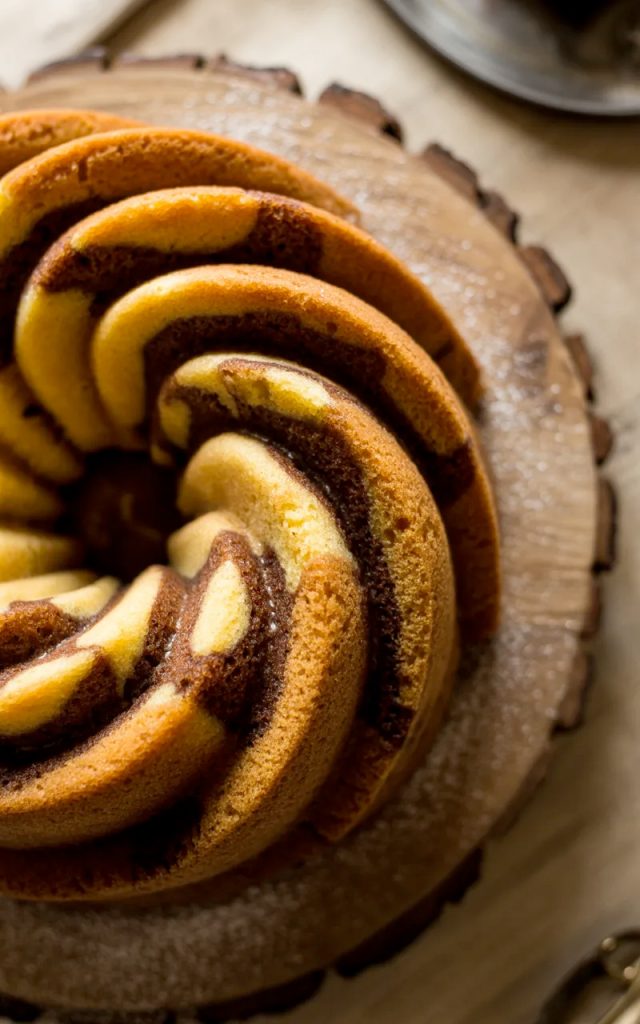
There are cakes that taste good and then there are cakes that stop people in their tracks the moment they walk into the room. This cinnamon swirl bundt cake is firmly in the second category.
That dramatic swirl of dark cinnamon sugar spiraling through golden vanilla butter cake, the gorgeous ridged shape of the bundt pan, the way it sits on a cake stand looking like it came from a proper bakery — it is the kind of cake that makes people pick up their phones and take a photo before they even cut into it.
And here is the thing. It is not actually that complicated. Tender, moist vanilla butter cake batter, a simple mixture of cinnamon and sugar layered through the middle, and the bundt pan does all the visual work for you.
The swirl happens naturally as you layer the batter and filling and the oven does the rest. When you flip it out of the pan and see that perfect spiral pattern on the outside, you will feel like an absolute genius.
I make this every fall when the cinnamon craving hits and every time it comes out of the oven I have to physically stop myself from cutting into it before it cools. The smell alone is worth making this cake. Let's get into it.
For the vanilla butter cake:
For the cinnamon swirl filling:
Step 1 — Prep the pan and preheat
Preheat your oven to 350°F. Preparing the bundt pan properly is the single most important step in this entire recipe and it deserves serious attention. Grease every single ridge and crevice of your bundt pan generously with softened butter using a pastry brush or your fingers — get into every groove. Then dust the greased pan with all-purpose flour, rotating and tapping to coat every surface, and tap out the excess. Alternatively use a baking spray that contains flour for a more convenient but equally effective release. A poorly greased bundt pan is the number one reason bundt cakes stick and break apart when you try to unmold them. Do not rush this step.
Step 2 — Make the cinnamon swirl filling
In a small bowl, combine the granulated sugar, brown sugar, ground cinnamon, flour, and melted butter. Stir well until everything is evenly combined and the mixture resembles wet sand with a slightly clumpy texture. Set aside. Having this ready before you start the batter means you can work quickly during assembly without the batter sitting and losing any leavening power.
Step 3 — Mix the dry ingredients
In a medium bowl, whisk together the all-purpose flour, baking powder, baking soda, and salt until evenly combined. Set aside.
Step 4 — Cream the butter and sugar
In the bowl of a stand mixer fitted with the paddle attachment, beat the softened butter and granulated sugar together on medium speed for 4-5 minutes until the mixture is very light, pale, and fluffy. This extended creaming time is important — it incorporates air into the batter that gives the cake its lift and tender crumb. Scrape down the sides of the bowl halfway through to ensure even mixing.
Step 5 — Add eggs and vanilla
Add the eggs one at a time, beating well after each addition and scraping down the sides of the bowl between each egg. Add the vanilla extract and mix until fully incorporated. The batter should look smooth, glossy, and well emulsified at this stage.
Step 6 — Add sour cream
Add the sour cream to the batter and mix on low speed until just incorporated. The batter may look slightly curdled at this point — that is completely normal and will smooth out once the flour is added.
Step 7 — Add the dry ingredients and milk alternately
With the mixer on low speed, add the flour mixture in three additions alternating with the milk in two additions — starting and ending with the flour. Mix only until just combined after each addition. The batter should be thick, smooth, and ribbon-like. Do not overmix at this stage — overmixing develops gluten which makes the cake tough and dense rather than tender.
Step 8 — Layer the batter and filling
Spoon approximately half of the cake batter into the prepared bundt pan and spread it into an even layer using a spatula or the back of a spoon. Sprinkle the cinnamon swirl filling evenly over the entire surface of the first batter layer — get it right to the edges but leave a small border around the inner and outer edges of the pan so the filling stays contained within the cake. Spoon the remaining batter over the filling layer and spread carefully and evenly to completely cover the filling. Do not stir or swirl the batter — the swirl pattern develops naturally during baking as the batter rises around the filling.
Step 9 — Bake
Bake at 350°F for 55-65 minutes until a toothpick or skewer inserted into the thickest part of the cake comes out clean or with just a few moist crumbs. The top of the cake should be golden brown and spring back lightly when pressed. If the top is browning too quickly before the center is cooked through, loosely tent the pan with aluminum foil for the remaining baking time.
Step 10 — Cool and unmold
This step requires patience and it matters enormously. Let the cake cool in the pan on a wire rack for exactly 15-20 minutes — not less and not more. Less time and the cake is too fragile to release cleanly. More time and the cinnamon sugar filling can cool and stick to the pan, causing the cake to break apart. After 15-20 minutes, place a wire rack or serving plate on top of the pan and invert in one confident, decisive motion. Give the pan a gentle tap or shake if needed and then lift it off slowly. If you greased the pan properly the cake will release cleanly and beautifully. Let the cake cool completely on the rack before slicing.
This cinnamon swirl bundt cake is spectacular on its own but here are a few ways to serve it:
Room temperature: Store the completely cooled cake loosely covered with plastic wrap or under a cake dome at room temperature for up to 4 days. The cake actually improves in flavor and moisture on day two as everything settles and the cinnamon swirl melds into the surrounding cake.
Refrigerator: You can refrigerate the cake for up to 6 days in an airtight container or well wrapped in plastic wrap. Bring slices to room temperature for 20-30 minutes before eating for the best texture — cold cake straight from the fridge is noticeably denser and less enjoyable than room temperature cake.
Freezing: This bundt cake freezes beautifully. Wrap the whole cooled cake or individual slices tightly in plastic wrap and then in aluminum foil and freeze for up to 3 months. Thaw overnight at room temperature still wrapped — unwrapping while frozen causes condensation that makes the exterior soggy. Once thawed, the cake tastes virtually as good as fresh.
Slicing tip: Use a sharp serrated knife for the cleanest slices. A serrated knife cuts through the tender crumb without compressing or tearing and gives you those beautiful clean slices that show off the cinnamon swirl to its full advantage.
Cinnamon swirl bundt cake is one of those recipes that delivers on every single level — the appearance, the aroma, the flavor, and the texture. It looks like it took all day, it smells like the best bakery you have ever walked into, and it tastes like everything a great cinnamon cake should be. Moist, warmly spiced, with that dramatic swirl running through every slice.
Make it for your next gathering, your next slow weekend morning, or just because your house deserves to smell like cinnamon and butter for a few hours. Give it a try and let me know how it turns out — happy baking :)
A tender, moist vanilla butter cake made with sour cream for an incredibly soft crumb, layered with a generous brown sugar and cinnamon filling that creates a dramatic swirl through the center of every slice. Simple to make, stunning to look at, and the kind of cake that fills your entire house with the most incredible smell.