

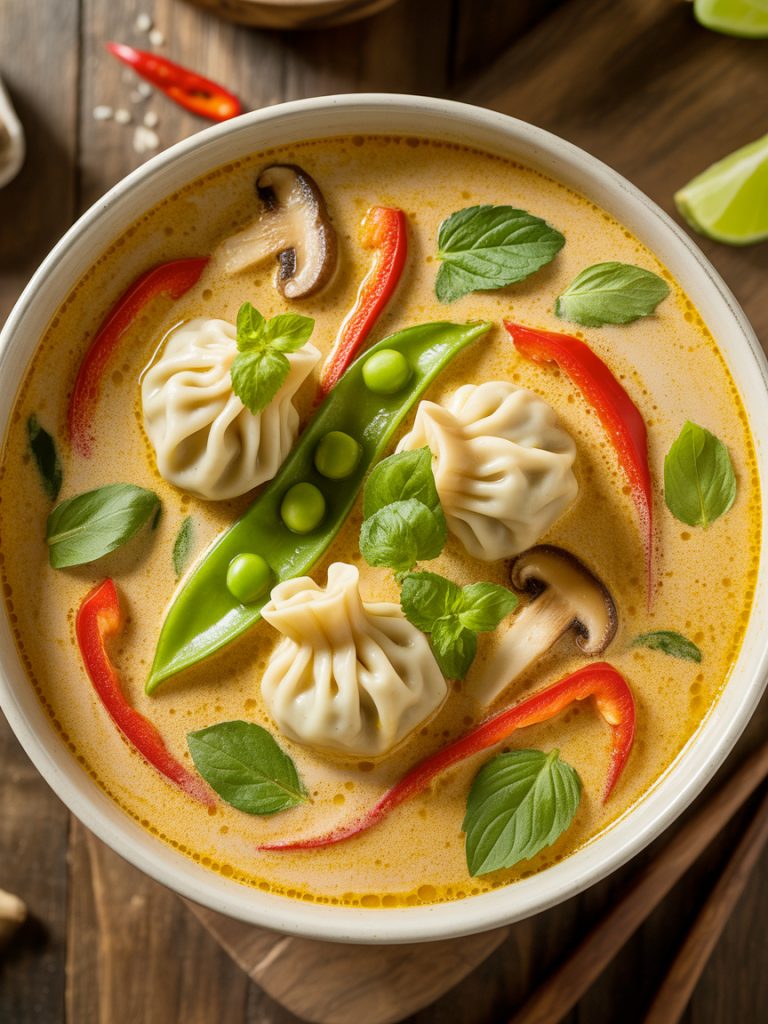

So here’s a weird confession: I’ve always been torn between ordering Thai coconut curry soup and Chinese dumpling soup at Asian restaurants. Both are amazing, but choosing between them felt like Sophie’s Choice for comfort food lovers.
Then one day I had a lightbulb moment—why not combine them? Thai coconut curry broth with dumplings floating in it. Sounds weird, tastes absolutely incredible. The dumplings soak up all that aromatic coconut curry goodness, and suddenly you’re eating the best fusion comfort food you never knew you needed.
I tested this on my most skeptical friend (the one who thinks fusion food is “trying too hard”), and even she went back for seconds. The combination just works—the creamy, spicy, aromatic curry broth pairs perfectly with tender dumplings. Now I make this all the time because it feels special and exotic but comes together in 30 minutes with mostly store-bought shortcuts. 🙂
Why You’ll Love This Recipe
Best of Both Worlds: Thai Flavors + Dumpling Comfort You get the aromatic, creamy, spicy elements of Thai coconut curry soup plus the satisfying, pillowy comfort of dumplings. It’s fusion done right—both elements enhance each other instead of competing.
Rich Coconut Curry Broth That’s Incredibly Aromatic The combination of coconut milk, curry paste, ginger, garlic, and lemongrass creates a broth that smells amazing while cooking and tastes even better. Every spoonful is packed with layers of flavor.
Store-Bought Dumplings Make It Easy No need to make dumplings from scratch (unless you want to!). Frozen dumplings from the Asian grocery store or regular supermarket work perfectly. This is a shortcut I fully endorse.
Ready in 30 Minutes From start to finish, this soup comes together fast. The broth builds quickly, the dumplings cook in minutes, and you’re done. Perfect for weeknights when you want something special without spending hours cooking.
Customizable Spice Level Control the heat by choosing mild, medium, or hot curry paste and adjusting the amount you use. This soup can be gentle and family-friendly or punchy and spicy—whatever you prefer.
Feels Exotic But Uses Accessible Ingredients Most ingredients are available at regular grocery stores. Even if you need to hit an Asian market for the dumplings or lemongrass, everything else is mainstream. You’re not hunting down impossible-to-find items.
Ingredients
For the Coconut Curry Broth:
- 1 tablespoon coconut oil or vegetable oil
- 3 cloves fresh garlic, minced
- 1 tablespoon fresh ginger, minced
- 2-3 tablespoons Thai red curry paste (adjust to taste)
- 2 cans (14 oz each) full-fat coconut milk
- 3 cups chicken or vegetable broth
- 1 stalk lemongrass, bruised and cut into 3-inch pieces (or 1 tsp lemongrass paste)
- 2 tablespoons fish sauce (or soy sauce for vegetarian)
- 1 tablespoon brown sugar or palm sugar
- 2 kaffir lime leaves (optional but adds authentic flavor)
For the Soup:
- 20-24 frozen dumplings (pork, chicken, shrimp, or vegetable)
- 1 lb chicken breast or thighs, cut into bite-sized pieces (optional, for protein)
- 8 oz mushrooms, sliced (shiitake or button)
- 1 red bell pepper, thinly sliced
- 1 cup snap peas or snow peas
- Juice of 2 limes (about 3-4 tablespoons)
- Salt to taste
For Garnish:
- Fresh cilantro, chopped
- Fresh Thai basil leaves (or regular basil)
- Fresh mint leaves
- Lime wedges
- Sliced red chilies or chili oil
- Green onions, sliced
- Bean sprouts (optional)
Key Ingredient Notes:
Full-Fat Coconut Milk is Essential: Don’t use light coconut milk—it’s watery and won’t give you that rich, creamy texture. Shake the can well before opening since the cream separates. Thai Kitchen and Chaokoh are reliable brands.
Thai Curry Paste: Red curry paste is most common and has medium heat. Yellow is milder and slightly sweeter. Green is spiciest. All work in this recipe—choose based on your heat preference. Find it in the international aisle.
Store-Bought Dumplings: Frozen dumplings from the Asian grocery store are best (bigger selection), but mainstream supermarkets carry them too. Pork, chicken, shrimp, or vegetable dumplings all work. Potstickers, gyoza, or wontons—any style works.
Lemongrass: Fresh lemongrass adds authentic Thai flavor. Bruise it (whack it with the back of a knife) to release oils. Remove before serving—it’s not meant to be eaten. Lemongrass paste is a convenient substitute (1 teaspoon = 1 stalk).
Fish Sauce: This adds that essential umami depth to Thai soup. It smells funky in the bottle but tastes amazing in the dish. For vegetarian, use soy sauce instead (not quite the same but still good).
Kaffir Lime Leaves: These add a distinctive citrusy aroma that’s very Thai. They’re optional but worth seeking out at Asian markets. Remove before serving like bay leaves.
Step-by-Step Instructions
Step 1: Build the Aromatic Curry Base
Heat the coconut oil in a large pot or Dutch oven over medium heat. Add the minced garlic and ginger, sautéing for about 1-2 minutes until fragrant. Your kitchen should start smelling incredible.
Add the Thai curry paste and stir it into the oil, garlic, and ginger. Cook for 1-2 minutes, stirring constantly. This “blooms” the curry paste and releases all those aromatic oils and spices.
Step 2: Create the Coconut Curry Broth
Pour in the coconut milk and chicken broth, stirring well to incorporate the curry paste completely. The liquid should turn a beautiful orange-red color (or yellow/green depending on your curry paste).
Add the bruised lemongrass stalks, kaffir lime leaves (if using), fish sauce, and brown sugar. Stir everything together.
Bring the mixture to a gentle boil, then reduce heat to medium-low and let it simmer for about 10 minutes. This allows all the flavors to meld together and the aromatics to infuse the broth.
Step 3: Add Protein and Vegetables
If using chicken, add the bite-sized pieces now and simmer for about 5-7 minutes until cooked through (165°F internal temperature).
Add the mushrooms, bell pepper, and snap peas. Let them simmer for another 3-4 minutes until the vegetables are tender-crisp. You want them cooked but still with some bite.
Step 4: Cook the Dumplings Perfectly
Add the frozen dumplings directly to the soup—no need to thaw them first. Bring the soup back to a gentle boil and cook the dumplings according to package directions, usually about 5-7 minutes.
The dumplings will float to the surface when they’re done. Stir gently and occasionally to prevent them from sticking to the bottom of the pot.
Step 5: Balance the Flavors
This is the crucial step for Thai cooking. Remove the lemongrass stalks and kaffir lime leaves. Stir in the fresh lime juice.
Taste the soup and adjust the flavors:
- Too bland? Add more fish sauce (½ teaspoon at a time)
- Not spicy enough? Add more curry paste or fresh sliced chilies
- Too spicy? Add more coconut milk or sugar
- Needs brightness? Add more lime juice
- Needs sweetness? Add a bit more sugar
The soup should taste balanced—creamy, spicy, tangy, savory, and slightly sweet all at once. That’s the hallmark of good Thai cooking.
Step 6: Garnish and Serve
Ladle the soup into bowls, making sure each bowl gets a good mix of dumplings, vegetables, and broth.
Garnish generously with fresh cilantro, Thai basil, mint leaves, sliced green onions, and lime wedges. Add sliced red chilies or a drizzle of chili oil if you want extra heat.
Serve immediately while hot. Encourage everyone to squeeze extra lime juice over their bowls—it makes a huge difference.
Serving Suggestions
Fresh Herb Garnishes (Essential!) Don’t skip the fresh herbs—they’re not just decoration. Thai basil, cilantro, and mint add brightness and complexity. Tear or roughly chop them and pile them on generously.
Lime Wedges for Brightness Extra lime juice at the table is essential. Thai food should have that bright, citrusy punch. Let everyone add as much as they want.
Extra Chili Oil or Sriracha Set out chili oil, sriracha, or sambal oelek for people who want more heat. Thai food is all about customization.
Rice or Noodles Option While the dumplings make this substantial, you can serve it over jasmine rice or with rice noodles added to the bowl. The broth is so good you’ll want something to soak it all up.
Making It a Complete Asian Meal Start with spring rolls or fresh summer rolls, serve this soup as the main course, and finish with mango sticky rice or coconut ice cream. Add Thai iced tea or a crisp white wine.
Side of Pickled Vegetables Quick-pickled cucumbers or radishes add a crunchy, tangy contrast to the rich soup. Very traditional in Thai cuisine.
Storage Tips
Refrigeration
Store leftover soup in an airtight container in the fridge for up to 3 days. The flavors intensify overnight, so leftovers are delicious.
Storing Dumplings Separately (Best Practice)
For the best texture, store the broth and dumplings separately. The dumplings can get mushy if they sit in the liquid too long. Reheat the broth, then add the dumplings and heat just until warm.
If you don’t want to deal with that, just store everything together—it’s still good, the dumplings just won’t be quite as perfectly textured.
Reheating Without Overcooking Dumplings
Reheat gently on the stovetop over medium-low heat. Don’t boil it hard or the dumplings can burst or get mushy. Heat just until everything is warm.
Microwave works for individual portions but be careful not to overheat—use 50% power and heat in 1-minute intervals, stirring between each.
Freezing Considerations
The soup base (before adding dumplings) freezes well for up to 2 months. Freeze the coconut curry broth, then when ready to serve, thaw, reheat, and add fresh dumplings.
Don’t freeze the finished soup with cooked dumplings—they get mushy and weird when frozen and thawed. Always add fresh dumplings when reheating frozen soup base.
Make-Ahead Strategy
Make the coconut curry broth (through Step 2) up to 2 days ahead and store in the fridge. When ready to serve, reheat the broth, add the vegetables, protein, and fresh dumplings. This gives you most of the work done ahead but maintains the best dumpling texture.
Final Thoughts
Here’s what I love about Coconut Curry Soup with Dumplings: it’s proof that fusion food doesn’t have to be pretentious or complicated. Sometimes the best ideas are just “what if I combined these two things I love?” This is one of those happy accidents that turned into a regular in my rotation.
The aromatic coconut curry broth is everything you want from Thai soup—creamy, spicy, tangy, complex. The dumplings add that comforting, satisfying element that makes it feel like a complete meal. Together, they’re greater than the sum of their parts.
I love that this recipe looks and tastes impressive but is secretly easy. Store-bought dumplings are a shortcut I’m never ashamed of, and the soup base comes together fast with simple ingredients. It’s the kind of recipe that makes you feel like an adventurous cook without requiring culinary school.
Give this a try and let me know what you think! Tag me on Instagram or Pinterest with your fusion soup creations. And if you come up with your own variations—different dumplings, creative vegetables, unique garnishes—share them in the comments. Fusion food is all about experimentation.
Now go make some aromatic, comforting, cross-cultural magic in your kitchen. This one’s special.
Happy cooking!
— Kip
Coconut Curry Soup with Dumplings (Thai-Inspired Comfort!)
Description
Coconut Curry Soup with Dumplings is a beautiful fusion of Thai coconut curry flavors and the comforting satisfaction of dumpling soup. Rich, creamy coconut milk infused with Thai curry paste, ginger, and lemongrass creates an aromatic broth that's perfectly balanced with tender dumplings, fresh vegetables, and vibrant herbs. This recipe uses convenient store-bought dumplings to make it weeknight-easy while delivering restaurant-quality Thai-inspired flavors. The combination is unexpectedly perfect—the pillowy dumplings soak up the fragrant curry broth, creating a bowl of pure comfort with an exotic twist.
Ingredients
For the Broth:
For the Soup:
For Garnish:
Instructions
-
Heat coconut oil in large pot over medium heat. Add garlic and ginger, sauté 1-2 minutes until fragrant. Add curry paste and cook 1-2 minutes, stirring constantly.
-
Pour in coconut milk and broth, stirring to incorporate curry paste. Add lemongrass, kaffir lime leaves, fish sauce, and sugar. Bring to gentle boil, reduce heat, simmer 10 minutes.
-
If using chicken, add now and simmer 5-7 minutes until cooked through (165°F). Add mushrooms, bell pepper, and snap peas. Simmer 3-4 minutes until tender-crisp.
-
Add frozen dumplings. Bring back to gentle boil and cook per package directions (usually 5-7 minutes) until dumplings float. Stir occasionally.
-
Remove lemongrass and lime leaves. Stir in lime juice. Taste and adjust flavors (add more fish sauce for salt, curry paste for heat, lime for brightness, sugar for balance).
-
Ladle into bowls. Garnish generously with cilantro, basil, mint, green onions, lime wedges, and chilies.
Note
Vegetarian/Vegan: Use vegetable broth, soy sauce instead of fish sauce, and vegetable dumplings. Skip chicken or use tofu.
Spice Levels: Mild = 1-2 tbsp curry paste; Medium = 2-3 tbsp; Spicy = 3-4 tbsp