
If you have ever eaten a stack of regular pancakes for breakfast and then wondered why you were hungry again an hour later, you already understand the problem I was trying to solve.
Traditional pancakes are essentially a vehicle for sugar and butter — delicious, absolutely, but not exactly the kind of breakfast that sets you up for a productive morning.
I spent a long time chasing the perfect pancake. Something fluffy and satisfying, something that actually tasted like a real breakfast treat, but without the inevitable crash that follows most syrup-soaked stacks.
I tried oat pancakes, banana pancakes, protein powder pancakes. Some were fine. Most were disappointing. A few were genuinely awful.
Then I stumbled onto cottage cheese pancakes and everything changed. The cottage cheese melts completely into the batter, creating a texture that is somehow fluffier and more tender than anything flour and milk alone can produce.
The protein content is legitimately impressive. And the flavor — light, slightly sweet, with golden crispy edges — is exactly what breakfast should taste like. These have been my weekend morning staple ever since, and I am fairly confident they are about to become yours too.
For the Pancakes:
For Serving:
Key Notes:
Cottage Cheese — Full fat cottage cheese is the way to go here. It creates a richer, creamier batter and produces a noticeably better texture in the finished pancake. Low fat cottage cheese tends to make the batter looser and the pancakes less substantial. If you do not love the texture of cottage cheese curds, blend the batter until completely smooth — the curds disappear entirely and you get a silky, uniform batter that produces beautifully even pancakes.
Eggs — Two large eggs bind the batter and contribute to the fluffy, light texture. Make sure they are at room temperature before you start — cold eggs straight from the fridge can make the batter slightly uneven and affect how the pancakes cook.
Flour — All purpose flour gives you the best structure and texture here. You can substitute a one to one gluten free flour blend if you need a gluten free option and the results are very close to the original. Almond flour also works but produces a slightly denser, more delicate pancake that requires a little more care when flipping.
Baking Powder — This is what gives the pancakes their lift and fluffiness. Make sure yours is fresh — baking powder loses its potency over time and old baking powder is one of the most common reasons pancakes come out flat and dense. If yours has been sitting in the cabinet for more than six months, it is worth replacing before you make this recipe.
Vanilla Extract — A full teaspoon of vanilla adds a warmth and sweetness to the batter that elevates the whole flavor profile. Pure vanilla extract is noticeably better than imitation here — the flavor is cleaner and more complex. If you happen to have vanilla bean paste, use that instead for an even more pronounced vanilla flavor.
Sugar — One tablespoon of sugar is optional but I genuinely recommend it. It adds just enough sweetness to the batter so the pancakes taste complete even without any toppings, and it helps the edges caramelize to that gorgeous golden color. Leave it out if you are watching your sugar intake and compensate with a little extra vanilla.
Butter for Cooking — Butter gives you the best flavor and the most beautiful golden color on the outside of the pancakes. Use a medium heat and let the butter melt fully before adding the batter. If the butter starts to brown too quickly, reduce the heat slightly — burnt butter will give the pancakes a bitter edge that you do not want.
Step 1 — Make the Batter
Add the cottage cheese, eggs, flour, baking powder, vanilla extract, sugar, and salt to a blender. Blend on medium speed for about 30-45 seconds until the batter is smooth and well combined with no visible cottage cheese curds remaining.
If you do not have a blender, whisk everything together vigorously in a large bowl. The batter will have visible cottage cheese curds in it, which is completely fine — the pancakes will still taste great, just with a slightly more rustic texture. Both methods work, but blending gives you the smoothest, most consistent result.
Let the batter rest for 2-3 minutes after blending. This gives the baking powder time to activate slightly and the batter time to settle, which helps the pancakes rise more evenly when they hit the pan.
Step 2 — Heat the Pan
Place a non-stick skillet or griddle over medium heat. Add about half a teaspoon of butter and let it melt completely, tilting the pan to coat the surface evenly.
You want the pan properly preheated before the batter goes in. To test if it is ready, drop a tiny amount of batter into the pan — it should sizzle gently on contact. If it splatters aggressively, your heat is too high. If nothing happens, give it another minute.
Step 3 — Cook the Pancakes
Pour the batter into the pan in rounds of about 3 tablespoons each — roughly the size of a standard cookie. These pancakes are intentionally smaller and thicker than traditional pancakes, which is what gives them their characteristic fluffy texture and golden exterior.
Cook the first side for about 2-3 minutes. Watch for bubbles forming on the surface of the batter and the edges looking set and no longer shiny — that is your signal that they are ready to flip. Do not rush the flip. Flipping too early is the number one reason cottage cheese pancakes fall apart.
Flip gently with a thin spatula and cook the second side for another 1-2 minutes until golden. Transfer to a plate and repeat with the remaining batter, adding a small amount of fresh butter to the pan between each batch.
Step 4 — Plate and Serve
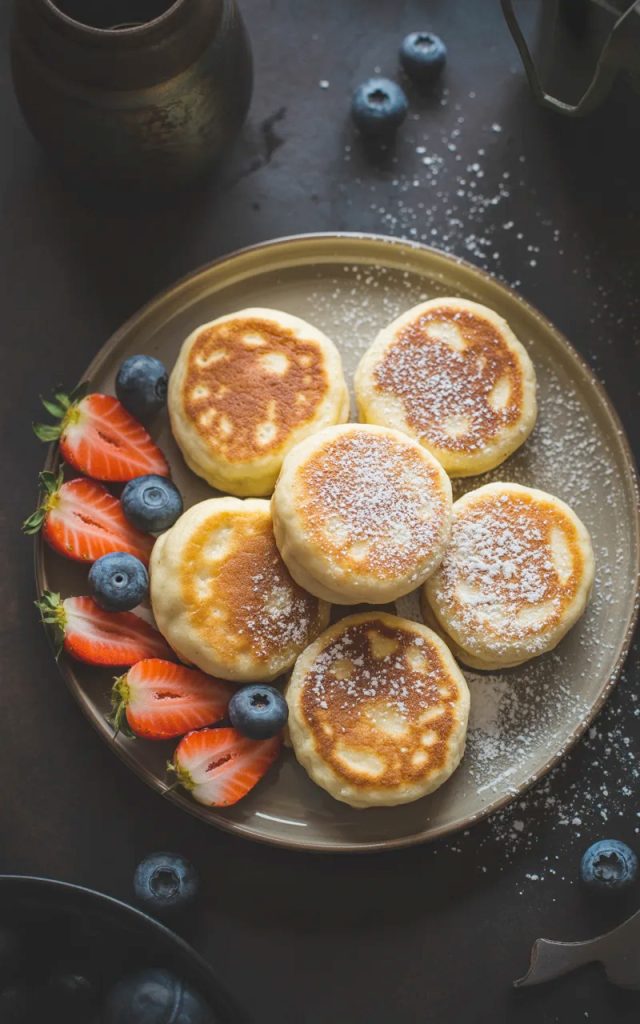
Stack the pancakes on a plate and dust generously with powdered sugar. Add fresh sliced strawberries and blueberries to the side of the plate. Serve immediately while the pancakes are still warm and the edges are still slightly crispy.
A light drizzle of maple syrup or honey takes things to the next level if you want that classic pancake experience, but honestly these are so flavorful on their own that the toppings are purely optional.
The classic presentation with powdered sugar and fresh berries is hard to beat and honestly requires zero effort. The brightness of the strawberries and blueberries against the golden pancakes is as visually appealing as it is delicious.
For a more indulgent weekend breakfast, drizzle warm maple syrup over the stack and add a small pat of butter on top while the pancakes are still hot. The butter melts down through the stack and the combination of flavors is exactly what Saturday morning is supposed to taste like.
If you want to take these in a savory direction — and yes, that is absolutely a thing you can do — skip the sugar and vanilla in the batter, season with a pinch of garlic powder and black pepper, and serve with a dollop of sour cream and fresh chives on top. It is a completely different experience but just as good.
For a higher protein breakfast bowl situation, serve the pancakes alongside a few scrambled eggs and some sliced avocado. You get a complete, balanced breakfast that covers every nutritional base and actually keeps you going all morning.
In the Fridge — Let the pancakes cool completely before storing. Stack them with a small piece of parchment paper between each pancake to prevent sticking, then transfer to an airtight container. They keep well in the fridge for up to 4 days.
In the Freezer — These pancakes freeze beautifully, which makes them a fantastic meal prep option. Cool completely, layer with parchment paper, and store in a freezer-safe bag or container for up to 2 months. Pull out however many you need the night before and let them thaw in the fridge overnight.
Reheating — For the best texture, reheat in a dry non-stick skillet over medium-low heat for about 1-2 minutes per side. This brings back the crispy edges and warms the interior evenly. The microwave works in a pinch — heat in 20-second intervals on medium power — but you will lose those golden crispy edges, which is honestly most of the joy.
Meal Prep Tip — Double the batter and make a full batch on Sunday. Stack and freeze individual portions and you have a high protein breakfast ready to go every morning of the week. Reheat in the skillet while your coffee brews and breakfast is done before you even have time to check your phone. FYI, this is one of the best weekly meal prep habits you can build.
Look, I have made a lot of pancakes in my kitchen. A lot. And these cottage cheese pancakes have quietly worked their way to the top of the list in a way that I genuinely did not see coming when I first made them.
They are fast, they are easy, the ingredient list is short, and they deliver a breakfast experience that actually holds up — in flavor, in texture, and in how you feel two hours later. That combination is rarer than it should be, and when you find it, you hold onto it.
Make these on a Saturday morning, dust them with powdered sugar, pile on the berries, and eat them while they are still warm. That is the move. And when you do, drop a comment below and let me know what you think — or what mix-ins you tried. I read every single one.
Happy cooking.
— Kip
These cottage cheese pancakes are light, fluffy, and golden on the outside with a soft, tender interior that regular pancakes honestly cannot compete with. Made with just a handful of simple ingredients and ready in 20 minutes, they deliver serious protein in every stack and keep you full for hours. Top them with fresh berries and a dusting of powdered sugar and you have got a breakfast that feels indulgent but is actually good for you.