
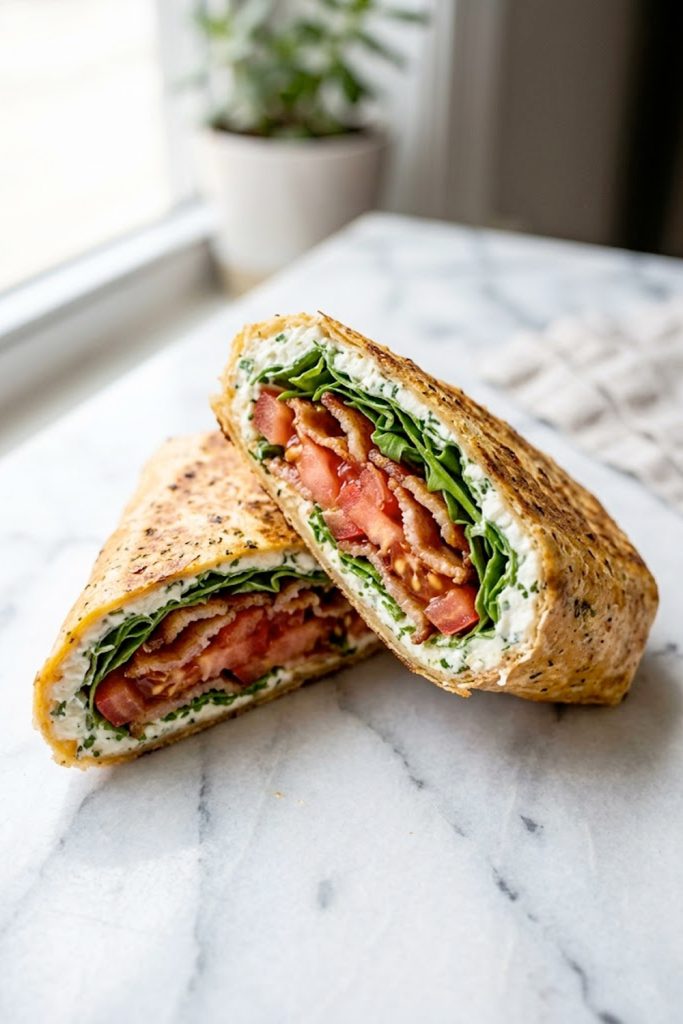
Look — I have seen a lot of viral food trends come and go. Cloud bread. Cauliflower everything. Banana oat cookies that taste exactly like what you imagine banana oat cookies would taste like. So when cottage cheese wraps started showing up everywhere I was, to put it mildly, unconvinced.
A wrap made from blended cottage cheese and eggs? Baked in the oven? That holds together and tastes good? Sure. Right. Absolutely.
Then I made them. And I genuinely could not believe how well they worked. The texture is slightly chewy, slightly crispy at the edges, and flexible enough to fold without cracking. They taste mild and creamy — almost like a very thin omelette meets a flatbread — and they hold up to fillings without falling apart. FYI, I have made them at least a dozen times since that first batch and I have zero regrets. This one is the real deal.
For the cottage cheese wrap:
For the BLT filling shown in the pin:
Step 1: Preheat your oven
Preheat your oven to 350 degrees F (175 degrees C). Line a large baking sheet with parchment paper and lightly spray it with cooking spray. This step is non-negotiable — the wrap will stick to an unlined pan and you will not get it off in one piece.
Step 2: Blend the wrap mixture
Add the cottage cheese and eggs to a blender or food processor. Blend on high for about 30 to 45 seconds until the mixture is completely smooth with no visible curds remaining. Add the garlic powder, onion powder, salt, pepper, and any chopped herbs. Blend for another 10 seconds to combine. The mixture should look like a smooth, slightly thick pancake batter.
Step 3: Pour and spread
Pour the blended mixture onto the center of your prepared baking sheet. Using a spatula or the back of a spoon, spread it out into a thin, even rectangle or oval shape — roughly 10 by 12 inches. The thinner and more even you spread it, the better the texture and the more flexible the final wrap will be. Aim for an even thickness throughout so it bakes uniformly.
Step 4: Bake
Place the baking sheet in the preheated oven and bake for 25 to 30 minutes. The wrap is ready when the edges are golden brown and slightly pulled away from the parchment paper, the surface looks dry and set rather than wet or glossy, and the center feels firm when you gently press it. Do not rush this step — an underbaked wrap will tear when you try to fold it.
Step 5: Cool before peeling
This is the step most people rush and then regret. Let the wrap cool on the baking sheet for at least 5 to 8 minutes before attempting to peel it off the parchment paper. Once it has cooled slightly, peel it away from the parchment gently and carefully — it should come off cleanly in one piece. If it tears at the edges, give it another minute or two to cool.
Step 6: Cook the bacon
While the wrap is cooling, cook your bacon strips in a skillet over medium-high heat until properly crispy. Drain on paper towels. Crispy bacon is important here — limp bacon releases moisture inside the wrap and makes everything soggy.
Step 7: Assemble the wrap
Place the cooled wrap on a clean surface. Spread the cream cheese or cottage cheese spread across one half of the wrap. Layer the crispy bacon strips, fresh tomato slices, and arugula or lettuce on top of the spread. Season with a little salt and black pepper. Fold the wrap in half over the filling. Press gently to hold it together.
Step 8: Optional — toast for a crispy finish
For an extra layer of texture, place the folded wrap in a dry skillet or sandwich press over medium heat for 1 to 2 minutes per side until golden grill marks appear on the outside. This step is optional but it takes the wrap to a completely different level — crispy on the outside, creamy and fresh on the inside.
Step 9: Slice and serve
Cut the wrap in half diagonally and serve immediately. The cross section reveals all those beautiful layers inside and trust me — it looks as good as it tastes.
Baked wraps — refrigerator: Store baked, unfilled cottage cheese wraps stacked between sheets of parchment paper in an airtight container or zip-lock bag in the fridge for up to 4 days. They stay flexible and peel apart easily when stored this way.
Baked wraps — freezer: These wraps freeze really well. Stack them with parchment paper between each one, wrap the stack tightly in foil, and freeze for up to 2 months. Thaw at room temperature for about 15 minutes before filling and eating or warming in a skillet.
Assembled wraps: Once filled, these are best eaten immediately. The moisture from the tomato and greens will start to soften the wrap if it sits for too long. If you need to take one to go, wrap it tightly in foil and eat within a few hours.
Reheating: Warm unfilled wraps in a dry skillet over medium heat for about 1 minute per side or pop them in a toaster oven for 3 to 4 minutes until warmed through and slightly crispy again.
I know — cottage cheese wrap sounds like diet food. It sounds like the kind of thing you eat while staring sadly at someone else's sandwich. But I promise you, that is not what this is.
This is a genuinely good wrap that happens to be high in protein and low in carbs. It holds together, it tastes great, and it makes lunch feel like something worth looking forward to rather than something you just get through. Give it a try this week and let me know what you filled yours with.
Drop a comment below, share it on Pinterest, or tag me in your version — I love seeing the creative fillings people come up with. Happy cooking — Kip.
These cottage cheese wraps are made from just cottage cheese and eggs, blended smooth and baked into a golden, flexible wrap that holds together beautifully. High in protein, low in carbs, and completely gluten free — fill them with crispy bacon, fresh tomato, and greens for a lunch that feels indulgent but is anything but.