
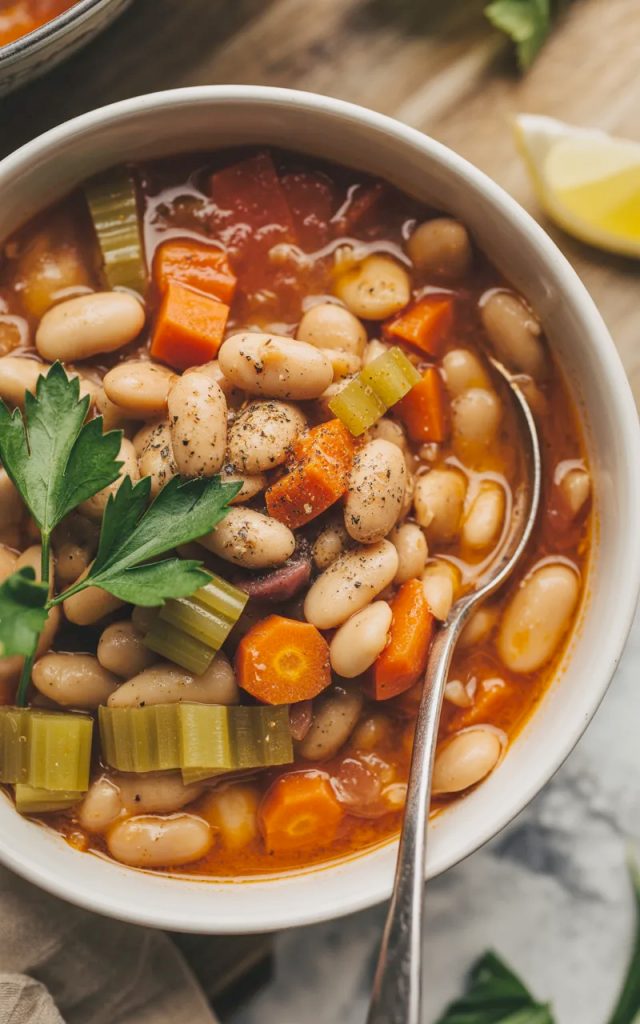
Here's the thing about Greek food—it doesn't need to be fancy to be absolutely delicious. Case in point: fasolatha. It's literally just beans, vegetables, and olive oil, but somehow it's become Greece's national dish. That should tell you something.
I first made this soup on one of those weeks where my budget was tight and my fridge was looking pretty sad. I had dried beans in the pantry, some carrots and celery that needed using up, and honestly not much else. What I ended up with was this incredibly satisfying bowl of soup that felt nourishing in a way that went beyond just filling my stomach.
The Greeks have been making fasolatha for centuries, and there's a reason it's stuck around. It's simple, healthy, ridiculously cheap to make, and somehow manages to be both comforting and light at the same time. Plus, it's accidentally vegan, which means everyone at your table can enjoy it without modifications. Win-win.
Authentically Greek – This isn't some Americanized version with a bunch of extra stuff thrown in. It's the real deal—simple, traditional, and exactly how Greek grandmothers have been making it for generations. Sometimes the classics just get it right.
Surprisingly satisfying – I know what you're thinking: "It's just bean soup, how filling can it be?" Trust me on this one. The combination of protein-rich beans and vegetables in that flavorful broth is incredibly satisfying. You won't be hunting for snacks an hour later.
Actually healthy – High in protein and fiber, low in fat, packed with vegetables, and full of nutrients. This is the kind of food that makes your body happy while tasting good enough that you forget you're eating healthy. The Mediterranean diet in action, folks.
Budget superstar – Dried beans cost basically nothing. Add some vegetables, olive oil, and pantry staples, and you've got enough soup to feed a crowd for less than ten bucks. When money's tight, this soup has your back.
Allergy-friendly – Naturally vegan, gluten-free, dairy-free, and nut-free. It's basically the unicorn of soup recipes—everyone can eat it without modifications. Makes potlucks and family dinners so much easier.
Meal prep champion – This soup actually gets better over the next few days as the flavors develop. Make a big batch on Sunday and you've got lunches sorted for the week. Plus it freezes beautifully.
White Beans: Great Northern beans are traditional, but cannellini or navy beans work perfectly. All three cook at about the same rate and have that creamy texture you want. Avoid using red or black beans—they'll change the whole character of the soup.
Dried vs. Canned: I usually use dried beans because they're cheaper and have better texture, but canned beans work in a pinch. If using canned, you'll need three 15-oz cans, drained and rinsed. Your cooking time drops to about 30 minutes total.
Olive Oil: This is important—don't skimp or substitute. Good olive oil is a key flavor component in Greek cooking. You're not just cooking with it; it's actually part of the dish's flavor profile.
Tomatoes: Crushed tomatoes give you a smoother, more integrated tomato flavor. Diced tomatoes work too and give you more texture. Fire-roasted adds a nice depth if you can find them.
Broth vs. Water: Vegetable broth adds more flavor, but traditional fasolatha often uses just water—the beans and vegetables create their own rich broth. I usually do half and half.
Vegetables: The carrot-celery-onion combo is pretty standard, but you can add diced bell peppers or a small diced potato if you want. Just keep it simple—this isn't meant to be a vegetable dumping ground.
First things first: your beans. If using dried beans, sort through them and remove any debris or weird-looking beans. Rinse them well under cold water.
Here's where people get religious about soaking: some swear by overnight soaking, others say it's unnecessary. I'm team overnight soak because it reduces cooking time and makes the beans more digestible (less, uh, gassy situations). Put your beans in a large bowl, cover with cold water by about 3 inches, and let them hang out overnight. In the morning, drain and rinse.
If you forgot to soak (we've all been there), you can do a quick soak: put beans in a pot, cover with water, bring to a boil for 2 minutes, then remove from heat and let sit for an hour. Drain and proceed.
Get all your vegetables diced and your aromatics prepped. Everything should be roughly the same size—about ½-inch dice works well.
Heat the olive oil in a large pot or Dutch oven over medium heat. Once it's shimmering (but not smoking), add your diced onion, carrots, and celery.
Sauté for about 8-10 minutes, stirring occasionally, until the vegetables soften and the onion becomes translucent. You're building the flavor foundation here, so let them actually cook—don't rush it.
Add the minced garlic and stir constantly for about 30 seconds until it smells incredible. Be careful not to burn the garlic; burned garlic is bitter and will ruin your soup's vibe.
Stir in your tomato paste and cook it for about a minute, stirring constantly. This caramelizes the paste slightly and intensifies the tomato flavor—it's a small step that makes a big difference.
Add the crushed tomatoes, oregano, and thyme. Give everything a good stir so the herbs get distributed evenly. Let this mixture cook together for about 3-4 minutes. Your kitchen should be smelling absolutely amazing at this point.
Add your drained, soaked beans to the pot along with the vegetable broth, water, and bay leaves. Stir everything together.
Bring the whole thing to a boil over high heat, then immediately reduce to a gentle simmer. This is important—don't let it boil aggressively or your beans might burst and get mushy.
Partially cover the pot (leave the lid slightly ajar so steam can escape) and let it simmer gently for about 1 to 1.5 hours. The exact time depends on your beans' age and how long you soaked them. You'll know they're done when the beans are tender and creamy inside but still hold their shape.
Check on the soup every 20 minutes or so. Give it a stir and add more water if it's looking too thick. The soup should be brothy but substantial—not watery, not stew-like.
Once your beans are tender, remove the bay leaves (important—nobody wants to bite into a bay leaf).
Season with salt and pepper. Start with the amounts listed and adjust to taste. This is crucial because beans absorb a lot of salt, so what tastes under-seasoned now might be perfect after sitting.
Let the soup simmer for another 5 minutes after seasoning so everything comes together.
If you want a thicker, creamier soup, use a potato masher or the back of a spoon to mash some of the beans against the side of the pot. Stir it back in—this thickens the broth naturally and makes it extra comforting.
Ladle into bowls, garnish with fresh chopped parsley, and serve with lemon wedges on the side. A squeeze of fresh lemon right before eating brightens everything up beautifully. Don't skip this step—it really makes the soup sing.
Fasolatha is traditionally served as a main course, but here's how to make it even better:
Crusty bread – Essential for soaking up that delicious broth. Greeks often serve this with rustic village bread, but any crusty bread works. Toast it and rub with garlic if you're feeling fancy.
Greek olives – A small bowl of Kalamata olives on the side adds a nice briny contrast to the soup's richness.
Fresh lemon – Seriously, don't skip the lemon wedges. A squeeze of fresh lemon juice right before eating transforms the soup. It adds brightness and brings all the flavors to life.
Extra virgin olive oil drizzle – A final drizzle of good quality olive oil on top is very Greek and very delicious.
Feta cheese – Okay, this makes it non-vegan, but crumbled feta on top is amazing if you eat dairy. Just saying.
Greek salad – A simple salad with tomatoes, cucumbers, onions, and olives rounds out the meal perfectly.
Red wine vinegar – Some people like a splash of red wine vinegar in their bowl instead of lemon. Try both and see what you prefer.
Store leftover fasolatha in an airtight container in the fridge for up to 5 days. This is one of those soups that actually improves after a day or two—the flavors meld together and deepen.
The soup will thicken considerably as it sits because the beans continue absorbing liquid. This is totally normal. Just add a splash of water or broth when reheating to get it back to your desired consistency.
This soup freezes beautifully for up to 3 months. I usually portion it into individual containers for easy grab-and-go lunches.
Let the soup cool completely before freezing. Leave about an inch of headspace in your containers since liquids expand when frozen.
FYI: The texture holds up perfectly after freezing, unlike cream-based soups. This is one of the benefits of plant-based soups.
From the fridge: Reheat on the stovetop over medium heat, stirring occasionally. Add water or broth to thin if needed. Takes about 7-10 minutes.
From frozen: Thaw overnight in the fridge first, then reheat as above. Or reheat directly from frozen on low heat—just be patient and stir frequently. It'll take about 20 minutes.
Microwave: Transfer to a microwave-safe bowl and heat in 90-second intervals, stirring between each, until hot throughout. Add a splash of water if it's too thick.
Always taste and adjust seasoning after reheating. You might need a pinch more salt or a squeeze of fresh lemon to wake everything up.
Look, I'm not going to claim that a simple bean soup will solve all your problems. But I will say this: there's something deeply satisfying about making food that's been nourishing people for literally centuries.
When I started cooking my way through difficult times five years ago, recipes like fasolatha became anchors for me. They reminded me that good food doesn't have to be complicated or expensive. Sometimes the most satisfying meals come from the humblest ingredients—just beans, vegetables, and a little care.
This soup has become one of my meal prep staples, especially when my budget's tight or I'm trying to eat healthier. It's proof that healthy, plant-based food can be just as comforting and satisfying as anything loaded with cream and cheese. The Greeks figured that out a long time ago.
Kali orexi (bon appétit in Greek)!
– Kip
Fasolatha is Greece's beloved national dish—a simple yet deeply satisfying white bean soup that's been warming hearts (and bellies) for generations. Loaded with creamy white beans, tender vegetables, and aromatic herbs in a rich tomato-based broth, this soup proves that the best comfort food doesn't need meat, dairy, or complicated ingredients. Just honest, wholesome food that tastes like home.