

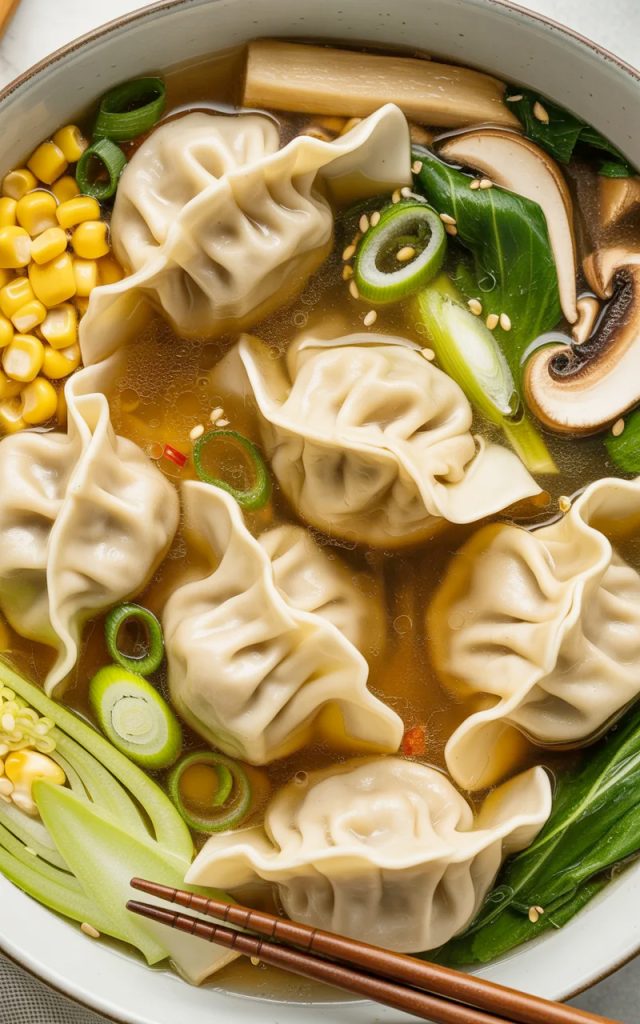

Here’s a confession: I’m obsessed with potsticker soup from my local Chinese restaurant, but ordering it feels ridiculous when I know how easy it is to make at home. Like, why am I paying $12 plus delivery for something I can throw together in 20 minutes?
So I started making this soup whenever the craving hits, and honestly? It’s better than most restaurant versions. You get to control the broth flavor, load it up with vegetables, and use whatever potstickers you love. Plus, the whole thing comes together faster than the delivery driver would even get to your house.
My family requests this constantly now. It’s become our go-to “I don’t feel like cooking but want real food” meal. That’s the beauty of using store-bought potstickers—you’re basically just making fancy broth and letting frozen dumplings do all the heavy lifting.
Why You’ll Love This Recipe
Stupid easy – If you can boil water and open a bag of frozen potstickers, you can make this soup. There’s no complicated technique, no fancy skills required. It’s honestly one of the easiest dinners you’ll ever make.
Twenty minutes, start to finish – That includes prep time. You’re literally going from raw ingredients to steaming bowls of soup in less time than it takes to watch an episode of your favorite show.
Store-bought shortcuts for the win – This recipe embraces the convenience of frozen potstickers, and there’s zero shame in that. They’re delicious, they’re affordable, and they make this soup possible on a busy weeknight.
Restaurant vibes at home – You get that same comforting, savory, aromatic broth you’d get at a good Asian restaurant, but you made it yourself in your pajamas. That’s a win in my book.
Budget-friendly comfort – A bag of frozen potstickers, some broth, and a few vegetables. You’re feeding a family for about $10, which is way less than takeout and tastes just as good (if not better).
Totally customizable – Pork potstickers, chicken, vegetable, shrimp—whatever you like. Add bok choy, mushrooms, noodles, whatever sounds good. This soup is a blank canvas for your cravings.
Ingredients with Key Notes
For the Broth:
- 6 cups chicken broth – Low-sodium gives you control; vegetable broth works for vegetarian
- 2 cups water – To stretch the broth slightly
- 3 cloves garlic, minced – Fresh is essential here
- 1-inch piece fresh ginger, minced – Don’t use ground ginger; fresh is key
- 3 tablespoons soy sauce – Use low-sodium if you’re watching salt; tamari for gluten-free
- 1 tablespoon sesame oil – This is what makes it taste authentically Asian
- 1 tablespoon rice vinegar – Adds brightness and balance
The Star:
- 16-20 frozen potstickers – Any variety you like; pork, chicken, vegetable, shrimp all work
The Vegetables:
- 1 cup baby bok choy, chopped – Adds crunch and freshness; regular bok choy works too
- 1 cup shiitake mushrooms, sliced – Or any mushroom you prefer
- ½ cup corn kernels – Frozen or fresh
- 4-5 green onions, sliced – Use both white and green parts
Flavor Boosters:
- 1 teaspoon chili garlic sauce or sriracha – Optional but adds a nice kick
- 1 teaspoon sugar – Balances the saltiness
- White pepper – More traditional than black pepper for Asian soups
- Salt – To taste
For Serving:
- Extra sliced green onions – For garnish
- Sesame seeds – Toasted if you’re feeling fancy
- Chili oil – For drizzling
- Fresh cilantro – If you’re a cilantro person
Key Notes:
- Don’t thaw the potstickers! Cook them straight from frozen—they hold together better.
- Fresh ginger and garlic are non-negotiable. This is where the flavor comes from.
- Use any type of potstickers you love. I rotate between pork and chicken depending on what’s on sale.
Step-by-Step Instructions
Step 1: Build the Broth
In a large pot, combine the chicken broth and water. Add the minced garlic, minced ginger, soy sauce, sesame oil, rice vinegar, chili garlic sauce (if using), and sugar.
Bring everything to a boil over high heat. Once it’s boiling, reduce the heat to medium and let it simmer for about 5 minutes. This gives the ginger and garlic time to infuse the broth with flavor. Your kitchen should smell absolutely incredible right now.
Step 2: Add the Vegetables
Toss in your sliced mushrooms and let them cook for about 3-4 minutes until they’re tender. Mushrooms add such great umami depth to the broth.
Add the corn and bok choy. Let them cook for another 2-3 minutes. The bok choy will wilt down slightly but should still have some crunch.
Step 3: Add the Potstickers
Here’s the moment of truth. Gently add your frozen potstickers directly to the simmering broth. Don’t thaw them first—frozen potstickers hold together way better when cooked.
Let them cook according to the package directions, usually about 5-7 minutes. They’ll float to the top when they’re done. Stir gently once or twice to make sure they’re not sticking to the bottom of the pot, but don’t stir too much or they might break apart.
Step 4: Finish and Season
Add the sliced green onions (save some for garnish) and let them cook for just a minute until they’re bright and fragrant.
Taste the broth and adjust the seasoning. You might want more soy sauce for saltiness, more rice vinegar for brightness, or a pinch of white pepper for extra flavor. Trust your taste buds here.
Step 5: Serve
Ladle the soup into bowls, making sure each person gets plenty of potstickers. Garnish with extra green onions, sesame seeds, a drizzle of chili oil, and fresh cilantro if you’re using it.
This is one of those soups where the presentation matters—those floating potstickers and the colorful vegetables make it look as good as it tastes.
Serving Suggestions
Classic style: Serve as is with chopsticks and a spoon. Use the chopsticks for the potstickers and vegetables, the spoon for the broth. It’s the traditional way and honestly the most fun.
Add noodles: Drop some fresh ramen noodles, rice noodles, or even spaghetti (in a pinch) into the broth during the last few minutes of cooking. Now you’ve got a fuller, more substantial meal.
Extra protein: Add some thinly sliced cooked chicken, shrimp, or tofu cubes along with the potstickers. More protein never hurt anyone.
Make it spicy: Serve with sriracha, chili oil, or sambal oelek on the side so everyone can customize their heat level. I like mine pretty spicy, but my kids prefer it mild.
Side dishes: Pair with spring rolls, steamed edamame, or cucumber salad with rice vinegar dressing. Keep the Asian theme going.
Crispy element: Serve with crispy wonton strips on top for a fun textural contrast. They get a little soft in the soup, but that’s part of the charm.
Storage Tips
Refrigerator: Let the soup cool completely, then transfer to an airtight container. It’ll keep in the fridge for 3-4 days. Fair warning: the potstickers will absorb a lot of liquid and get softer as they sit. They’re still delicious, just not as firm as when freshly made.
Freezer: This soup doesn’t freeze super well because the potstickers can get mushy when thawed. If you really want to freeze it, I’d suggest freezing just the broth with the vegetables, then cooking fresh potstickers when you reheat it. That way you get the best texture.
Reheating: From the fridge, warm it on the stovetop over medium heat, stirring gently. You’ll definitely need to add extra broth or water since the potstickers absorb so much liquid. Heat it slowly so the dumplings don’t fall apart. Microwave works for individual portions, but be gentle—overheating can make the potstickers explode (yes, really).
Pro tip: If you’re meal prepping, store the potstickers separately from the broth and vegetables. Reheat the broth, then add the potstickers and cook them fresh. Takes an extra few minutes but the texture is so much better.
Best practice: Honestly, this soup is best eaten fresh. Make only what you’ll eat in a day or two, or plan to reheat it knowing the texture will be different.
Final Thoughts
Look, I could pretend this is some sophisticated, from-scratch recipe, but that would be lying. This is glorified convenience food, and I’m not even a little bit ashamed of it.
Sometimes the best cooking is the kind that uses smart shortcuts to get delicious food on the table fast. That’s exactly what this Potsticker Soup does. It’s comforting, it’s flavorful, and it’s ready before you’d even get your takeout order.
So next time you’re craving Asian comfort food but don’t want to order out, grab a bag of frozen potstickers and make this instead. Your taste buds and your wallet will thank you.
Now grab your chopsticks, dig in, and enjoy your homemade “takeout”!
— Kip
Easy Homemade Potsticker Soup (Ready in 20 Minutes!)
Description
This Easy Homemade Potsticker Soup features tender potstickers floating in a flavorful, aromatic broth with fresh vegetables and green onions. It's the ultimate shortcut comfort food—using store-bought potstickers means you get restaurant-quality soup in just 20 minutes. Simple, satisfying, and absolutely delicious.
Ingredients
Broth:
Main:
Garnish:
Instructions
-
Build broth: In a large pot, combine chicken broth, water, garlic, ginger, soy sauce, sesame oil, rice vinegar, chili garlic sauce, and sugar. Bring to a boil, then reduce heat and simmer 5 minutes.
-
Add vegetables: Add mushrooms and cook 3-4 minutes until tender. Add corn and bok choy, cook 2-3 minutes more.
-
Add potstickers: Gently add frozen potstickers to simmering broth. Cook according to package directions, about 5-7 minutes, until they float to the top. Stir gently to prevent sticking.
-
Finish: Add sliced green onions and cook 1 minute. Taste and adjust seasoning with salt, white pepper, or more soy sauce.
-
Serve: Ladle into bowls, making sure each gets plenty of potstickers. Garnish with green onions, sesame seeds, chili oil, and cilantro.
Note
- Use frozen potstickers directly—don't thaw
- Any potsticker variety works (pork, chicken, vegetable, shrimp)
- Use tamari instead of soy sauce for gluten-free
- Fresh ginger and garlic are essential for authentic flavor
- Add rice noodles or ramen for a heartier soup
- Best eaten fresh; potstickers absorb liquid over time
- Substitute vegetable broth for vegetarian version