
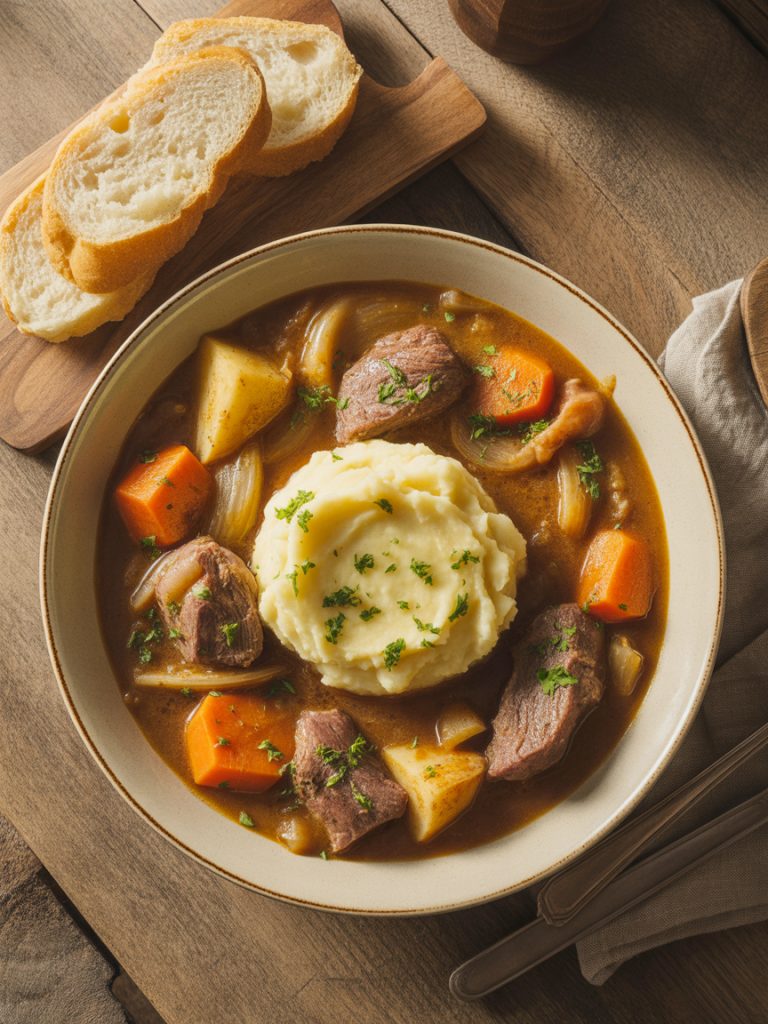
I'll never forget the first time I had real Irish stew. Not the watery, bland version that sometimes passes for it, but the authentic kind—rich, hearty, with meat so tender it fell apart at the touch of a fork, vegetables that had surrendered all their sweetness to the broth, and mashed potatoes so creamy they made me understand why Irish people are passionate about their spuds.
What struck me most was how such simple ingredients could create something so profound. There's no fancy technique here, no expensive ingredients. Just good meat, root vegetables, herbs, and time. That's the magic of Irish cooking—it's honest food that doesn't pretend to be anything other than what it is.
Now I make this whenever the weather turns cold and I need something that feels like it was made by someone's Irish grandmother. The smell alone while it's cooking is worth making it. And here's the best part: it actually tastes better the next day. That's the sign of a truly great stew. :)
Ultimate Comfort Food on Cold Days This is the kind of meal that warms you from the inside out. Rich, hearty, and deeply satisfying, it's what you crave when it's cold and miserable outside. One bowl and you'll understand why Irish people have been making this for centuries.
Simple Ingredients, Incredible Flavor No exotic ingredients or complicated techniques here. Just meat, vegetables, herbs, and patience. The slow simmering does all the work, transforming basic ingredients into something special. This is peasant food at its finest.
Traditional Irish Recipe (Authentic!) This isn't some Americanized version loaded with Guinness and brown sugar. It's the real deal—the way Irish grandmothers have been making it for generations. Simple, honest, and absolutely delicious.
One-Pot Wonder (Almost!) The stew cooks in one pot, and while you do need to make mashed potatoes separately, that's hardly a dealbreaker. Everything else happens in a single Dutch oven, which means less cleanup and more flavor development.
Perfect for Feeding a Crowd This recipe easily feeds 6-8 people and scales up beautifully. It's ideal for St. Patrick's Day gatherings, Sunday dinners, or anytime you're feeding a group. Plus, it's one of those dishes that feels special without requiring a ton of work.
Gets Better the Next Day The flavors deepen and meld overnight, making leftovers even more delicious than the first serving. Make it ahead for easy entertaining or meal prep for the week.
Lamb vs. Beef: Traditional Irish stew uses lamb—specifically mutton or lamb shoulder. The gamey flavor is authentic and delicious. However, beef chuck is more accessible and makes an excellent stew. Use what you prefer or can find. Lamb neck is also traditional if you can source it.
Root Vegetables Are Essential: Carrots are non-negotiable. Onions too. Parsnips and turnips are traditional and add earthy sweetness, but if you can't find them or don't like them, extra carrots work. The vegetables should be cut large—they'll shrink during cooking.
Fresh Herbs Matter: Fresh thyme and bay leaves make a huge difference. Dried herbs work in a pinch, but fresh gives you that authentic Irish flavor. Don't skip the parsley garnish—it adds brightness.
Potatoes in Stew vs. Mashed: Some Irish stew recipes cook potatoes directly in the stew. This version serves the stew over mashed potatoes, which lets you enjoy the rich gravy properly. Both methods are authentic.
Guinness is Optional: Traditional Irish stew doesn't always include Guinness. It's a modern addition that adds depth and color. Water or extra stock is more authentic. If using Guinness, replace the water with it.
Irish Butter: Kerrygold or another Irish butter makes the mashed potatoes authentically rich and creamy. The higher butterfat content creates silkier mash.
Pat the meat chunks dry with paper towels—this is crucial for good browning. Season the meat generously with salt and pepper, then toss with the flour to coat lightly.
Heat 2 tablespoons of butter or oil in a large Dutch oven over medium-high heat. Working in batches (don't crowd the pan!), brown the meat on all sides, about 2-3 minutes per side. You want deep golden-brown color. Transfer browned meat to a plate and set aside.
Don't skip this step or rush it. Browning develops flavor that you can't get any other way.
Reduce heat to medium. Add the remaining 1 tablespoon butter to the pot. Add the chopped onions and cook for about 5 minutes, stirring occasionally, until they start to soften and turn translucent.
Add the smashed garlic cloves and tomato paste. Cook for 1-2 minutes, stirring constantly. The tomato paste will darken and smell slightly caramelized.
Pour in about 1 cup of the stock and use a wooden spoon to scrape up all those delicious browned bits (fond) from the bottom of the pot. This is where tons of flavor lives.
Add the carrots, parsnips, and turnips (if using). Stir everything together, coating the vegetables in the fond and onion mixture.
Return the browned meat to the pot along with any accumulated juices. Add the remaining stock, water (or Guinness), bay leaves, thyme sprigs, and rosemary.
Stir everything together and bring to a boil. Once boiling, reduce heat to low so the stew is just barely simmering—you should see gentle bubbles breaking the surface occasionally, not a rolling boil.
Cover the pot and let it simmer gently for about 1½ to 2 hours. Check occasionally to make sure it's not boiling hard—adjust heat if needed. The meat should become fork-tender and the vegetables soft but not mushy.
After about 1 hour, taste the broth and adjust seasoning. You'll likely need more salt and pepper. The stew should be rich and flavorful.
Oven Option: After bringing to a boil, you can transfer the covered pot to a 325°F oven for 2 hours. This gives you more even, gentle heat.
About 30 minutes before the stew is done, make your mashed potatoes. Place the peeled, quartered potatoes in a large pot and cover with cold salted water. Bring to a boil, then reduce heat and simmer for 15-20 minutes until the potatoes are fork-tender.
Drain the potatoes well and return them to the hot pot for a minute to let excess moisture evaporate. Mash the potatoes (use a potato masher, ricer, or food mill—never a blender or food processor or they'll get gluey).
Add the warmed milk and butter, stirring to combine. Season with salt and white pepper. The mash should be creamy and smooth but still have some body. Taste and adjust seasoning.
Once the meat is tender, remove the bay leaves and thyme sprigs. If the stew seems too thin, you can thicken it slightly: remove about 1 cup of the liquid, mix it with 2 tablespoons of flour until smooth, then stir it back into the stew and simmer for 5 minutes.
Taste one final time and adjust seasoning. The stew should be rich, savory, and deeply flavorful.
Place a generous mound of mashed potatoes in the center of each wide, shallow bowl. Ladle the stew around and over the potatoes—the gravy will pool around the mash beautifully.
Garnish with plenty of fresh chopped parsley. Serve with crusty bread on the side for soaking up the gravy.
Traditional Irish Soda Bread This is the classic pairing. The dense, slightly sweet bread is perfect for mopping up every last drop of that rich gravy. Make it from scratch or buy it—either way, it's essential.
Crusty Brown Bread Irish brown bread (a hearty whole wheat bread) is another traditional choice. Slather it with Irish butter and use it to soak up the stew.
Simple Cabbage Side Keep it authentically Irish with buttered cabbage or colcannon (mashed potatoes with cabbage or kale mixed in). Though honestly, the stew is so hearty you barely need sides.
Guinness Pairing A pint of Guinness is traditional, but any Irish stout works. The roasty, slightly bitter beer complements the rich, savory stew beautifully. Red wine (something medium-bodied like Côtes du Rhône) also pairs well.
Making It a Full Irish Feast Start with Irish potato and leek soup, serve this stew as the main course with soda bread, and finish with Irish apple cake or bread pudding with whiskey sauce. Add a cheese board with Irish cheddar. Now you're talking.
Leftovers the Irish Way Next-day leftovers are traditionally served on toast or with fresh soda bread. The stew thickens overnight and becomes almost like a thick gravy—perfect for breakfast or lunch.
Store the stew in an airtight container in the fridge for up to 4 days. The flavors deepen and meld beautifully overnight—many people think day-two stew is even better than fresh.
Store mashed potatoes separately in an airtight container for up to 3 days. They don't improve with age like the stew does, so make them fresh when possible.
Reheat the stew gently on the stovetop over medium-low heat, stirring occasionally. Add a splash of water or broth if it's too thick. Don't boil it hard or the meat can toughen.
For mashed potatoes, reheat in a pot over low heat with a splash of milk or cream, stirring frequently. Or microwave with a bit of butter on top, stirring halfway through.
The stew freezes beautifully for up to 3 months. Let it cool completely, then freeze in portion-sized containers. Thaw in the fridge overnight before reheating.
Don't freeze mashed potatoes—they get grainy and watery when thawed. Make them fresh when you're ready to serve frozen stew.
Make the stew 1-2 days ahead and store in the fridge. The flavor improves and you'll have less stress on the day. Reheat the stew and make fresh mashed potatoes on serving day.
You can also make the stew through Step 5, refrigerate it, then finish cooking the next day. This breaks up the cooking time nicely.
Here's what I love about Irish Stew with Mashed Potatoes: it's proof that you don't need fancy techniques or expensive ingredients to make something truly special. This is humble food that tastes extraordinary when made with care and patience.
The slow simmering fills your house with the most incredible aroma, and when you finally sit down to eat, that first spoonful—the tender meat, the sweet vegetables, the rich gravy mixed with creamy mashed potatoes—it just makes everything right with the world. This is comfort food in its purest, most honest form.
I make this every year for St. Patrick's Day, but also regularly throughout fall and winter whenever I need something warming and satisfying. It's the kind of meal that makes you slow down, sit at the table, and actually savor your food. In our rushed world, that's a gift.
Give this a try and let me know what you think! Tag me on Instagram or Pinterest with your Irish cooking adventures. And if you have Irish grandparents who made stew differently, drop their tips in the comments—I love learning traditional family variations.
Now go make some honest, hearty, soul-warming Irish magic. Your kitchen is about to smell incredible.
Happy cooking!
— Kip
Irish Stew with Mashed Potatoes is a traditional Irish dish that exemplifies comfort food at its finest. Tender chunks of lamb or beef slowly simmered with root vegetables, fresh herbs, and a rich savory broth, served over a bed of creamy, buttery mashed potatoes. This is peasant food elevated—simple ingredients transformed through slow cooking into something deeply satisfying and soul-warming. Perfect for cold days, St. Patrick's Day celebrations, or anytime you need a meal that feels like a warm hug.