

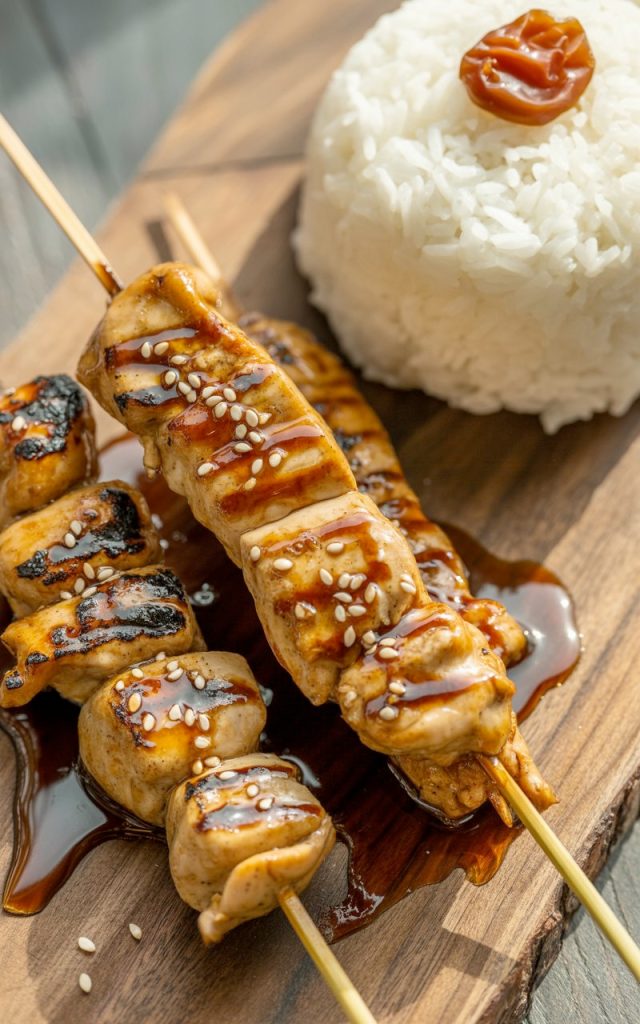

The first time I had real yakitori was at a tiny hole-in-the-wall place in my city’s Japanese district. The chef was grilling skewers over charcoal right in front of me, and the smell alone had me drooling before I even took a bite. When I finally did? Life-changing.
I spent the next month trying to recreate those flavors at home, and after a dozen attempts, I finally nailed it. Turns out, making restaurant-quality yakitori isn’t nearly as complicated as I thought. The secret is all in the sauce—that glossy, sticky, sweet-savory tare that coats every piece of chicken.
Now I make these skewers at least twice a month. They’re perfect for summer grilling, winter broiling, game day appetizers, or just Tuesday night dinner when you want something that feels special without a ton of effort.
Why You’ll Love This Japanese Chicken Yakitori
Restaurant-quality yakitori at home for half the price – Those tiny skewers at Japanese restaurants run like $3-5 each and you need at least six to feel full. Making them at home costs a fraction of that and you can eat as many as you want without bankrupting yourself.
Ready in just 30 minutes from start to finish – Including making the sauce and threading the skewers. This is genuinely one of the quickest ways to make something that feels this special. Most of the time is just waiting for the grill to heat up.
That sweet and savory tare sauce is absolutely addictive – The sauce is where the magic happens. It’s sweet from mirin and sugar, savory from soy sauce, with a hint of garlic and ginger. It caramelizes on the grill and creates this glossy coating that makes you want to lick your fingers.
Perfect for grilling season or indoor cooking – While grilling gives you that authentic smoky char, these work just as well under the broiler or in a grill pan. You can make great yakitori year-round regardless of weather or equipment.
Great as appetizers or main course – Serve them as party appetizers with the skewers standing upright in a glass, or make them the main event over rice with sides. They’re versatile enough to work for any occasion.
Fun, interactive meal that everyone loves – There’s something about food on a stick that makes eating more fun. Kids love them, adults love them, picky eaters are more willing to try them. It’s just a universally appealing format.
Ingredients You’ll Need
For the Chicken:
- 1.5 pounds boneless, skinless chicken thighs – Thighs stay juicier than breast meat. Trust me on this.
- Salt and pepper to taste – For seasoning before grilling.
- 8-10 bamboo or metal skewers – If using bamboo, soak them in water for 30 minutes first.
For the Tare Sauce:
- 1/2 cup soy sauce – Use regular or low-sodium, your call.
- 1/4 cup mirin – Japanese sweet rice wine. Essential for authentic flavor.
- 1/4 cup sake – Japanese rice wine. If you don’t have it, use dry white wine or more mirin.
- 3 tablespoons sugar – White or brown sugar both work.
- 2 cloves garlic, minced – Fresh garlic only.
- 1 teaspoon fresh ginger, grated – Adds brightness and warmth.
- 1 tablespoon cornstarch – For thickening the sauce.
- 2 tablespoons water – To mix with the cornstarch.
For Garnish:
- Sesame seeds – White or black, both look great.
- Sliced green onions – Optional but adds color.
- Shichimi togarashi – Japanese seven-spice blend, optional but highly recommended.
Key Notes:
- Chicken thighs vs. breast: Thighs have more fat and stay juicier on the grill. Breast meat tends to dry out. If you must use breast, watch the cooking time carefully.
- Mirin matters: Don’t skip the mirin or substitute with regular wine. It’s what gives yakitori its distinctive sweet flavor. Find it in the Asian section of most grocery stores.
- Skewer soaking: If using bamboo skewers, soak them in water for at least 30 minutes so they don’t burn on the grill.
- Sauce thickness: The sauce should be thick enough to coat the back of a spoon but still drizzle-able. Adjust with water if needed.
How to Make Japanese Chicken Yakitori (Step-by-Step)
Step 1: Make the Tare Sauce
Start with the sauce because it needs time to thicken and cool slightly. In a small saucepan over medium heat, combine soy sauce, mirin, sake, sugar, minced garlic, and grated ginger.
Bring to a simmer, stirring occasionally until the sugar dissolves completely. Let it simmer for about 5 minutes to let the alcohol cook off and the flavors meld.
In a small bowl, mix cornstarch with 2 tablespoons of water until smooth. Pour this into your simmering sauce while stirring constantly. The sauce will thicken almost immediately.
Remove from heat and let it cool while you prep the chicken. It’ll thicken even more as it cools. Set aside about 1/4 cup of sauce in a separate bowl for serving—don’t use the sauce you’ll be brushing on raw chicken for serving later.
Step 2: Prepare the Chicken
Cut your chicken thighs into bite-sized pieces, about 1 to 1.5 inches. Try to keep them roughly the same size so they cook evenly. Don’t make them too small or they’ll dry out, but not so big that they don’t cook through.
Season the chicken pieces with a little salt and pepper. Not too much—the tare sauce is pretty salty and will add most of the seasoning.
Step 3: Thread the Skewers
Thread 4-5 pieces of chicken onto each skewer, leaving a little space between pieces so the heat can circulate. Don’t pack them too tightly or the middle pieces won’t cook properly.
If you’re using bamboo skewers and forgot to soak them, wrap the exposed ends in foil to prevent burning. Metal skewers don’t need any prep and are reusable, so they’re worth the investment if you make skewers often.
Step 4: Grill the Yakitori
Preheat your grill to medium-high heat (about 400-450°F). Oil the grates well to prevent sticking—use a paper towel dipped in oil and held with tongs to wipe down the grates.
Place your skewers on the grill. Cook for 3-4 minutes on the first side without moving them. You want nice grill marks and a bit of char.
Flip the skewers and brush the cooked side generously with your tare sauce. Cook for another 3-4 minutes.
Flip again, brush the other side with sauce, and cook for 2 more minutes. Keep flipping and basting every couple of minutes until the chicken is cooked through (internal temp of 165°F) and the sauce is caramelized and sticky. Total cooking time is usually 10-12 minutes.
The sauce will create a beautiful glossy coating and char slightly in spots. That caramelization is what you want—it’s where the flavor is.
Step 5: Rest and Serve
Remove the skewers from the grill and let them rest for 2-3 minutes. This lets the juices redistribute so every bite is juicy.
Brush one final coat of that reserved clean sauce over the skewers. Sprinkle with sesame seeds, green onions, and shichimi togarashi if you have it.
Serve immediately while they’re hot and the sauce is still sticky and glossy.
Serving Suggestions
Yakitori is traditionally an izakaya (Japanese pub) food, meant to be eaten with drinks, but it works in lots of contexts:
Over steamed rice – The classic way to make it a meal. The tare sauce drips onto the rice and it’s incredible. Add a fried egg on top and you’ve got a complete dinner.
With Japanese sides – Serve with miso soup, edamame, pickled vegetables (tsukemono), and cucumber salad for an authentic Japanese meal experience.
As party appetizers – Arrange the skewers standing upright in a tall glass or vase. People can grab them easily and eat them in a few bites. Perfect for cocktail parties.
Yakitori donburi – Slice the chicken off the skewers and serve over rice with the sauce drizzled on top. Add shredded cabbage, pickled ginger, and a soft-boiled egg for a rice bowl version.
With cold beer or sake – This is how it’s traditionally enjoyed in Japan. The salty-sweet yakitori pairs perfectly with a cold beer or chilled sake.
Mixed skewer platter – Make some chicken yakitori alongside vegetables like bell peppers, mushrooms, and green onions for variety.
Storage and Reheating Tips
Storing Leftovers
Let the yakitori cool completely, then store in an airtight container in the fridge for up to 3 days. Keep any extra sauce separate.
The chicken is safe to eat cold (I’ve been known to eat leftover yakitori straight from the fridge), but it’s better reheated.
Make-Ahead Instructions
You can prep everything ahead to make dinner super quick:
Tare sauce: Make it up to a week ahead and store in the fridge. It actually gets better as the flavors develop.
Skewered chicken: Thread the raw chicken onto skewers up to 24 hours ahead. Store covered in the fridge, then bring to room temperature before grilling.
Cooked yakitori: You can fully cook the yakitori, then reheat when ready to serve. Not quite as good as fresh, but still delicious and way better than most leftovers.
Reheating
Oven method (best): Preheat to 350°F. Place skewers on a baking sheet and heat for 8-10 minutes until warmed through. Brush with fresh sauce before serving.
Grill/broiler method: Quickly reheat on the grill or under the broiler for 2-3 minutes, brushing with more sauce. This re-caramelizes the exterior.
Microwave method (fastest but not ideal): Heat on 50% power for 1-2 minutes. The chicken can get a bit rubbery, but it’s fine in a pinch.
Freezing
Cooked yakitori freezes reasonably well. Cool completely, freeze in a single layer, then transfer to a freezer bag. Good for up to 2 months. Thaw overnight in the fridge and reheat in the oven.
Final Thoughts
These Japanese Chicken Yakitori skewers have become one of my favorite things to make when I want something that feels special but doesn’t require hours of work. The combination of juicy chicken and that sweet-savory tare sauce is just unbeatable.
Fire up your grill (or turn on your broiler) and give these a try. Your kitchen is about to smell amazing.
– Kip
Japanese Chicken Yakitori Recipe (Easy Grilled Skewers in 30 Minutes!)
Description
These Japanese Chicken Yakitori skewers feature tender, juicy chicken pieces grilled to perfection and glazed with a homemade tare sauce that's sweet, savory, and absolutely addictive. It's the kind of dish that makes you feel like you're sitting at an izakaya in Tokyo!
Ingredients
For the Chicken:
For the Tare Sauce:
For Garnish:
Instructions
-
Make tare sauce: Combine soy sauce, mirin, sake, sugar, garlic, and ginger in a saucepan. Simmer for 5 minutes. Mix cornstarch with water and add to sauce, stirring until thickened. Set aside 1/4 cup for serving.
-
Prepare chicken: Cut chicken thighs into bite-sized pieces and season with salt and pepper.
-
Thread skewers: Place 4-5 pieces of chicken on each skewer, leaving small spaces between pieces.
-
Preheat grill to medium-high heat (400-450°F) and oil the grates.
-
Grill yakitori: Place skewers on grill and cook for 3-4 minutes. Flip, brush with tare sauce, and cook 3-4 more minutes.
-
Continue basting: Keep flipping and brushing with sauce every 2 minutes until chicken reaches 165°F internal temperature and sauce is caramelized, about 10-12 minutes total.
-
Rest and serve: Let rest 2-3 minutes, brush with reserved clean sauce, and garnish with sesame seeds and green onions.