

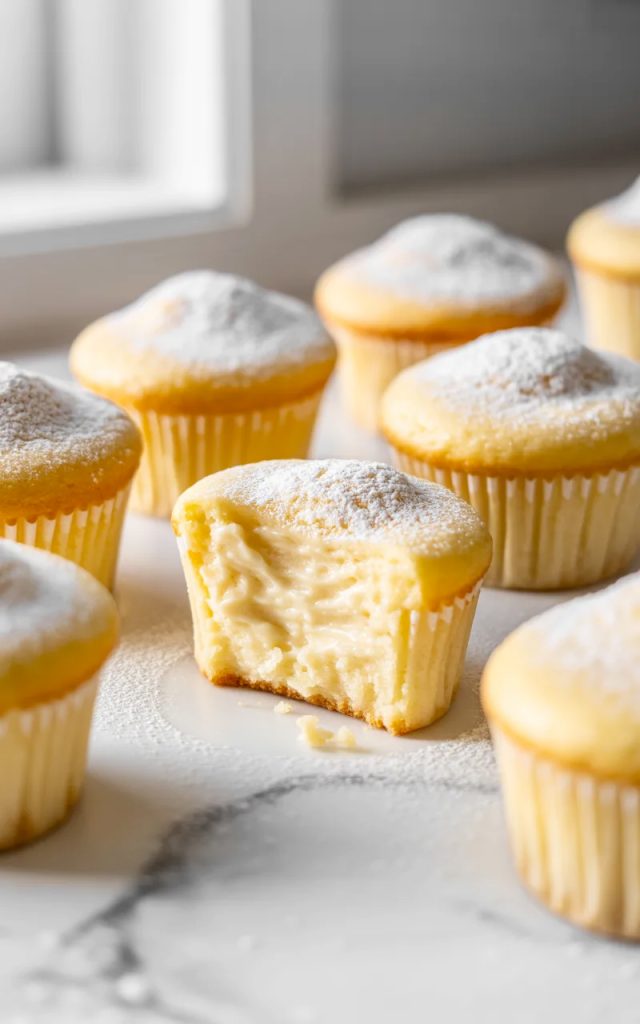

I have always been a cheesecake person. Dense, creamy, rich New York style cheesecake on a graham cracker crust — that was my standard. Then I tried Japanese cotton cheesecake for the first time and everything changed. It is soft in a way that feels almost impossible. Light in a way that makes you wonder if you are actually eating cheesecake at all. And then the flavor hits and you realize it absolutely is cheesecake — just a completely different and arguably more magical version of it.
I spent a few weeks figuring out how to translate that experience into individual cupcake portions and this recipe is the result. The individual cupcake format solves one of the classic challenges of Japanese cheesecake — the dramatic collapse that can happen when a full cake comes out of the oven. In cupcake form, each portion holds its shape beautifully and comes out with that gorgeous golden dome dusted in powdered sugar.
The technique requires a little attention but nothing that an intermediate home baker cannot handle. If you have ever whipped egg whites for a recipe you are more than equipped to make these. And I promise you — the first time you bite into one of these and feel that impossibly light, creamy, melt-in-your-mouth texture, you will understand exactly why I keep making them 🙂
Why you’ll love this recipe
- That texture is unlike anything else — light as a cloud, creamy as cheesecake, impossible to describe until you try it
- Individual portions mean no slicing, no mess — each person gets their own perfect little cheesecake
- Delicately sweet — not overpowering, which means you can actually eat more than one without regret
- Beautiful presentation — those golden domes dusted with powdered sugar look stunning on any table
- Lighter than traditional cheesecake — you get all the cheesecake satisfaction at a fraction of the heaviness
- A genuine conversation starter — nobody expects this texture and everyone asks for the recipe
Ingredients with key notes
- 8 oz cream cheese, softened to room temperature — Full-fat cream cheese only. The fat content is what gives these cupcakes their creamy, rich flavor. Low-fat cream cheese will result in a less flavorful and less stable cupcake. Room temperature is non-negotiable — cold cream cheese will not blend smoothly and will leave lumps in your batter.
- 1/4 cup unsalted butter — Also at room temperature. The butter adds richness and helps create a smooth, cohesive batter.
- 1/3 cup whole milk — Whole milk gives the batter the right consistency. The fat in the milk contributes to the overall creaminess of the finished cupcake.
- 6 large eggs, separated — The yolks go into the cheesecake base and the whites get whipped separately to stiff peaks. This separation is the entire secret behind the cotton-like texture. Do not skip this step and do not get any yolk in your whites or they will not whip properly.
- 1/2 cup cake flour, sifted — Cake flour has a lower protein content than all-purpose flour which results in a more tender, delicate crumb. Sift it every time — lumps in this batter are the enemy.
- 2 tablespoons cornstarch — Works with the cake flour to keep the texture light and prevent the cupcakes from becoming dense.
- 1/2 cup granulated sugar, divided — Half goes into the egg yolk base and half gets added gradually to the egg whites as they whip.
- 1 tablespoon fresh lemon juice — Adds a subtle brightness that lifts the flavor of the cream cheese without making the cupcakes taste lemony. It also helps stabilize the whipped egg whites.
- 1 teaspoon vanilla extract — Use pure vanilla extract for the cleanest, most delicate flavor.
- Pinch of cream of tartar — Added to the egg whites before whipping to help stabilize the meringue and ensure it holds its volume when folded into the batter.
- Powdered sugar for dusting — The finishing touch. Dust generously right before serving for that classic Japanese cheesecake look.
Step-by-step instructions
Step 1: Prepare your pan and preheat the oven
Preheat your oven to 320 degrees F (160 degrees C). Line a standard 12-cup muffin tin with white cupcake liners. Set aside. Also prepare a larger baking pan or roasting pan that is big enough to hold the muffin tin — you will be using a water bath which is essential for the gentle, even heat that gives these cupcakes their texture.
Step 2: Make the cream cheese base
In a medium saucepan over very low heat, combine the cream cheese, butter, and milk. Stir continuously until everything is completely melted and smooth with no lumps. Remove from heat and let it cool slightly for about 5 minutes. You do not want the mixture too hot when you add the egg yolks or you will scramble them.
Step 3: Add the egg yolks and dry ingredients
Add the egg yolks one at a time to the cooled cream cheese mixture, whisking well after each addition. Add the lemon juice and vanilla extract and whisk to combine. Sift the cake flour and cornstarch directly into the mixture and whisk until completely smooth. The batter at this stage should be silky and lump-free. Set aside.
Step 4: Whip the egg whites
In a completely clean, dry bowl — any trace of fat or moisture will prevent the whites from whipping properly — add the egg whites and cream of tartar. Using a hand mixer or stand mixer, beat the egg whites on medium speed until foamy. Then gradually add the remaining sugar one tablespoon at a time while continuing to beat. Increase the speed to medium-high and beat until the egg whites reach soft to medium peaks. You want them to hold their shape but still have a slight wobble. Do not beat to stiff peaks — over-beaten whites are harder to fold in and can deflate the batter.
Step 5: Fold the egg whites into the batter
Add about one-third of the whipped egg whites to the cream cheese batter and fold gently with a rubber spatula using a slow circular motion from the bottom of the bowl upward. This first addition lightens the batter and makes it easier to incorporate the rest without deflating the whites. Add the remaining egg whites in two more additions, folding slowly and gently each time. Stop folding as soon as the batter is just combined with no white streaks remaining. The batter should be light, airy, and mousselike.
Step 6: Fill the cupcake liners
Spoon or pour the batter into the prepared cupcake liners, filling each one about three quarters full. The batter will rise during baking so do not overfill. Tap the muffin tin gently on the counter once or twice to remove any large air bubbles.
Step 7: Bake using a water bath
Pour about an inch of hot water into the larger baking pan. Place the filled muffin tin inside the larger pan so it sits in the water bath. Carefully transfer the whole setup to the preheated oven. Bake at 320 degrees F for 22 to 25 minutes until the tops are lightly golden and the cupcakes have a slight jiggle in the center when you gently shake the pan. They will firm up as they cool.
Step 8: Cool properly
This step is important. Turn off the oven and crack the oven door open slightly. Leave the cupcakes in the oven with the door cracked for about 10 minutes. This gradual cooling prevents the dramatic deflation that can happen when these cupcakes meet cold air too suddenly. After 10 minutes, remove from the oven and let cool completely at room temperature before removing from the tin.
Step 9: Dust and serve
Once fully cooled, dust the tops generously with powdered sugar using a fine mesh sieve. Serve immediately or refrigerate until ready to serve.
Serving suggestions
- Serve them at room temperature or slightly chilled — both are wonderful but chilled gives you a slightly denser, more classic cheesecake feel
- Pair with fresh strawberries or a light berry compote on the side for a beautiful contrast of flavors and colors
- Serve on a dessert platter dusted with extra powdered sugar for a stunning presentation at any gathering
- Add a small dollop of lightly whipped cream on the side for extra indulgence without overwhelming the delicate flavor
- Pair with a cup of green tea or a light jasmine tea — the floral notes complement the delicate sweetness of the cupcakes beautifully
- Serve as a light dinner party dessert — after a rich main course, these feel like a perfectly restrained and elegant finish
Storage tips
Refrigerator: Store the cupcakes in an airtight container in the fridge for up to 4 days. The texture actually becomes slightly denser and more cheesecake-like after a night in the fridge which many people prefer. Dust with fresh powdered sugar right before serving as the powdered sugar absorbs into the surface overnight.
Room temperature: These cupcakes can sit at room temperature for a few hours during serving but should not be left out for extended periods due to the cream cheese content. Refrigerate any leftovers within 2 hours.
Freezer: These cupcakes freeze surprisingly well. Wrap each one individually in plastic wrap and place in a freezer-safe container for up to 1 month. Thaw in the refrigerator overnight and dust with fresh powdered sugar before serving.
Do not microwave: Reheating these in the microwave will destroy the delicate texture completely. Always thaw at room temperature or in the fridge and serve cold or at room temperature.
Closing
Japanese cotton cheesecake cupcakes are one of those recipes that genuinely changes how you think about dessert. They are light enough to feel like a treat you can enjoy without the heaviness of a traditional cheesecake, yet rich enough to satisfy every craving completely. Once you master the technique, this recipe becomes one of the most impressive and versatile desserts in your entire repertoire.
Give them a try and let me know how they turned out in the comments below. And if you experimented with a matcha or fruit variation, I absolutely want to hear about it. That kind of kitchen creativity is exactly what Recipes By Kip is built on.
With gratitude, Kip.
Japanese cotton cheesecake cupcakes — the lightest, fluffiest dessert you will ever make
Description
Individual Japanese cotton cheesecake cupcakes that are impossibly light, delicately sweet, and melt completely in your mouth. Made with cream cheese, whipped egg whites, and a touch of lemon, these cupcakes sit somewhere beautifully between a classic cheesecake and a soufflé. Soft golden domes dusted with powdered sugar that taste like nothing else you have ever made.
Ingredients
Instructions
-
Preheat oven to 320 degrees F. Line a 12-cup muffin tin with cupcake liners. Prepare a larger pan for the water bath.
-
Melt cream cheese, butter, and milk together over very low heat until smooth. Cool slightly.
-
Whisk in egg yolks one at a time. Add lemon juice and vanilla. Sift in cake flour and cornstarch and whisk until smooth.
-
Beat egg whites with cream of tartar until foamy. Gradually add remaining sugar and beat to soft to medium peaks.
-
Fold egg whites into the batter in three additions until just combined and no white streaks remain.
-
Fill cupcake liners three quarters full. Tap the pan gently to remove air bubbles.
-
Place muffin tin in a larger pan with one inch of hot water. Bake for 22 to 25 minutes until lightly golden with a slight jiggle.
-
Turn off oven and crack the door. Leave cupcakes inside for 10 minutes then cool completely at room temperature.
-
Dust with powdered sugar and serve.