

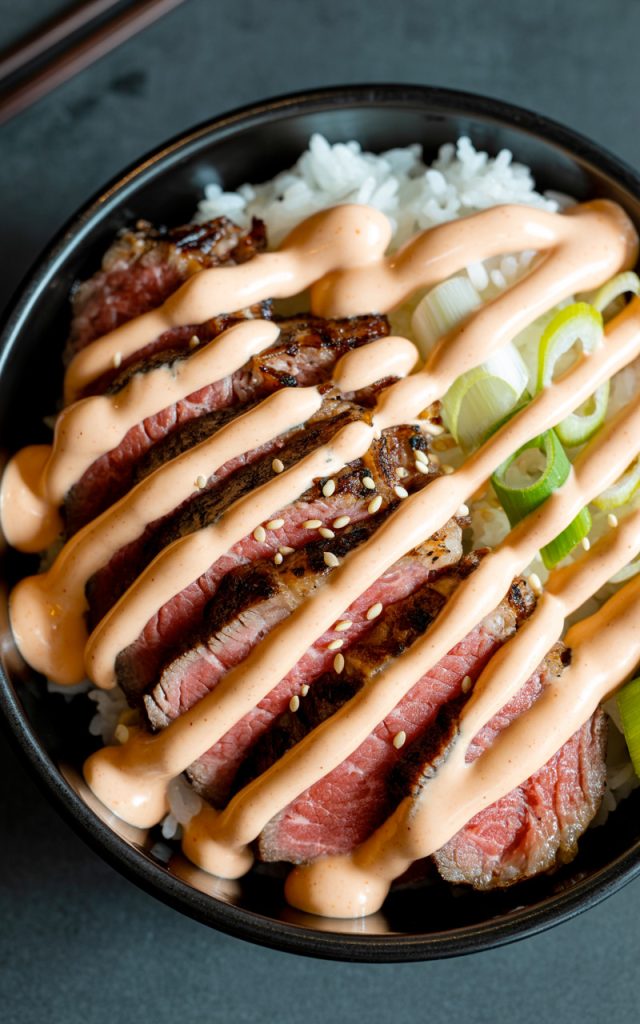

There’s regular steak and rice, and then there’s this. The first time I made these Korean BBQ Steak Rice Bowls, I literally stood over the stove eating straight from the pan because I couldn’t wait long enough to plate it properly. Not my proudest moment, but honestly? No regrets.
The combination of savory Korean BBQ steak with that spicy, creamy, slightly sweet sauce is just stupid good. It’s like if Korean BBQ and your favorite steakhouse had a baby, and that baby was raised by a really cool fusion restaurant.
I’ve made these at least twenty times in the past few months, tweaking the sauce until it was absolutely perfect. The result? A bowl that tastes like it came from a fancy restaurant but takes less time than ordering delivery.
Why You’ll Love These Korean BBQ Steak Rice Bowls
Perfect fusion of Korean BBQ and creamy indulgence – The steak has all those classic Korean BBQ flavors—soy, sesame, garlic—but then you add this ridiculous spicy cream sauce that takes it to another level. It’s the best of both worlds and somehow even better than the sum of its parts.
Ready in just 30 minutes start to finish – Including marinating time! The steak only needs 15-20 minutes to soak up the flavors, and cooking takes maybe 10 minutes. This is faster than most takeout and tastes about a million times better.
That spicy cream sauce is absolutely addictive – I’m not exaggerating when I say people ask me for this sauce recipe specifically. It’s creamy, spicy, a little sweet, with just enough tang to keep things interesting. You’ll want to put it on everything.
Restaurant-quality for a fraction of the price – A bowl like this at a Korean fusion restaurant would run you $20-25 easy. Making it at home costs maybe $8 per serving, and you get to control exactly how you like it cooked.
Easily customizable to your heat preference – Want it mild? Cut back on the gochujang. Want it face-meltingly spicy? Add more. The sauce is totally adjustable, so everyone can have it exactly how they like it.
Impressive enough for date night, easy enough for weeknights – This is one of those recipes that looks and tastes fancy but is actually super simple. Perfect for when you want to impress someone (or just yourself) without spending hours in the kitchen.
Ingredients You’ll Need
For the Korean BBQ Steak:
- 1.5 pounds flank steak or ribeye – Flank is leaner and more budget-friendly. Ribeye is more marbled and tender. Both are excellent.
- 1/4 cup soy sauce – Low-sodium works great if you’re watching salt intake.
- 2 tablespoons brown sugar – Helps with caramelization and balances the saltiness.
- 2 tablespoons sesame oil – Essential for that authentic Korean flavor.
- 4 cloves garlic, minced – Fresh only. This isn’t the time for jarred garlic.
- 1 tablespoon fresh ginger, grated – Adds brightness and complexity.
- 1 tablespoon rice vinegar – A touch of acidity to balance everything.
- 1 teaspoon black pepper
- 2 green onions, chopped – Both white and green parts.
For the Spicy Cream Sauce:
- 1/2 cup mayonnaise – Use good quality mayo. It makes a difference.
- 2 tablespoons gochujang – Korean red chili paste. This is the star of the sauce.
- 1 tablespoon sriracha – For extra heat and tang.
- 1 tablespoon honey – Balances the heat with sweetness.
- 1 tablespoon rice vinegar – Adds brightness.
- 1 teaspoon sesame oil – Ties it to the Korean flavors.
- 1 clove garlic, minced – Because more garlic is always better.
- Water to thin – Start with a tablespoon and add more as needed.
For the Bowls:
- 3 cups cooked white rice – Short-grain or jasmine rice work best.
- 2 tablespoons butter – For cooking the steak. Trust me on this.
- Sliced green onions – For garnish.
- Sesame seeds – Always.
- Optional toppings: Fried egg, kimchi, pickled vegetables, sliced cucumber
Key Notes:
- Steak choice: Flank steak is my go-to—affordable and flavorful. Ribeye is more tender but pricier. New York strip works great too.
- Gochujang: Find it at Asian markets or in the international aisle. No substitute really captures the same flavor, but in a pinch, use sriracha with a bit of miso paste.
- Mayo alternative: Greek yogurt or sour cream work if you want a tangier, lighter sauce.
- Make it spicier: Add more gochujang or sriracha. Start conservative—you can always add more heat.
How to Make Korean BBQ Steak Rice Bowls (Step-by-Step)
Step 1: Marinate the Steak
Pat your steak dry with paper towels. This helps it sear better later. If you’re using flank steak, look for the grain—you’ll want to slice against it after cooking.
In a large bowl or zip-top bag, combine soy sauce, brown sugar, sesame oil, minced garlic, grated ginger, rice vinegar, black pepper, and chopped green onions. Whisk it together until the sugar dissolves.
Add your steak and massage the marinade into the meat. Cover or seal and let it sit for 15-20 minutes at room temperature. If you have more time, refrigerate it for up to 2 hours, but honestly, 15 minutes is plenty for great flavor.
Step 2: Make the Spicy Cream Sauce
While the steak marinates, let’s make this incredible sauce. In a small bowl, combine mayonnaise, gochujang, sriracha, honey, rice vinegar, sesame oil, and minced garlic.
Whisk everything together until smooth. The sauce will be thick at this point. Add water one tablespoon at a time until you reach a drizzle-able consistency—think slightly thicker than ranch dressing.
Taste it. This is important. It should be creamy, spicy, slightly sweet, with a little tang. Adjust the flavors—more honey if it’s too spicy, more gochujang if you want more heat, more vinegar if you want brightness.
Set aside and let the flavors meld while you cook the steak.
Step 3: Cook Your Rice
If you haven’t already, get your rice going. I use a rice cooker because I’m lazy and it’s foolproof. Stovetop works great too—just follow package directions.
For this recipe, slightly warm or room temperature rice actually works better than piping hot rice. The contrast with the hot steak is nice.
Step 4: Sear the Steak
Remove the steak from the marinade and pat it dry with paper towels. This is crucial—wet meat steams instead of searing. You want a crust, not boiled meat.
Heat a large cast iron skillet or heavy-bottomed pan over high heat until it’s smoking hot. Add 2 tablespoons of butter and swirl to coat.
Immediately add your steak. You should hear an aggressive sizzle. If you don’t, your pan wasn’t hot enough. Let it sear without moving it for 3-4 minutes. This develops that beautiful crust.
Flip and cook for another 3-4 minutes for medium-rare (internal temp of 130-135°F), or longer if you prefer it more done. For medium, go to 140-145°F.
Step 5: Rest the Steak
This step is non-negotiable. Transfer the steak to a cutting board and let it rest for 5 minutes. I know it smells amazing and you want to cut into it immediately, but don’t. Resting lets the juices redistribute so you don’t end up with a dry steak and a puddle of juice on your cutting board.
Cover it loosely with foil if you want to keep it extra warm.
Step 6: Slice the Steak
After resting, slice the steak against the grain into thin strips. Look for the direction of the muscle fibers and cut perpendicular to them. This makes the meat way more tender.
Thin slices are key here—aim for about 1/4-inch thick. Thinner is better than thicker for bowls.
Step 7: Assemble Your Bowls
Now for the fun part. Start with a generous scoop of rice in each bowl. Top with sliced steak, arranging it nicely because we eat with our eyes first, right?
Drizzle that gorgeous spicy cream sauce all over the steak and rice. Be generous—this sauce is what makes the dish.
Sprinkle with sliced green onions and sesame seeds. Add any other toppings you want—a fried egg is amazing, kimchi adds tang, pickled cucumbers add crunch.
Serve immediately and watch people’s faces light up.
Serving Suggestions
These bowls are pretty complete on their own, but here are some ways to make them even better:
With a fried egg on top – Break that yolk and let it run over everything. It adds richness and another layer of texture that’s just incredible. Sunny-side up or over-easy both work.
Add kimchi – The tangy, spicy, fermented flavor of kimchi is perfect with the rich steak and creamy sauce. It cuts through the heaviness and adds complexity.
Quick pickled cucumbers – Thinly slice cucumbers and quick-pickle them in rice vinegar, sugar, and salt for 10 minutes. Adds freshness and crunch.
Sautéed vegetables – Mushrooms, bok choy, or spinach sautéed with garlic make great additions. They add nutrition and bulk out the meal.
Extra sauce on the side – Always. People will want more of that spicy cream sauce. I usually double the sauce recipe just to have extra.
Seaweed salad – If you can find it at an Asian market, seaweed salad adds an authentic touch and a different texture.
Storage and Reheating Tips
Storing Leftovers
Store the steak, rice, and sauce separately in airtight containers. The steak keeps for 3-4 days in the fridge. Rice is good for about the same. The sauce will last up to a week.
Keeping them separate prevents the rice from getting soggy and makes reheating way better.
Freezing Instructions
The cooked steak freezes well. Let it cool completely, then freeze in a single layer before transferring to a freezer bag. Good for up to 3 months.
The marinated raw steak also freezes great—just marinate it, freeze it in the bag, and thaw overnight in the fridge when ready to cook.
I don’t recommend freezing the sauce—the mayonnaise can separate. Just make it fresh when you need it. It only takes 5 minutes anyway.
Reheating
Steak (best method): Let it come to room temperature first. Heat a skillet over medium heat with a tiny bit of butter or oil. Quickly sear the sliced steak for 30 seconds per side—just enough to warm through without overcooking.
Microwave method: Heat on 50% power in 20-second bursts. Steak overcooks fast, so go slow and check frequently.
Rice: Sprinkle with a tablespoon of water, cover, and microwave for 1-2 minutes. Or steam it in a pot for the best texture.
Never microwave the sauce with mayonnaise – it can separate and get weird. Add it fresh when serving.
Final Thoughts
These Korean BBQ Steak Rice Bowls with Spicy Cream Sauce have become my absolute favorite way to enjoy steak at home. They’re quick, they’re impressive, and that sauce? It’s legitimately life-changing.
Make them once, and I guarantee they’ll become part of your regular dinner rotation. Just don’t blame me when you start putting that spicy cream sauce on everything.
– Kip
Korean BBQ Steak Rice Bowls with Spicy Cream Sauce (Ready in 30 Minutes!)
Description
These Korean BBQ Steak Rice Bowls combine perfectly seared steak with Korean BBQ flavors, topped with an irresistible spicy cream sauce that'll have you licking the bowl. It's restaurant-quality fusion food that comes together in just 30 minutes!
Ingredients
For the Korean BBQ Steak:
For the Spicy Cream Sauce:
For the Bowls:
Instructions
-
Pat steak dry and combine with soy sauce, brown sugar, sesame oil, garlic, ginger, rice vinegar, black pepper, and green onions in a bowl or bag. Marinate for 15-20 minutes.
-
Make sauce by whisking together mayonnaise, gochujang, sriracha, honey, rice vinegar, sesame oil, and garlic. Add water to reach drizzle consistency. Set aside.
-
Cook rice according to package directions if not already prepared.
-
Pat steak dry after marinating. Heat large skillet over high heat until smoking. Add butter, then immediately add steak.
-
Sear steak for 3-4 minutes per side for medium-rare (130-135°F internal temperature). Adjust time for desired doneness.
-
Rest steak on cutting board for 5 minutes, covered loosely with foil.
-
Slice steak thinly against the grain, about 1/4-inch thick.
-
Assemble bowls with rice as base, top with sliced steak, drizzle generously with spicy cream sauce, and garnish with green onions and sesame seeds.