
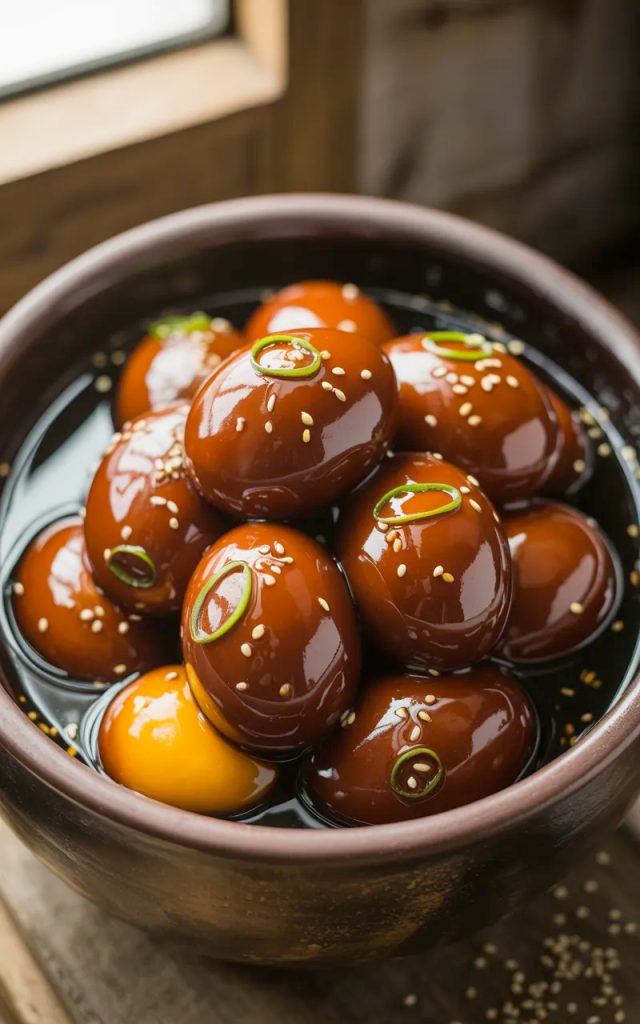
There is a word in Korean — mayak — that translates roughly to narcotic or drug. That is what these eggs are named after. Not because they contain anything illegal, but because once you have eaten one you will find yourself thinking about them at odd hours of the day, making batch after batch, and putting them on top of everything you cook for the next two weeks. The name is not an exaggeration. These eggs are genuinely that addictive.
The concept is deceptively simple. You cook eggs to a soft jammy yolk, peel them, and submerge them in a marinade made from soy sauce, water, garlic, sugar, sesame oil, and gochugaru — Korean red pepper flakes. Then you wait.
The overnight rest is where the magic happens. The whites absorb the marinade and turn a deep glossy amber. The flavor penetrates every layer. The yolk stays perfectly soft and custardy. By morning you have something that looks spectacular, tastes deeply complex, and cost you about five dollars and twenty minutes of actual effort.
These eggs have taken over Korean social media, Japanese convenience store culture, and the food internet in general for a reason. They are one of those rare recipes that genuinely delivers on every bit of the hype surrounding them. Make them once and you will understand immediately why people call them addictive. Let's get into it.
The flavor is unlike anything else. The combination of soy sauce, garlic, sesame oil, and gochugaru creates a marinade that is savory, slightly sweet, gently spicy, and deeply umami all at once. It is one of the most compelling flavor profiles you will encounter in a simple home recipe.
Only 20 minutes of active work. Boil the eggs, make the marinade, combine them, and refrigerate. The overnight rest does all the real work while you sleep. This is about as low effort as a recipe with this much payoff gets.
Incredibly versatile. These eggs work as a standalone snack, a protein addition to rice bowls, a topping for ramen or noodles, a side dish for any Korean meal, or a meal prep staple that makes every lunch and dinner more interesting all week.
High protein and low carb. Each egg delivers solid protein with minimal calories and virtually no carbohydrates. They fit naturally into keto, low carb, and high protein dietary frameworks without any modifications.
Meal prep gold. Make a batch of six or eight eggs on Sunday and you have a ready to eat high protein addition for every meal of the week. They keep beautifully in the fridge for up to five days and get better with each passing day as the marinade continues to develop.
They look absolutely stunning. The deep amber color, the glossy surface, the white sesame seeds, the bright green onion against the golden yolk — these are among the most visually striking things you can put in a bowl. They photograph beautifully and make any dish they are added to look intentional and impressive.
Mayak Gyeran — mayak eggs — originated in a small area of Seoul called Dongdaemun where street vendors were selling them cheaply by the bag as a popular snack food.
The story goes that once people tasted them they could not stop eating them and kept coming back for more, earning them the nickname mayak which means narcotic in Korean. Whether or not that exact origin story is entirely accurate, the name stuck and the recipe spread.
The core concept draws on a long tradition of soy marinated eggs across East Asia. Japanese ramen eggs — ajitsuke tamago — follow a similar principle of soaking soft boiled eggs in a soy based marinade, and Chinese soy eggs have been a staple of Chinese cooking for generations.
What makes the Korean Mayak version specifically distinctive is the addition of gochugaru — Korean red pepper flakes — which adds a gentle building heat and a subtle smokiness that the Japanese and Chinese versions do not have, and the inclusion of sesame oil which adds a nutty, aromatic quality that rounds out the entire flavor profile.
The other key distinction of the Mayak version is the egg cook itself. These eggs are cooked to a very specific jammy consistency — the whites fully set and the yolks soft, custardy, and just barely set in the very center.
That specific yolk texture absorbs the marinade differently than a fully hard boiled yolk would, staying soft and rich inside the deeply flavored exterior. Getting that yolk right is the most important single step in the entire recipe and with the timing provided in the instructions it is completely achievable every time.
Key Notes: The single most important variable in this recipe is the egg cook time. Seven minutes in boiling water followed by an immediate ice bath gives you the jammy yolk that makes Mayak eggs what they are. One minute less and the white will not be fully set. One minute more and the yolk starts to firm up and lose that custardy center. Set a timer, use it, and get your eggs into the ice bath the moment it goes off. Everything else in this recipe is forgiving. The egg timing is not.
Korean marinated eggs are one of the most versatile things you can have in your fridge. Here are the serving combinations that showcase them best:
Refrigerator: Store the eggs submerged in their marinade in an airtight container in the fridge for up to 5 days. The flavor continues to develop and intensify with each passing day — the eggs on day three taste noticeably more complex and deeply seasoned than the eggs on day one. Some people prefer them on day one for a lighter flavor, others prefer day three for maximum intensity. Both are valid.
Marinade reuse: The leftover marinade after the eggs are eaten is a deeply flavored, umami rich liquid that is too good to throw away. Use it as a dipping sauce for dumplings or gyoza, drizzle it over steamed vegetables, use it as a base for a quick stir fry sauce, or make a second batch of eggs in it immediately. The marinade keeps in the fridge for up to a week.
Do not freeze: Freezing cooked eggs changes the texture of the whites dramatically — they become rubbery and spongy when thawed. Do not freeze these. Make them fresh, eat them within 5 days, and simply make another batch when you need more. The active time is only 20 minutes so this is not a hardship.
Color note: The longer the eggs sit in the marinade the darker the amber color of the whites becomes. Eggs at 4 hours will be lightly golden. Eggs at 12 hours will be a deep rich amber. Eggs at 3 days will be a very deep mahogany brown. All of these are safe and delicious — the color progression is purely a result of continued marinade absorption and does not indicate any spoilage.
There is a reason these eggs went viral across every food platform on the internet and the reason is simple — they are one of the best things you can make in 20 minutes of active effort and they deliver a flavor experience that feels completely disproportionate to how little work was involved. That combination does not come around often.
Make a batch tonight. Put them in the fridge. Wake up tomorrow, pull one out, slice it in half over a bowl of rice, and pour a spoonful of that dark glossy marinade over the top. That first bite will tell you everything you need to know about why these eggs have the name they do.
From my kitchen to yours — go make something addictive.
With gratitude, Kip
Korean Marinated Eggs, known as Mayak Gyeran or Mayak Eggs, are soft boiled eggs with jammy golden yolks that get submerged in a deeply savory, slightly sweet, garlic and chili forward soy marinade and left to soak overnight. By the time you crack one open the next morning the whites have turned a rich amber color, the flavor has penetrated every layer, and the yolk is still perfectly soft and custardy in the center. Serve them over steamed rice, on top of ramen, alongside any Korean dish, or eat them straight from the container with a spoon. However you eat them, you will make them again immediately.