

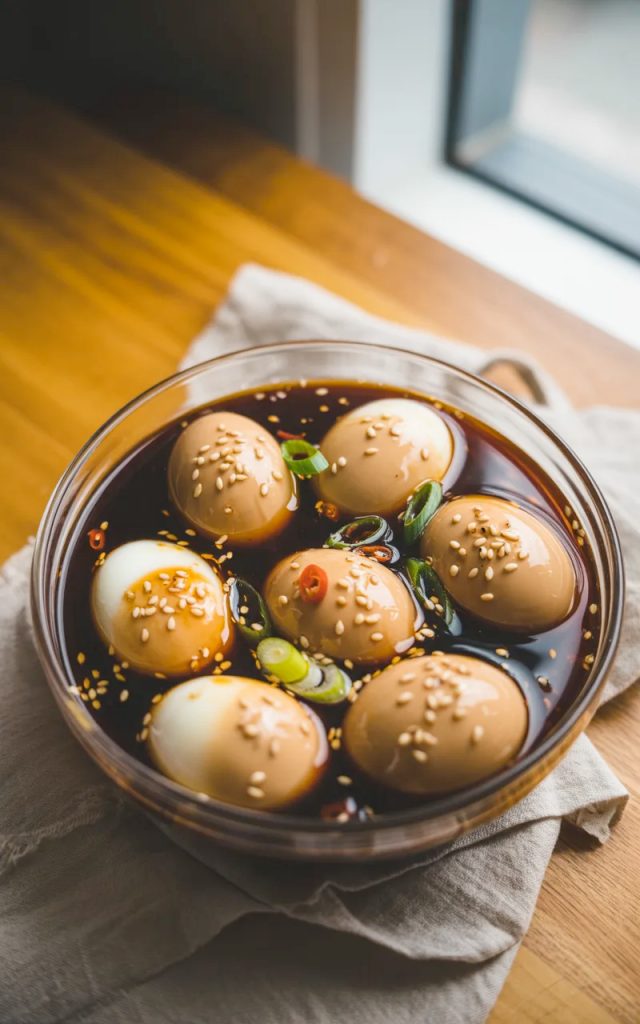

You know that one recipe you make once and suddenly it’s on rotation every single week? That’s mayak eggs for me.
These little guys are soft-boiled eggs soaked in a savory, slightly sweet, umami-packed soy marinade — and honestly, calling them “addictive” is an understatement. Mayak actually translates to “drug” in Korean, so yeah, the name pretty much says it all.
The best part? You don’t need any fancy ingredients or chef-level skills. If you can boil water and mix a sauce, you can make these. Let’s get into it.
Why You’ll Love This Recipe
- Incredibly easy to make — Minimal prep, minimal effort, maximum flavor. This is the kind of recipe that makes you look like you know what you’re doing in the kitchen.
- Ready with minimal cooking — The eggs take about 6 minutes to boil. After that, the marinade does all the heavy lifting.
- Meal prep friendly — Make a batch on Sunday and you’ve got a protein-packed topping for rice bowls, noodles, or ramen all week long.
- Budget-friendly — Eggs and pantry staples. We’re talking a full batch for under $5. IMO, that’s a win.
- Surprisingly healthy — High in protein, dairy-free, and gluten-free adaptable. Comfort food that actually works in your favor.
- Customizable heat level — Love spice? Dial it up. Cooking for kids? Dial it down. This recipe plays well with everyone.
Ingredients with Key Notes
For the Eggs:
- 6 large eggs — Fresh eggs work best here. The fresher the egg, the harder it is to peel, so eggs that are 1-2 weeks old actually peel much more cleanly.
- Water — For boiling and for the ice bath.
- Ice — Don’t skip the ice bath. It stops the cooking immediately and gives you that perfect jammy yolk.
For the Marinade:
- 1/2 cup soy sauce — Use regular soy sauce for the full flavor. If you need gluten-free, swap with tamari — it works just as well.
- 1/2 cup water — Balances out the saltiness of the soy sauce.
- 2 tablespoons sugar — Just enough sweetness to round out the savory notes. You can swap with honey or maple syrup.
- 4 cloves garlic, minced — Fresh garlic is non-negotiable here. It’s a core part of the flavor profile.
- 3 green onions, thinly sliced — Adds a mild sharpness and a pop of color.
- 1-2 red chili peppers, thinly sliced — Adjust based on your heat preference. Remove the seeds for less heat.
- 1 tablespoon sesame oil — Adds that nutty, aromatic finish that pulls the whole marinade together.
- 1 tablespoon sesame seeds — For texture and that classic Korean flavor.
- 1 teaspoon gochugaru (Korean red pepper flakes) — Optional, but highly recommended if you want a bit of depth and color. Regular red pepper flakes work as a substitute.
Step-by-Step Instructions
Step 1: Boil the Eggs
Bring a pot of water to a full rolling boil. Gently lower your eggs in using a spoon — dropping them in will crack the shells. Boil for exactly 6 minutes and 30 seconds for that perfect jammy yolk.
While the eggs boil, prepare a large bowl with cold water and plenty of ice. Timing is everything here, so have it ready before the eggs are done.
Step 2: Ice Bath
As soon as the timer goes off, transfer the eggs straight into the ice bath. Let them sit for at least 5 minutes. This stops the cooking process and makes peeling significantly easier.
Ever tried to peel a hot egg right out of the pot? Not fun. The ice bath is your best friend here.
Step 3: Peel the Eggs
Once the eggs are fully cooled, peel them carefully under a thin stream of running water. The water helps remove any stubborn shell bits without tearing the egg white.
Set the peeled eggs aside and resist the urge to eat one plain right now. Almost there.
Step 4: Make the Marinade
In a small saucepan over medium heat, combine the soy sauce, water, and sugar. Stir until the sugar fully dissolves — this takes about 2 minutes. You’re not looking to reduce it, just to dissolve and gently warm it.
Remove from heat and let it cool to room temperature. Then add in the minced garlic, green onions, chili peppers, sesame oil, sesame seeds, and gochugaru if using. Stir everything together.
Step 5: Marinate the Eggs
Place the peeled eggs in a zip-lock bag or an airtight container. Pour the cooled marinade over the eggs, making sure they’re fully submerged. If using a container, you can place a small piece of plastic wrap directly on top of the eggs to keep them pressed into the marinade.
Refrigerate for a minimum of 4 hours, but overnight is where the magic really happens. The longer they sit, the deeper the flavor.
Step 6: Serve and Enjoy
Slice the eggs in half lengthwise and serve over steamed rice with a spoonful of the marinade drizzled on top. That’s it. Simple, beautiful, and absolutely delicious.
Serving Suggestions
Over steamed white rice — The classic way to serve mayak eggs. Slice them in half, lay them over a bowl of hot rice, and drizzle a little of the marinade over everything. Simple and deeply satisfying.
With ramen or noodle soups — Drop a whole or halved mayak egg into your favorite ramen or noodle soup. The marinade seeps into the broth and adds a whole new layer of flavor.
In a rice bowl (bibimbap style) — Add mayak eggs to a bowl with rice, sauteed vegetables, and a drizzle of sesame oil for a quick, balanced meal.
As a side dish (banchan) — In Korean cuisine, small side dishes called banchan are served alongside the main meal. Mayak eggs fit right into that tradition and pair beautifully with grilled meats or stir-fries.
On avocado toast — Not traditional at all, but hear me out. Sliced mayak eggs on avocado toast with a sprinkle of sesame seeds? That’s a breakfast worth waking up for.
Storage Tips
In the refrigerator: Store mayak eggs in their marinade in an airtight container for up to 5 days. The flavor actually deepens over time, so day 2 and day 3 eggs are arguably even better than day 1.
Do not freeze: Freezing boiled eggs changes the texture of the egg white significantly — they become rubbery and unpleasant. Stick to the fridge.
Reusing the marinade: You can reuse the marinade once to make a second batch of eggs. After that, the flavor starts to dilute. Give it a taste before reusing — if it still tastes strong and savory, you’re good to go.
Pro tip: If you’re meal prepping, make a double batch of the marinade and keep it in the fridge. That way you can boil fresh eggs and drop them straight in without starting from scratch.
Brief Closing
Mayak eggs are proof that the simplest recipes are often the most satisfying ones.
A handful of pantry ingredients, six minutes of cooking, and a little patience while they marinate — that’s genuinely all it takes. Whether you’re topping a rice bowl, dressing up your ramen, or just eating them straight out of the container at midnight (no judgment at all), these eggs deliver every single time.
If you make this recipe, I’d love to hear how it turned out. Drop a comment below or tag Recipes By Kip on Pinterest. Let’s keep cooking good food together.
— Kip
Mayak Eggs (Korean Marinated Eggs) — The Addictive Soy-Glazed Eggs You’ll Make Every Week
Description
Mayak eggs are a popular Korean street food — soft-boiled eggs with jammy yolks, marinated overnight in a rich blend of soy sauce, garlic, sesame, and a touch of heat. They're quick to prepare, deeply flavorful, and wildly versatile.
Ingredients
Eggs:
Marinade:
Instructions
-
Boil eggs for 6 minutes 30 seconds in rolling boiling water.
-
Transfer immediately to an ice bath for 5 minutes.
-
Peel eggs carefully under running water.
-
Heat soy sauce, water, and sugar until sugar dissolves. Cool completely.
-
Add garlic, green onions, chili, sesame oil, sesame seeds, and gochugaru to the cooled marinade.
-
Place eggs in a container, pour marinade over, and refrigerate for at least 4 hours.
-
Slice in half and serve over rice with a drizzle of marinade.