

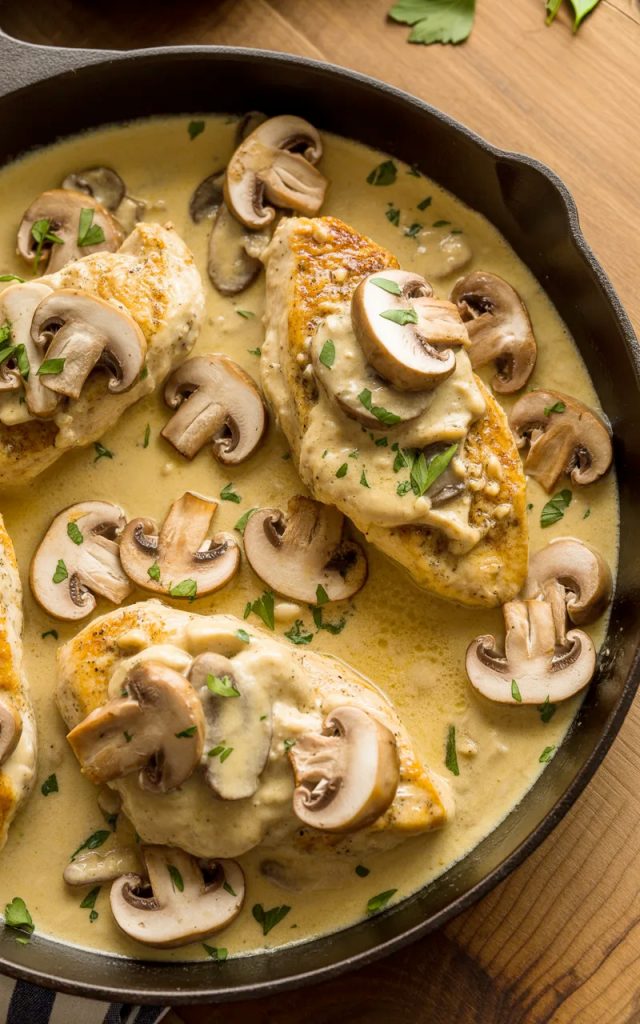

There is a category of dinner that I think about a lot — the kind that looks and tastes genuinely impressive but does not require you to spend your entire evening in the kitchen.
The kind of meal where someone takes their first bite and goes quiet for a second because they were not expecting it to be that good. This mushroom Asiago chicken lives firmly in that category and it has earned its place there every single time I have made it.
The combination of golden seared chicken, earthy sauteed mushrooms, and a rich Asiago cream sauce is one of those flavor combinations that just makes sense on every level.
The Asiago cheese brings a nuttier, slightly sharper depth than the usual Parmesan you see in cream sauces — it melts into the cream beautifully and gives the sauce a complexity that tastes like it took hours to develop. It did not. It took about ten minutes.
Everything happens in one pan which means minimal cleanup, maximum flavor from all the fond left behind from the seared chicken, and a sauce that tastes like it absorbed every good thing that happened in that pan before it.
Serve it over pasta, mashed potatoes, or crusty bread and you have got a dinner that earns you serious points at the table on a Wednesday night. That is the kind of cooking I am always looking for.
Why you’ll love this mushroom Asiago chicken
- One pan and thirty minutes. Everything — from searing the chicken to building and finishing the sauce — happens in a single skillet. Less cleanup, more flavor, and a dinner on the table in half an hour. That is genuinely hard to beat on a weeknight.
- The Asiago cream sauce is extraordinary. Asiago cheese has a nuttier, more complex flavor than standard Parmesan and it melts into cream in a way that produces a sauce with real depth and richness. Once you make a cream sauce with Asiago you will find yourself looking for excuses to use it in other dishes.
- Golden seared chicken that stays juicy. The searing technique used in this recipe gives the chicken a deeply golden, slightly crispy exterior that locks in the juices and adds a layer of flavor that you simply cannot get from poaching or baking. The chicken stays tender and moist inside even after finishing in the sauce.
- Restaurant quality flavor from home kitchen ingredients. Everything in this recipe is available at any grocery store. No obscure ingredients, no specialty items, nothing that requires a trip to a specialty food market. The restaurant-quality result comes entirely from technique and the quality of the cheese.
- Endlessly versatile for serving. Serve it over pasta, creamy mashed potatoes, steamed rice, cauliflower mash for a low carb option, or with thick slices of crusty bread for soaking up the sauce. The dish adapts effortlessly to whatever you have on hand or whatever your table prefers.
- Impressive enough for guests. This is the kind of dish you can serve at a dinner party without anyone questioning whether you put in the effort. It looks stunning in the pan, it smells incredible while it cooks, and it tastes like something that required significantly more skill and time than it actually did. That is a recipe worth keeping very close.
Ingredients you’ll need
For the chicken:
- 4 boneless skinless chicken breasts (about 6–8 oz each)
- 1 teaspoon garlic powder
- 1 teaspoon onion powder
- 1/2 teaspoon smoked paprika
- 1/2 teaspoon salt
- 1/2 teaspoon black pepper
- 2 tablespoons olive oil
For the mushroom Asiago sauce:
- 2 tablespoons unsalted butter
- 3 cloves garlic, minced
- 8 oz cremini or baby bella mushrooms, sliced
- 1/2 cup dry white wine (or chicken broth as a substitute)
- 1 cup heavy cream
- 1/2 cup chicken broth
- 1 cup freshly grated Asiago cheese
- 1 teaspoon fresh thyme leaves (or 1/2 teaspoon dried)
- 1 tablespoon fresh flat-leaf parsley, finely chopped
- Salt and black pepper to taste
- 1/2 teaspoon red pepper flakes (optional, for a slight kick)
Key ingredient notes:
Chicken breasts — Boneless skinless chicken breasts work beautifully in this recipe but the size and thickness matters for even cooking. If your chicken breasts are very thick — more than an inch at the thickest point — use a meat mallet to pound them to an even thickness of about 3/4 inch. Even thickness means even cooking which means no dry edges and undercooked centers. Alternatively, butterfly them by slicing horizontally almost all the way through and opening them like a book. Chicken thighs also work well in this recipe and produce an even juicier result — they are more forgiving of slightly longer cooking times.
Asiago cheese — Buy a block of Asiago and grate it yourself rather than using pre-shredded. Pre-shredded cheese contains anti-caking agents that prevent it from melting smoothly into the sauce and can make the sauce grainy. Freshly grated Asiago melts into the cream in a completely smooth, silky way that makes the sauce genuinely luxurious. Asiago has a nuttier, slightly sharper flavor profile than Parmesan — if you cannot find it, Parmesan or Pecorino Romano are the closest substitutes, though the flavor will be slightly different.
Cremini mushrooms — Cremini or baby bella mushrooms have a deeper, earthier flavor than white button mushrooms and hold their texture better during cooking. Slice them about 1/4 inch thick — not too thin or they will disappear into the sauce, not too thick or they will not cook through properly. Do not wash mushrooms under running water — they absorb liquid and will steam rather than saute in the pan. Wipe them clean with a damp paper towel instead.
Dry white wine — A dry white wine like Sauvignon Blanc, Pinot Grigio, or an unoaked Chardonnay adds an important layer of acidity and depth to the sauce that chicken broth alone cannot replicate. The alcohol cooks off completely during cooking so the sauce has none of the alcohol flavor — just the complexity and brightness that the wine contributes. If you prefer not to cook with wine, substitute with an equal amount of additional chicken broth and a teaspoon of white wine vinegar to replicate some of the acidity.
Heavy cream — Do not substitute with half-and-half or milk in this recipe. Heavy cream has the fat content necessary to create a stable, smooth sauce that does not break or curdle when the cheese is added. Lower-fat dairy alternatives will result in a thinner sauce that may separate when the heat is applied. If you want a lighter version, a mixture of half heavy cream and half chicken broth produces a thinner but still very good sauce.
Step-by-step instructions
Part 1: Sear the chicken
Step 1: Season the chicken
Pat the chicken breasts completely dry with paper towels — this is the most important step for getting a good sear. Moisture on the surface of the chicken creates steam in the pan which prevents browning. Mix together the garlic powder, onion powder, smoked paprika, salt, and black pepper in a small bowl and sprinkle the seasoning generously and evenly over both sides of each chicken breast, pressing it gently into the surface.
Step 2: Sear the chicken until golden
Heat the olive oil in a large heavy-bottomed skillet — a cast iron skillet or stainless steel pan works best — over medium-high heat until the oil is shimmering and hot. Carefully add the seasoned chicken breasts and cook without moving them for 5–6 minutes until deeply golden and easily releasing from the pan. Flip and cook for another 4–5 minutes on the second side. The internal temperature should reach 165°F. If the chicken breasts are very thick, finish them in a 375°F oven for 5–8 minutes after searing.
Step 3: Rest the chicken
Transfer the seared chicken to a plate and tent loosely with aluminum foil to keep warm. Do not clean the pan — all those golden bits stuck to the bottom are flavor and they are about to become the foundation of your sauce.
Part 2: Make the mushroom Asiago sauce
Step 4: Saute the mushrooms
Reduce the heat to medium. Add the butter to the same pan and let it melt, scraping up any browned bits from the bottom with a wooden spoon as it does. Add the sliced mushrooms in a single layer and cook without stirring for 2–3 minutes until they develop a golden sear on one side. Stir and cook for another 2 minutes until the mushrooms are tender and golden all over. Season with a pinch of salt and pepper.
Step 5: Add the garlic
Add the minced garlic to the pan with the mushrooms and stir constantly for 30–60 seconds until fragrant. Watch carefully — garlic burns quickly and burnt garlic will make the whole sauce bitter. You want it golden and fragrant, not dark.
Step 6: Deglaze with white wine
Pour the dry white wine into the pan and use your wooden spoon to scrape up any remaining browned bits from the bottom of the pan — these bits are pure concentrated flavor and you want every single one of them in your sauce. Let the wine cook for 2–3 minutes until it has reduced by about half and the sharp alcohol smell has cooked off.
Step 7: Add the cream and broth
Pour in the heavy cream and chicken broth and stir to combine. Bring the mixture to a gentle simmer over medium heat and cook for 3–4 minutes, stirring occasionally, until the sauce has thickened slightly and coats the back of a spoon. Do not let it boil aggressively — a gentle simmer is all you need and keeps the cream from breaking.
Step 8: Melt in the Asiago
Reduce the heat to low. Add the freshly grated Asiago cheese a handful at a time, stirring continuously between each addition until each handful is fully melted before adding the next. This gradual addition is what keeps the sauce smooth and prevents the cheese from clumping. Once all the cheese is incorporated, the sauce should be velvety, rich, and beautifully golden. Add the fresh thyme and stir through. Taste and adjust the seasoning with salt and pepper.
Part 3: Bring it all together
Step 9: Return the chicken to the pan
Nestle the rested chicken breasts back into the sauce in the pan, spooning the sauce generously over the top of each piece. Cook over low heat for 2–3 minutes until the chicken is heated through and the sauce has thickened slightly around it.
Step 10: Garnish and serve
Scatter the fresh chopped parsley generously over the chicken and sauce and add the red pepper flakes if using. Serve directly from the pan for a dramatic presentation or plate individually with the sauce spooned generously over each chicken breast.
Serving suggestions
This dish is rich and saucy and it needs something to soak all of that sauce up properly. Here are the best options:
- Over creamy mashed potatoes. This is the classic and most satisfying pairing. The rich Asiago mushroom sauce soaks into the mashed potatoes in a way that makes every bite a complete experience. Make the mashed potatoes as buttery and creamy as possible — this is not the time for restraint.
- Over pasta. Toss al dente fettuccine, pappardelle, or linguine with a little of the Asiago sauce and serve the chicken on top. The pasta absorbs the sauce beautifully and the whole plate looks genuinely impressive. A sprinkle of extra grated Asiago on top and fresh parsley and you have got a restaurant-quality pasta dish.
- With crusty bread. Thick slices of a good crusty sourdough or ciabatta for dragging through the sauce is one of the simplest and most satisfying ways to serve this dish. The bread does not compete with the flavors — it just makes sure none of that incredible sauce goes to waste.
- Over cauliflower mash for a low carb option. Cauliflower mash made with butter and cream cheese absorbs the Asiago mushroom sauce just as beautifully as regular mashed potatoes and keeps the meal low carb without sacrificing any of the comfort factor.
- With steamed green vegetables. Steamed broccoli, green beans, or asparagus alongside this chicken cuts through the richness of the cream sauce with a fresh, slightly bitter contrast that balances the whole plate. It also makes the dinner feel more complete and rounded.
Storage tips
Refrigerator: Store leftover chicken and sauce together in an airtight container in the refrigerator for up to 3 days. The sauce thickens significantly when cold — this is normal. Store with the sauce spooned generously over the chicken to keep it moist.
Reheating: The best way to reheat this dish is gently on the stovetop over low heat. Add a splash of chicken broth or cream to the pan along with the chicken and sauce and warm slowly, stirring the sauce occasionally until it returns to its original silky consistency. Avoid the microwave if possible — it reheats unevenly and can make the chicken rubbery and the sauce grainy. If you must use the microwave, use 50 percent power in 30-second intervals and stir between each one.
Freezer: Cream-based sauces generally do not freeze well — the emulsion breaks during freezing and thawing and the sauce separates into a greasy, grainy mixture that is difficult to bring back together. If you want to freeze leftovers, the chicken freezes better than the sauce. Freeze the cooked chicken separately without the sauce in a freezer-safe bag for up to 2 months and make a fresh batch of sauce when you reheat it.
Make-ahead tip: You can sear the chicken up to 24 hours ahead and store it covered in the refrigerator. When you are ready to serve, make the sauce fresh — it takes about 15 minutes — and return the pre-seared chicken to the pan to warm through in the sauce for the last few minutes. This splits the work across two sessions and makes the final assembly feel effortless.
Closing
Mushroom Asiago chicken is one of those recipes that earns a permanent spot in your dinner rotation after the very first time you make it. It is fast enough for a weeknight, impressive enough for company, and satisfying enough to make the whole house smell incredible while it cooks — which is really its own form of value when you think about it.
One pan, thirty minutes, and a dinner that tastes like you really tried. That is the goal every time I walk into the kitchen on a Tuesday evening and this recipe delivers it consistently every single time.
Make it this week and serve it over mashed potatoes with crusty bread on the side. Drop a comment below and tell me how it went. Did you use chicken thighs? Did you add red pepper flakes? Did you drink the rest of the wine while the sauce was cooking? Again, no judgment whatsoever. Tag me on Pinterest and Instagram — I want to see that golden pan.
Happy cooking — Kip
Mushroom Asiago chicken (a creamy one-pan dinner ready in 30 minutes)
Description
This mushroom Asiago chicken is the kind of weeknight dinner that makes people think you spent far more time in the kitchen than you actually did. Chicken breasts get seared until deeply golden and crispy, then simmered right in the same pan in a rich, velvety Asiago cream sauce loaded with tender sauteed mushrooms, garlic, and fresh herbs. One pan, thirty minutes, and a dinner that tastes like something you would order at a nice Italian restaurant on a Friday night. It has become one of the most requested meals in my house and once you make it the first time you will completely understand why.
Ingredients
For the chicken:
For the mushroom Asiago sauce:
Instructions
-
Pat chicken dry and season both sides with garlic powder, onion powder, smoked paprika, salt, and pepper.
-
Heat olive oil in a large skillet over medium-high heat. Sear chicken for 5–6 minutes per side until deeply golden. Transfer to a plate and tent with foil.
-
Reduce heat to medium. Add butter to the same pan and melt, scraping up browned bits.
-
Add sliced mushrooms and cook for 4–5 minutes until golden. Season with salt and pepper.
-
Add minced garlic and stir for 30–60 seconds until fragrant.
-
Pour in white wine and cook for 2–3 minutes until reduced by half.
-
Add heavy cream and chicken broth. Simmer for 3–4 minutes until slightly thickened.
-
Reduce heat to low. Add Asiago cheese gradually, stirring between each addition until melted and smooth. Add thyme.
-
Return chicken to the pan and spoon sauce over the top. Cook for 2–3 minutes until heated through.
-
Garnish with fresh parsley and red pepper flakes. Serve immediately.