


You know that Little Debbie oatmeal cream pie that you grabbed from the snack aisle as a kid and somehow still reach for as an adult when nobody is looking?
This cake is that — except it is a full-on showstopping layer cake that walks into a room and makes everyone immediately forget about every other dessert on the table.
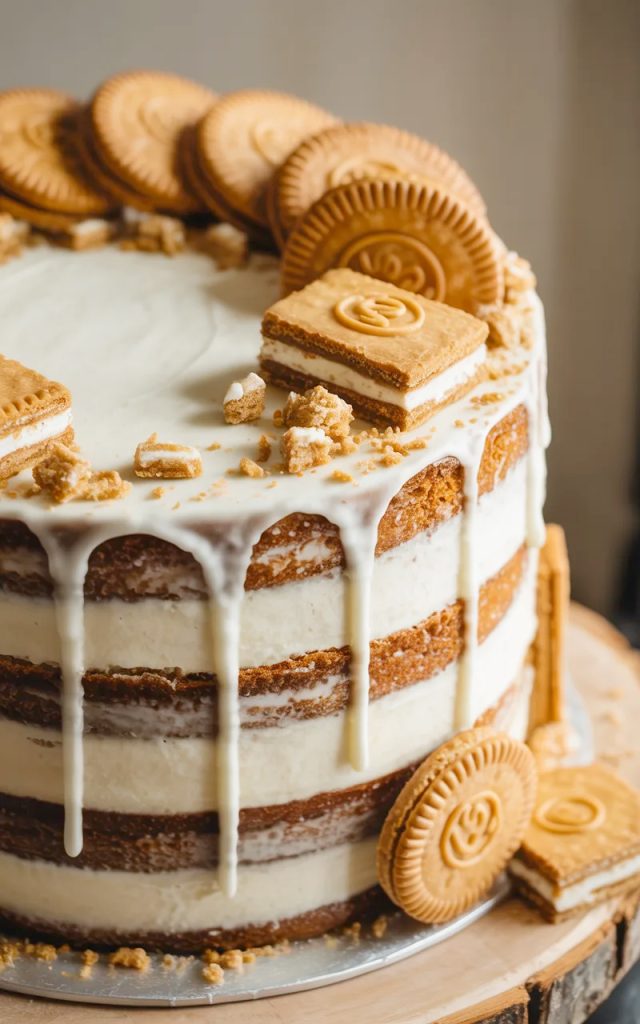
Warmly spiced oatmeal cake layers, a fluffy vanilla cream filling sandwiched between each layer, smooth white vanilla buttercream on the outside, and crushed oatmeal cream pie cookies piled on top like a crown. It is nostalgic, it is impressive, and it tastes even better than it looks.
I came up with this recipe because I wanted to take something people already loved and turn it into something genuinely special. The oatmeal cake layers are soft, warmly spiced with cinnamon and nutmeg, and have that slightly dense, chewy character that immediately reminds you of the original cookie. The vanilla cream filling is light, fluffy, and perfectly sweet — just like the filling in the original but better because you made it yourself with real ingredients.
Ever brought a cake somewhere and had someone ask you where you bought it? This is that cake. Let’s get into it.
Why you’ll love this recipe
- Pure nostalgic comfort in cake form. This recipe takes one of the most universally loved childhood snacks and transforms it into a stunning layer cake that delivers all the same cozy, familiar flavors in the most impressive format possible.
- Those spiced oatmeal cake layers are incredible. Soft, warmly spiced, slightly dense in the best possible way — these cake layers have so much more character and flavor than a standard vanilla or chocolate cake.
- The vanilla cream filling is the star. Light, fluffy, perfectly sweet, and sandwiched generously between each layer — it is the element that makes every single slice taste exactly like biting into an oatmeal cream pie.
- Stunning enough for any occasion. The naked cake style with white buttercream drips and crushed cookie topping looks genuinely breathtaking on a dessert table. This cake makes people stop and stare before they even take a bite.
- It is a conversation starter. Nobody expects an oatmeal cream pie cake. The moment you tell people what it is, you have their complete and undivided attention. FYI the first bite always seals the deal.
- Makes ahead beautifully. The cake layers can be baked in advance and the whole assembled cake holds up beautifully in the fridge overnight — which makes it an excellent choice for parties and celebrations where you want to do the work ahead of time.
Ingredients with key notes
For the oatmeal cake layers:
- 2 cups old fashioned rolled oats — Process them briefly in a food processor or blender until coarsely ground. You want texture and oat character in the cake — not a fine oat flour. This is what gives the cake layers their signature look and that slightly chewy, dense texture that calls back to the original oatmeal cream pie cookie.
- 2 cups all-purpose flour — Standard all-purpose flour gives the cake the right structure.
- 1.5 tsp baking powder
- 1 tsp baking soda
- 2 tsp ground cinnamon — A generous amount because cinnamon is a defining flavor of this cake. Do not reduce it.
- 1/2 tsp ground nutmeg — Adds warmth and depth alongside the cinnamon.
- 1/2 tsp salt
- 1 cup unsalted butter, softened — Room temperature. Cold butter will not cream properly and will result in a dense, uneven cake.
- 1 cup granulated sugar
- 1 cup brown sugar, packed — The brown sugar adds a subtle molasses flavor that gives the cake layers their warm, slightly caramel-like character.
- 4 large eggs, room temperature — Room temperature eggs incorporate much more evenly into the batter. Pull them out at least 30 minutes before you start.
- 2 tsp pure vanilla extract
- 1 cup buttermilk, room temperature — Buttermilk adds moisture, tenderness, and a slight tang that balances the sweetness beautifully. If you do not have buttermilk, add a tablespoon of white vinegar to a cup of regular milk and let it sit for 5 minutes.
For the vanilla cream filling:
- 1 cup unsalted butter, softened — For the base of the fluffy vanilla cream filling.
- 1 cup vegetable shortening — The secret to a filling that stays light, fluffy, and stable at room temperature. Using shortening alongside butter gives you that classic cream pie filling texture that is distinctly different from regular buttercream.
- 4 cups powdered sugar, sifted — Sifting prevents lumps. Add it gradually so the filling stays light rather than dense.
- 3 tbsp heavy cream — Adds richness and helps create a smooth, pipeable consistency.
- 2 tsp pure vanilla extract — Pure vanilla is important here. Imitation vanilla will give you an artificial flavor that detracts from the whole nostalgic experience.
- Pinch of salt — Balances the sweetness.
For the vanilla buttercream frosting:
- 1.5 cups unsalted butter, softened
- 5 cups powdered sugar, sifted
- 3-4 tbsp heavy cream
- 2 tsp pure vanilla extract
- Pinch of salt
For decoration:
- 6-8 oatmeal cream pie cookies — For the top of the cake. Break some in half, leave some whole, and crush a few for crumbles scattered around the top for a natural, rustic look.
- Cookie crumbs for garnish
Step-by-step instructions
Step 1 — Process the oats
Add the rolled oats to a food processor and pulse 8-10 times until coarsely ground. You want them broken down but still with visible texture — not a powder. This step gives the cake layers their signature slightly rough, textured crumb that calls back to the original oatmeal cookie. Set aside.
Step 2 — Prep your pans and preheat
Preheat your oven to 350°F. Grease three 8-inch round cake pans thoroughly with butter or cooking spray, line the bottoms with parchment paper circles, and grease the parchment as well. Flouring the pans after greasing also helps ensure clean release. Getting this right prevents a lot of heartbreak later.
Step 3 — Mix the dry ingredients
In a large bowl, whisk together the ground oats, all-purpose flour, baking powder, baking soda, cinnamon, nutmeg, and salt until evenly combined. Set aside.
Step 4 — Cream the butter and sugars
In the bowl of a stand mixer fitted with the paddle attachment, beat the softened butter, granulated sugar, and brown sugar together on medium speed for 4-5 minutes until the mixture is light, pale, and very fluffy. This extended creaming time is important — it incorporates air into the batter which gives the cake its lift and tender crumb. Do not rush it.
Step 5 — Add eggs and vanilla
Add the eggs one at a time, beating well after each addition and scraping down the sides of the bowl between each egg. Add the vanilla extract and mix until fully incorporated. The batter should look smooth, glossy, and well emulsified at this point.
Step 6 — Add dry and wet ingredients alternately
With the mixer on low speed, add the dry ingredient mixture in three additions, alternating with the buttermilk in two additions — starting and ending with the dry ingredients. This alternating method prevents the batter from becoming too wet or too dry at any stage and ensures a smooth, well-combined batter. Mix only until just combined after each addition — overmixing at this stage develops gluten and makes the cake tough.
Step 7 — Bake the cake layers
Divide the batter evenly between the three prepared cake pans — a kitchen scale is the most reliable way to ensure even layers. Smooth the tops with an offset spatula. Bake at 350°F for 28-32 minutes until a toothpick inserted into the center comes out clean or with just a few moist crumbs. The tops should spring back lightly when touched. Do not overbake — a dry oatmeal cake layer is a sad oatmeal cake layer.
Step 8 — Cool the cake layers completely
Let the cake layers cool in the pans for 15 minutes before turning them out onto wire racks to cool completely. This step is not negotiable — frosting a warm cake layer causes the filling and frosting to melt and slide off. The layers need to be completely at room temperature before assembling. If you are short on time, wrap the cooled layers in plastic wrap and refrigerate for 30 minutes to firm them up before assembling.
Step 9 — Make the vanilla cream filling
In the bowl of a stand mixer fitted with the whisk attachment, beat the softened butter and vegetable shortening together on medium-high speed for 3-4 minutes until the mixture is very light, fluffy, and almost white in color. Add the sifted powdered sugar one cup at a time, beating well between each addition. Add the heavy cream, vanilla extract, and pinch of salt. Beat on high speed for 2-3 minutes until the filling is light, fluffy, and smooth. It should hold its shape when spread but still feel light and airy — not dense like a standard buttercream.
Step 10 — Make the vanilla buttercream
In a clean bowl, beat the softened butter on medium-high speed for 3-4 minutes until pale and fluffy. Add the sifted powdered sugar one cup at a time on low speed until incorporated. Add the heavy cream, vanilla extract, and salt. Beat on high speed for 3 minutes until the buttercream is smooth, fluffy, and spreadable. If it is too stiff add more cream a teaspoon at a time. If it is too loose add more powdered sugar a tablespoon at a time.
Step 11 — Assemble the cake
Place the first cake layer on a cake board or serving plate. Spread a generous, even layer of vanilla cream filling over the top — be really generous here. Place the second cake layer on top and repeat. Add the third layer on top. Apply a thin crumb coat of vanilla buttercream all over the outside of the cake to seal in any loose crumbs. Refrigerate for 20-30 minutes until the crumb coat is firm.
Step 12 — Frost and decorate
Apply the final coat of vanilla buttercream to the outside of the chilled cake. For the naked cake look shown in the photo, apply the buttercream to the top and sides and then use a bench scraper to scrape most of it off the sides, leaving just a thin translucent layer through which the cake layers are visible. Allow some of the buttercream to drip down the sides naturally. Arrange whole oatmeal cream pie cookies on the top, break a few in half, and scatter cookie crumbles around and between them for a natural, abundant look. Refrigerate for at least 30 minutes before slicing.
Serving suggestions
This oatmeal cream pie cake is spectacular on its own but here are a few ways to make serving it even more special:
- With a cold glass of milk — The classic pairing. Cold milk and a slice of this spiced oatmeal cream cake is an experience that transcends age.
- With a scoop of vanilla ice cream — A warm slice alongside a scoop of good vanilla bean ice cream is genuinely one of the better dessert combinations you can offer someone.
- With a hot cup of coffee or chai tea — The cinnamon and nutmeg in the cake layers pair beautifully with the warm spice notes of a chai latte or the bitterness of a strong black coffee.
- At a fall or winter celebration — The warm spices make this cake feel particularly at home at a Thanksgiving dessert table, holiday gathering, or cozy autumn birthday party.
- As a birthday cake — This cake is an incredibly memorable birthday cake choice. It is different enough to be exciting and familiar enough to be universally loved.
Storage tips
Room temperature: The assembled cake can sit at room temperature for up to 2 hours before serving. Beyond that, refrigerate it.
Refrigerator: Store the assembled cake loosely covered with plastic wrap or in a cake box in the fridge for up to 4 days. The cake actually tastes even better on day two as the filling settles into the layers and the flavors meld together beautifully. Bring slices to room temperature for 20-30 minutes before eating for the best texture and flavor.
Individual cake layers: Baked and completely cooled cake layers can be wrapped tightly in plastic wrap and stored at room temperature for up to 2 days or refrigerated for up to 5 days before assembling.
Freezing cake layers: Wrap individual cooled cake layers tightly in plastic wrap and then in aluminum foil and freeze for up to 2 months. Thaw overnight in the fridge before assembling. Do not freeze the assembled and frosted cake as the filling texture changes significantly after thawing.
Frosting: Both the vanilla cream filling and the vanilla buttercream can be made up to 3 days in advance and stored covered in the fridge. Bring to room temperature and re-whip briefly before using.
Wrapping it up
Vanilla filled oatmeal cream pie cake is the kind of dessert that creates a genuine moment. The first sight of it stops people in their tracks, the first bite takes them straight back to childhood, and the second bite confirms that this is one of the best cakes they have ever had. Warmly spiced layers, fluffy vanilla cream, smooth buttercream, and those cookies on top — every element works together perfectly.
Bake it for a birthday, bring it to a celebration, or just make it because you deserve something truly spectacular. Give it a try and let me know how it turns out — happy baking 🙂
Vanilla filled oatmeal cream pie cake — the nostalgic layer cake that takes a childhood classic to a whole new level
Description
Three layers of warmly spiced oatmeal cake made with coarsely ground rolled oats, brown sugar, cinnamon, and nutmeg, filled with a light and fluffy vanilla cream filling, frosted with smooth vanilla buttercream in a naked cake style, and topped with whole and crushed oatmeal cream pie cookies. Nostalgic, stunning, and absolutely unforgettable.
Ingredients
For the oatmeal cake layers:
For the vanilla cream filling:
For the vanilla buttercream:
For decoration:
Instructions
-
Preheat oven to 350°F. Grease and line three 8-inch round cake pans with parchment paper.
-
Pulse rolled oats in a food processor 8-10 times until coarsely ground. Whisk together with flour, baking powder, baking soda, cinnamon, nutmeg, and salt. Set aside.
-
Beat softened butter, granulated sugar, and brown sugar on medium speed for 4-5 minutes until light and fluffy.
-
Add eggs one at a time, beating well after each. Mix in vanilla extract.
-
Alternately add dry ingredients in three additions and buttermilk in two additions, beginning and ending with dry ingredients. Mix until just combined.
-
Divide batter evenly between the three prepared pans. Bake for 28-32 minutes until a toothpick comes out clean. Cool in pans for 15 minutes then transfer to wire racks to cool completely.
-
Beat butter and shortening together for 3-4 minutes until very light and fluffy. Add powdered sugar one cup at a time. Add cream, vanilla, and salt. Beat on high for 2-3 minutes until light and fluffy. Set aside.
-
Beat butter for buttercream for 3-4 minutes until pale. Add powdered sugar gradually. Add cream, vanilla, and salt. Beat on high for 3 minutes until smooth and fluffy.
-
Place first cake layer on a board. Spread a generous layer of vanilla cream filling on top. Repeat with second layer. Add third layer on top. Apply a thin crumb coat of buttercream and refrigerate for 20-30 minutes.
-
Apply final buttercream coat in a naked cake style using a bench scraper. Decorate the top with whole and broken oatmeal cream pie cookies and cookie crumbles. Refrigerate for 30 minutes before slicing.