
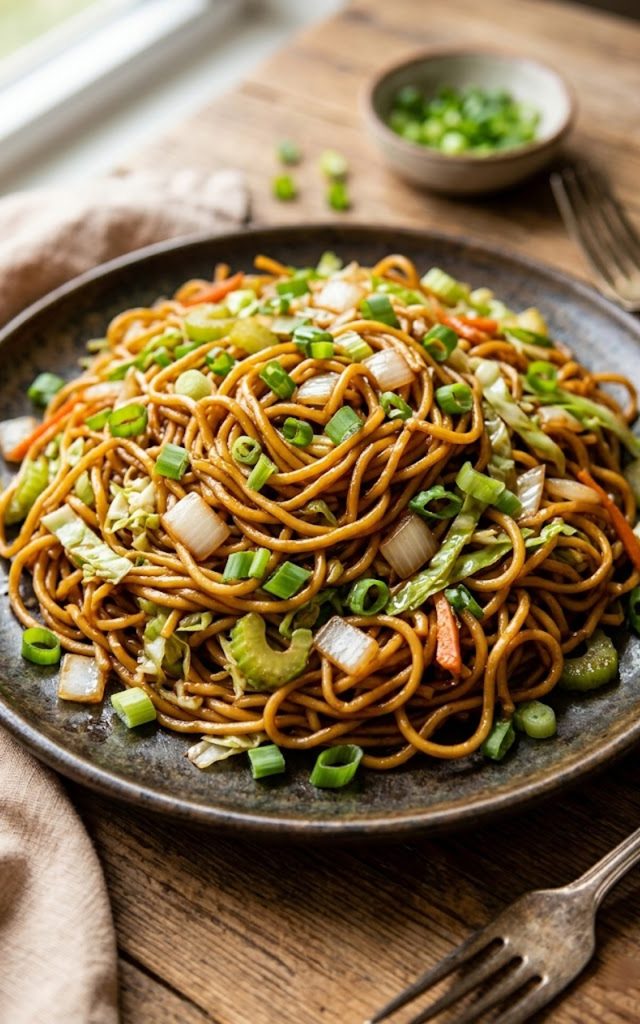
I have a confession. For a long time, the Panda Express chow mein was the reason I went to Panda Express. Not the orange chicken, not the fried rice — the chow mein. Those saucy, savory noodles with the perfectly cooked vegetables had me in a chokehold for years.
Then one day I decided to figure out what was actually in it. Turns out? It's not complicated at all. A few simple ingredients, the right noodles, and a sauce that comes together in minutes. The hardest part of this recipe is honestly just waiting for the water to boil.
This copycat version is so close to the original that my family did a side-by-side taste test and could not agree on which one was which. Make of that what you will. What I will tell you is that this version costs a fraction of the price, takes 20 minutes, and you can make it in your own kitchen any night of the week.
For the noodles:
For the vegetables:
For the sauce:
For cooking:
Step 1 — Cook the noodles
Bring a pot of water to a boil and cook the yakisoba noodles according to the package instructions — usually just 2-3 minutes. Drain and rinse them under cold water immediately to stop the cooking and prevent them from sticking together. Set aside. If your noodles are already pre-cooked and just need to be loosened, you can skip the boiling and just separate them with your hands.
Step 2 — Mix the sauce
In a small bowl, whisk together the soy sauce, oyster sauce, sesame oil, sugar, and white pepper. Give it a taste — it should be savory, slightly sweet, and deeply fragrant. Set it aside so it's ready to go when you need it. Having the sauce ready before you start cooking is important because this dish moves fast once it hits the wok.
Step 3 — Stir fry the aromatics
Heat a large wok or skillet over high heat until it's very hot. Add the vegetable oil and let it heat up for about 30 seconds. Add the garlic and ginger and stir fry for about 30 seconds until fragrant — watch it closely because garlic burns fast on high heat and burned garlic will ruin the whole dish.
Step 4 — Cook the vegetables
Add the white onion and celery to the wok and stir fry for 2-3 minutes until they start to soften but still have a bite to them. Then add the cabbage and cook for another 2 minutes. You want the vegetables tender but not mushy — they should still have some texture and color when you're done.
Step 5 — Add the noodles and sauce
Add the cooked noodles to the wok and pour the sauce over everything. Toss everything together using tongs or two wooden spoons, making sure the sauce coats every strand of noodle and every piece of vegetable evenly. Cook for another 2-3 minutes on high heat, tossing continuously. The high heat is what gives you that slightly charred, wok-kissed flavor that makes this dish so good.
Step 6 — Finish and serve
Remove from heat and top with sliced green onions. Serve immediately while it's hot and the noodles are at their sauciest. This is not a dish that gets better sitting on the stove — eat it fresh.
Refrigerator: Store leftovers in an airtight container in the fridge for up to 4 days. The noodles will absorb some of the sauce as they sit, which actually makes the flavor even deeper the next day.
Freezer: Chow mein freezes reasonably well for up to 2 months. Store in a freezer-safe container and thaw overnight in the fridge before reheating. The texture of the vegetables will soften slightly after freezing but the flavor stays strong.
Reheating: Reheat in a hot skillet or wok with a small splash of soy sauce and a few drops of sesame oil to bring it back to life. The skillet method is far superior to the microwave here — it revives the texture and gives the noodles that freshly cooked feel again. Add a drizzle of water if the noodles look too dry.
Some recipes are worth reverse engineering and this Panda Express chow mein is absolutely one of them. Twenty minutes, one wok, and a handful of simple ingredients — that's all it takes to bring one of the most craveable takeout dishes straight to your dinner table.
If you make this, I genuinely want to hear how it went. Leave a comment, share it with someone who loves Panda Express, and let me know if you added your own twist to it. That is always my favorite part.
With gratitude, Kip
This Panda Express chow mein copycat brings everything you love about the original straight to your kitchen — tender yakisoba noodles, crisp celery, onion, and cabbage, all tossed in a rich savory sauce that coats every single strand. It tastes exactly like the real thing, costs a fraction of the price, and comes together faster than the drive-through line.