


Let me paint you a picture. It’s a Tuesday night, you’re tired, and your brain has already checked out for the day. The Panda Express drive-through is calling your name — specifically that mushroom chicken that somehow hits different every single time.
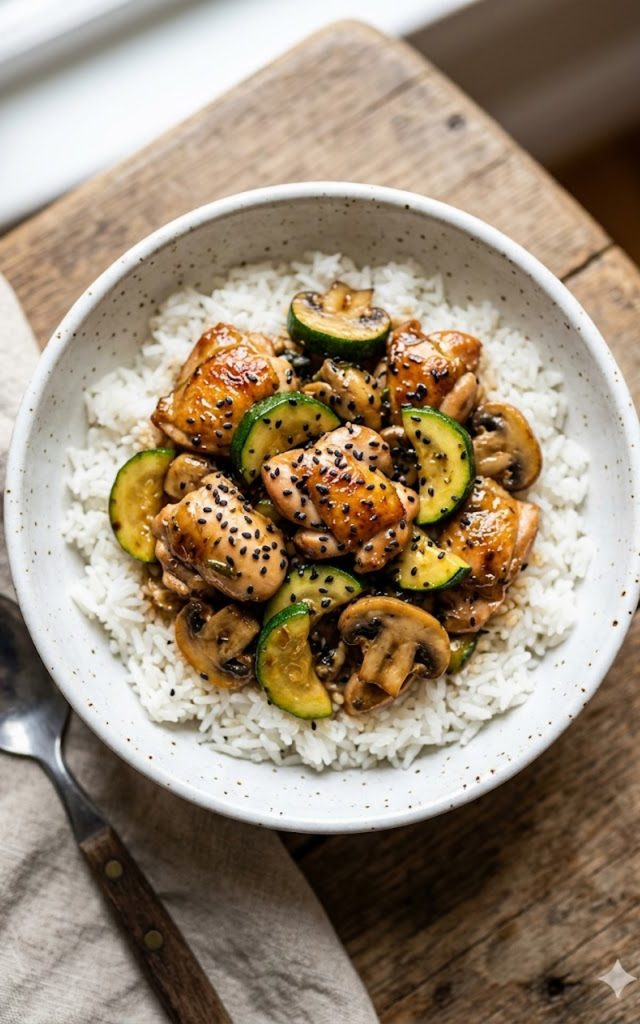
You know the one. Tender chicken, soft zucchini, earthy mushrooms, all coated in that glossy savory sauce that you can never quite put your finger on.
I’ve been in that drive-through line more times than I’d like to admit. But one evening I decided to figure out what was actually in that sauce — and after a few test runs in my kitchen, I cracked it. The result is this recipe, and I genuinely think it tastes better than the original. Bold claim? Maybe. But once you make it at home, you’ll understand.
The best part? It takes 20 minutes, uses ingredients you can find at any grocery store, and costs a fraction of what you’d spend at the restaurant. FYI — this one is going into your regular dinner rotation whether you planned for it or not.
Why you’ll love this recipe
- It’s faster than the drive-through — From cold pan to dinner table in 20 minutes. No waiting in line, no soggy takeout box, no regrets.
- Made with real, simple ingredients — No mystery sauces or hard-to-find items. Everything in this recipe is available at your regular grocery store.
- High protein and surprisingly light — Chicken breast and vegetables in a sauce that’s big on flavor but not heavy on calories. Comfort food that doesn’t wreck your day.
- Completely customizable — Swap the zucchini for broccoli, add bell peppers, throw in some snap peas. The sauce works with pretty much any vegetable you have sitting in your fridge.
- Better than takeout — You control the ingredients, the sodium, and the portion size. And because it’s fresh off your own stove, the texture is significantly better than anything that’s been sitting in a warming tray.
- Meal prep friendly — Make a double batch, portion it out, and you’ve got lunch sorted for the next few days. It reheats beautifully.
Ingredients with key notes
For the chicken marinade (velveting)
- 1 lb (450g) boneless skinless chicken breast, thinly sliced
- 1 tablespoon soy sauce
- 1 tablespoon cornstarch
- 1 teaspoon sesame oil
For the stir fry sauce
- 3 tablespoons oyster sauce
- 2 tablespoons low-sodium soy sauce
- 1 teaspoon dark soy sauce
- 1 teaspoon sesame oil
- 1 teaspoon cornstarch
- 1/2 cup chicken broth (or water)
- 1 teaspoon sugar
For the stir fry
- 2 tablespoons vegetable oil (divided)
- 3 cloves garlic, minced
- 1 teaspoon fresh ginger, grated
- 1 medium zucchini, cut into half-moon slices
- 1 and 1/2 cups mushrooms, sliced (white button or cremini)
- 1/2 teaspoon black sesame seeds (optional, for garnish)
Key notes
- Chicken breast: Slice it thin and against the grain for the most tender bites. Partially freezing the chicken for 15 minutes before slicing makes this much easier.
- Velveting: This is the step most home cooks skip — and it’s the reason restaurant Chinese food always has that impossibly tender chicken texture. Coating the chicken in soy sauce, cornstarch, and sesame oil before cooking creates a protective layer that locks in moisture. Do not skip this.
- Oyster sauce: This is the backbone of the sauce. It adds a deep, savory, slightly sweet flavor that you simply cannot replicate with anything else. You’ll find it in the Asian foods aisle of most grocery stores.
- Dark soy sauce: Just a teaspoon, but it gives the dish that beautiful deep color you see in the restaurant version. If you can’t find it, regular soy sauce works — the color will just be a little lighter.
- Zucchini: Cut it into half-moon slices about 1/2 inch thick. Too thin and it’ll turn mushy; too thick and it won’t cook through in time.
- Mushrooms: White button mushrooms work perfectly here and are the most authentic to the Panda Express version. Cremini mushrooms add a slightly deeper flavor if you want to go that route.
Step-by-step instructions
Step 1: Velvet the chicken
Add the sliced chicken to a bowl with soy sauce, cornstarch, and sesame oil. Toss everything together until the chicken is evenly coated. Let it sit for at least 10 minutes while you prep the rest of your ingredients. This step is what gives you that tender, silky chicken texture — it’s worth the wait.
Step 2: Mix the sauce
In a small bowl, whisk together the oyster sauce, low-sodium soy sauce, dark soy sauce, sesame oil, cornstarch, chicken broth, and sugar until smooth. Set it aside. Having your sauce ready before you start cooking is important — stir fry moves fast and you won’t have time to measure things mid-cook.
Step 3: Cook the chicken
Heat 1 tablespoon of vegetable oil in a large wok or skillet over high heat until it just starts to smoke. Add the chicken in a single layer and let it sear for about 60–90 seconds without moving it. Flip and cook for another 60 seconds. You’re looking for golden color on the outside and just-cooked through on the inside. Remove the chicken from the pan and set aside.
Step 4: Stir fry the vegetables
In the same pan, add the remaining tablespoon of oil. Add the minced garlic and grated ginger and stir fry for about 30 seconds until fragrant — keep it moving so it doesn’t burn. Add the zucchini and mushrooms and stir fry on high heat for 2–3 minutes. You want them tender but still with a little bite. Don’t overcrowd the pan or they’ll steam instead of fry.
Step 5: Add the sauce
Pour the sauce into the pan with the vegetables and stir to coat everything evenly. Let it cook for about 60 seconds, stirring constantly, until the sauce thickens and becomes glossy.
Step 6: Bring it all together
Add the cooked chicken back into the pan and toss everything together until the chicken is fully coated in the sauce and heated through. This should take about 60 seconds. Taste and adjust seasoning if needed — a little more soy sauce if you want more salt, a pinch more sugar if you want to balance the savory notes.
Step 7: Serve immediately
Transfer to a plate or bowl, garnish with black sesame seeds if using, and serve immediately over steamed white rice. This dish is best eaten fresh off the stove when the sauce is at its glossiest and the vegetables still have their texture.
Serving suggestions
- Over steamed white rice — This is the classic pairing and for good reason. The sauce soaks into the rice beautifully and every bite is perfectly balanced. Use jasmine rice for the most authentic experience.
- Over fried rice — Want to take it up a notch? Serve it over a simple egg fried rice instead of plain steamed rice. The flavors layer in a way that makes the whole dish feel more indulgent without much extra effort.
- With lo mein or noodles — Toss the mushroom chicken over stir-fried noodles for a heartier meal. This works especially well if you’re feeding a crowd and need to stretch the dish a little further.
- In lettuce wraps — Spoon the mushroom chicken into crisp butter lettuce cups for a lighter, lower-carb option. Add a little drizzle of chili oil on top and suddenly you have an appetizer that looks way more impressive than the effort required.
- With a side of egg rolls or potstickers — If you’re going full takeout-at-home mode, pair this with a few baked egg rolls or pan-fried potstickers. Nobody’s going to complain.
Storage tips
In the refrigerator
Store leftovers in an airtight container in the fridge for up to 4 days. The sauce thickens slightly as it cools, which is totally normal. The flavors actually develop overnight and taste even better the next day — IMO, day-two leftovers hit harder.
In the freezer
This dish freezes well for up to 2 months. Let it cool completely before transferring to a freezer-safe container or zip-lock bag. Lay it flat to freeze for easier storage. Thaw overnight in the fridge before reheating.
Reheating
The best way to reheat this is in a hot skillet with a splash of chicken broth or water to loosen the sauce back up. Stir it around on medium-high heat for 2–3 minutes and it’ll taste almost as good as fresh. The microwave works too — 90 seconds on high, stirring halfway through — but the stovetop gives you a much better result.
Quick tip: Store the rice and the mushroom chicken separately in the fridge. Combining them before storage makes the rice absorb all the sauce and turns the whole thing into a bit of a mushy situation.
A quick note before you go
This Panda Express Mushroom Chicken copycat came out of one of those evenings where I was too tired to go out but too hungry to eat cereal for dinner. And honestly, those kinds of evenings have produced some of my best recipes.
There’s something really satisfying about recreating a dish you love and realizing you can make it better at home — fresher, cleaner, and exactly the way you like it. That’s what cooking has always been for me. Taking something that brings comfort and making it your own.
If you give this recipe a try, drop a comment below and let me know how it went. And if you put your own spin on it, I’d love to hear what you changed. Tag me on Pinterest — let’s keep building this community one delicious recipe at a time.
With gratitude, Kip
Panda Express Mushroom Chicken – Better Than Takeout and Ready in 20 Minutes
Description
This Panda Express Mushroom Chicken copycat brings together juicy chicken breast, tender zucchini, and earthy mushrooms in a rich, savory sauce made with soy sauce, oyster sauce, garlic, and ginger. It tastes just like the original — honestly, better — and you can have it on the table in 20 minutes flat.