

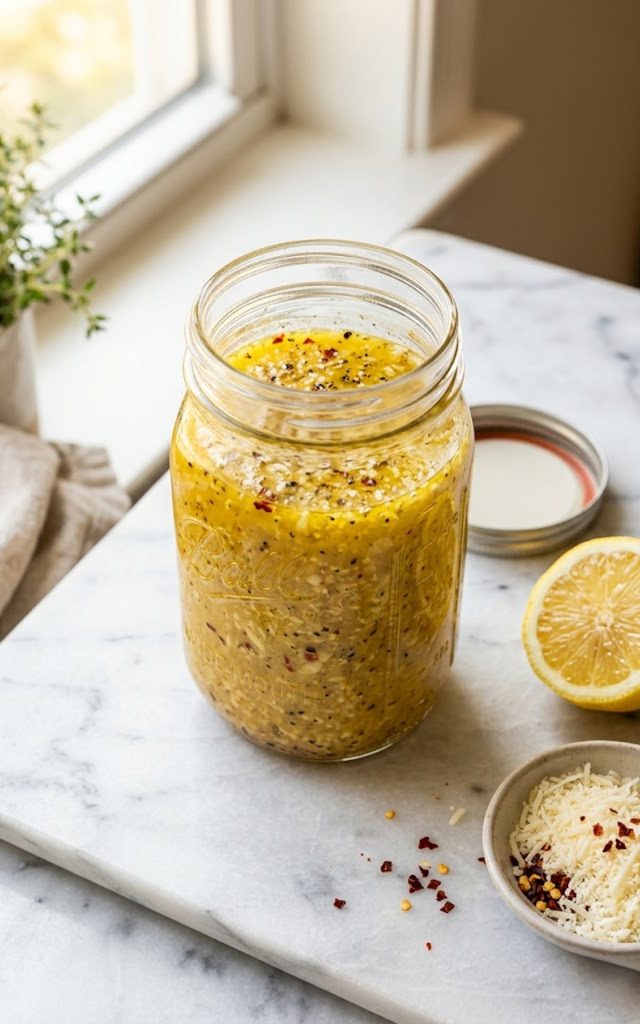

Can I tell you something that took me an embarrassingly long time to figure out? The difference between a salad you actually want to eat and one you feel obligated to finish almost always comes down to the dressing. Not the greens, not the toppings, not how perfectly you sliced the cucumbers. The dressing. Get that right and everything else falls into place.
I spent years buying bottled dressing out of habit and convenience and honestly just never questioning it. Then one evening I had some leftover parmesan, a lemon, and a bottle of white wine vinegar and I threw together a quick dressing just to use up what I had.
The result stopped me in my tracks. It was sharp, tangy, savory, and coated the salad in a way that made every single bite interesting. I have not bought bottled dressing since that night and that was years ago.
This parmesan vinaigrette takes five minutes to make, uses ingredients you almost certainly already have, and makes any salad taste like something from a proper restaurant.
It works on simple green salads, pasta salads, grain bowls, roasted vegetables, and just about anything else you want to drizzle it over. Once you have a jar of this in your fridge you will start putting it on everything. Fair warning — that is exactly what is supposed to happen.
Why you’ll love this recipe
- It takes five minutes and uses ingredients you already have. Olive oil, vinegar, garlic, parmesan, mustard, and a few pantry staples. No special trip to the store, no complicated technique, no excuses not to make it.
- The flavor is genuinely restaurant quality. The combination of sharp parmesan, tangy vinegar, fresh garlic, and good olive oil creates a depth of flavor that no bottled dressing can replicate. This is what a vinaigrette is supposed to taste like.
- It makes every salad better. We are talking significantly better. Even a simple bowl of romaine with some croutons becomes something you actually look forward to eating when it is dressed with this vinaigrette.
- It keeps well all week long. Make a full jar on Sunday and you have salad dressing ready for every meal until the following weekend. That kind of low effort meal prep is exactly what busy weeks are made for.
- It is naturally gluten free, low carb, and keto friendly. No hidden sugars, no preservatives, no ingredients you cannot pronounce. Just real food that tastes incredible and works for a wide range of dietary needs.
- It is endlessly versatile beyond salads. Use it as a marinade for chicken, a dipping sauce for bread, a drizzle over roasted vegetables, or a finishing sauce for grilled proteins. Once this dressing is in your fridge it starts showing up everywhere.
Ingredients with key notes
- 1/2 cup extra virgin olive oil — The base of the dressing and a primary flavor component. Use a good quality extra virgin olive oil here — it genuinely makes a noticeable difference. A light neutral olive oil will give you a milder dressing while a more robust one adds character and depth.
- 3 tbsp white wine vinegar — The tangy backbone of the vinaigrette. White wine vinegar is lighter and more delicate than red wine vinegar which makes it the right choice here. Apple cider vinegar works as a substitute and adds a slightly fruity note that is actually quite nice.
- 2 tbsp fresh lemon juice — Adds brightness and a clean citrus note that lifts the whole dressing. Fresh squeezed only — bottled lemon juice tastes flat and slightly off in a dressing where the flavors are this simple and direct.
- 1/3 cup freshly grated parmesan cheese — Finely grated so it incorporates smoothly into the dressing rather than sitting in clumps. Buy a block and grate it yourself rather than using pre-grated parmesan from a shaker — the flavor difference is significant and the fresh parmesan emulsifies into the dressing much more effectively.
- 2 garlic cloves, finely minced or grated — Fresh garlic grated on a microplane gives you the best result because it almost dissolves into the dressing rather than leaving noticeable pieces. If you do not have a microplane, mince it as finely as possible. Garlic powder works in a pinch but fresh garlic is noticeably better here.
- 1 tsp dijon mustard — This does two important things. First it adds a subtle tangy sharpness that complements the vinegar and parmesan beautifully. Second it acts as an emulsifier helping the oil and vinegar stay combined rather than separating immediately. Do not skip this ingredient.
- 1/2 tsp dried oregano — Adds a gentle herby note that ties everything together and gives the dressing an Italian character that works beautifully with the parmesan.
- 1/4 tsp red pepper flakes — Optional but highly recommended. Just enough to add a subtle background heat that makes the dressing more interesting without making it spicy.
- 1/2 tsp honey — Just a small amount to balance the acidity and round out the flavors. Maple syrup works as a vegan substitute. If you are strictly keto leave this out — the dressing is still excellent without it.
- Salt and freshly cracked black pepper to taste — Season generously. The parmesan adds saltiness but the dressing still needs a proper seasoning to bring everything together. Always taste and adjust before serving.
Step-by-step instructions
Step 1 — Combine the ingredients
Add the white wine vinegar, lemon juice, minced garlic, dijon mustard, honey, dried oregano, red pepper flakes, salt, and black pepper to a clean glass jar with a tight fitting lid or a medium mixing bowl. If using a jar, this is going to be the easiest cleanup of your cooking life. Add the finely grated parmesan cheese and stir everything together briefly before adding the oil.
Step 2 — Add the olive oil
If you are using a bowl, slowly drizzle the olive oil into the vinegar mixture while whisking constantly. This slow addition helps the dressing emulsify and stay combined longer. If you are using a jar, simply add all the olive oil at once — you are going to shake it to combine anyway and the mustard will help it emulsify.
Step 3 — Shake or whisk to combine
If using a jar, seal the lid tightly and shake vigorously for about 30 seconds until everything is fully combined and the dressing looks creamy and slightly opaque. If using a bowl, whisk vigorously for about 60 seconds until the oil and vinegar are fully emulsified and the parmesan is evenly distributed throughout.
Step 4 — Taste and adjust
This is the most important step and the one most people skip. Dip a clean spoon or a piece of lettuce into the dressing and taste it. Does it need more acid? Add a splash more vinegar or lemon juice. Does it need more salt? Add a pinch. Does it taste flat? A tiny bit more mustard or parmesan can bring it to life. Getting the balance right to your personal taste is what makes a homemade dressing genuinely great.
Step 5 — Rest before serving
If you have five to ten minutes before serving, let the dressing sit at room temperature to allow the flavors to meld together. The garlic and parmesan continue to infuse into the oil during this resting period and the result is noticeably more developed and complex than dressing served immediately after making. It is a small step that makes a real difference.
Serving suggestions
This parmesan vinaigrette works on almost everything. Here are the best ways to use it:
- Toss it with a classic romaine Caesar-style salad with homemade croutons, shaved parmesan, and cracked black pepper for one of the best simple salads you have ever made at home.
- Drizzle it over a simple arugula salad with thinly sliced pears, candied walnuts, and shaved parmesan for a salad that tastes genuinely elegant with almost zero effort.
- Use it as a marinade for chicken breasts or thighs before grilling or roasting. The acidity tenderizes the meat beautifully and the parmesan and garlic create an incredible crust as it cooks.
- Toss it with warm roasted vegetables — especially asparagus, broccoli, zucchini, or cherry tomatoes — for a side dish that goes from ordinary to outstanding in seconds.
- Drizzle it over a grain bowl with farro, quinoa, or brown rice topped with roasted vegetables and a soft boiled egg for a complete and genuinely satisfying weekday lunch.
- Use it as a dipping sauce for warm crusty bread or focaccia alongside a cheese board at your next gathering. It disappears faster than almost anything else on the table.
Storage tips
Refrigerator: Store the parmesan vinaigrette in a sealed glass jar or airtight container in the refrigerator for up to 7 days. The olive oil will solidify slightly when cold which is completely normal — just take the jar out of the fridge about 10 minutes before using and give it a good shake to bring it back together.
Room temperature: This dressing should not be stored at room temperature for extended periods because of the fresh garlic and parmesan. Keep it refrigerated and only bring it out when you are ready to use it.
Shaking before use: The oil and vinegar will naturally separate in the fridge between uses. This is completely normal and not a sign that anything has gone wrong. A vigorous shake before each use brings everything back together in seconds.
Do not freeze: This dressing does not freeze well. The emulsion breaks completely when frozen and the texture of the parmesan becomes grainy and unpleasant after thawing. Make it fresh as needed — it only takes five minutes anyway.
Closing
This parmesan vinaigrette is one of those recipes that seems almost too simple to be worth writing about until you make it and realize it has completely changed how you think about salad dressing. Five minutes, a handful of real ingredients, and a jar to shake it in. That is genuinely all it takes to have restaurant quality dressing in your fridge every single week.
Make a batch this week, put it on everything, and then come back and tell me about it. Leave a comment below, share your salads on Pinterest, or tag me in your posts. I read every single one and I genuinely love seeing what you are making. Now go grate some parmesan — your salads have been waiting for this.
With love from my kitchen, Kip
Parmesan vinaigrette — the only salad dressing you will ever need
Description
This parmesan vinaigrette is the kind of homemade dressing that makes you wonder why you ever bought the bottled stuff. Sharp parmesan, tangy white wine vinegar, fresh garlic, a touch of dijon mustard, and good quality olive oil come together in five minutes to create a dressing that is bright, bold, and deeply savory. It coats every leaf perfectly, keeps well in the fridge for a week, and genuinely elevates everything it touches. Kip's version is straightforward, pantry-friendly, and absolutely delicious because a great salad starts with a great dressing.
Ingredients
Instructions
-
Add white wine vinegar, lemon juice, minced garlic, dijon mustard, honey, oregano, red pepper flakes, salt, pepper, and grated parmesan to a clean glass jar or mixing bowl.
-
Add the olive oil.
-
Seal the jar and shake vigorously for 30 seconds, or whisk in a bowl for 60 seconds, until fully combined and emulsified.
-
Taste and adjust seasoning as needed.
-
Let rest for 5 to 10 minutes before serving for best flavor. Shake well before each use.