
I'll be honest—I used to be intimidated by cooking pork tenderloin. It seemed like one of those dishes that required actual cooking skills, you know?
Then one night, I had friends coming over and wanted to make something impressive without spending hours in the kitchen. I grabbed a pork tenderloin, seared it like I would a steak, threw it in the oven, and whipped up this Dijon cream sauce while it cooked. Twenty minutes later, I sliced into it and it was perfect—juicy, tender, and that sauce? Absolutely incredible.
My friends thought I'd been slaving away all day. I didn't correct them. :) Now this is my go-to recipe when I want to look like I know what I'm doing in the kitchen without actually breaking a sweat.
Restaurant-quality results at home. This tastes like something you'd order at a nice steakhouse, but you're making it in your own kitchen. The technique is simple, but the results are seriously impressive.
Ready in 30 minutes. From start to finish, you're looking at half an hour. The pork cooks quickly, and the sauce comes together while it's in the oven. Perfect for weeknight dinners when you want something special.
Incredibly tender and juicy. The sear-then-roast method locks in the juices and creates a beautiful crust. No dry, overcooked pork here—this is tender, succulent, and practically melts in your mouth.
That sauce though. The Dijon cream sauce is rich, tangy, and ridiculously delicious. It's made with pantry staples but tastes gourmet. You'll want to put it on everything.
Impressive enough for special occasions. Date night? Dinner party? Holiday meal? This dish handles it all. It looks elegant and tastes expensive, but the effort level is surprisingly low.
One-pan method means easy cleanup. You sear the pork, roast it in the same skillet, then make the sauce in that same pan. One skillet, minimal dishes, maximum flavor.
Here's what separates good pork tenderloin from great pork tenderloin.
The sear-and-roast method is key. Searing creates a beautiful golden crust that locks in moisture and adds flavor. Then finishing in the oven ensures the inside cooks evenly without drying out. It's the same technique fancy restaurants use.
Pork tenderloin itself is an underrated cut. It's lean, cooks fast, and stays incredibly tender when cooked properly. It's way easier to work with than a big pork loin or roast, and it's naturally elegant when sliced.
The Dijon cream sauce elevates everything. It's tangy from the mustard, rich from the cream, and has just enough garlic and herbs to make it interesting. The best part? You make it in the same pan you cooked the pork in, so all those flavorful browned bits get incorporated into the sauce.
Proper temperature control is what keeps the pork juicy. Cooking to 145°F (then letting it rest) gives you perfectly pink, tender pork that's safe to eat and incredibly flavorful. Overcooking is the enemy here, and a meat thermometer is your best friend.
For the Pork Tenderloin:
For the Dijon Cream Sauce:
For Garnish:
Preheat your oven to 400°F (200°C).
Pat the pork tenderloins completely dry with paper towels. This is important—moisture prevents a good sear. Remove the silver skin (that shiny membrane) if your butcher hasn't already done it.
In a small bowl, mix together the salt, pepper, garlic powder, thyme, and paprika. Rub this seasoning mixture all over the pork tenderloins, coating them evenly on all sides.
Let the seasoned pork sit at room temperature for about 5-10 minutes while you heat your pan. This helps it cook more evenly.
Heat a large oven-safe skillet (cast iron works great) over medium-high heat. Add the olive oil and let it get hot—you want it shimmering but not smoking.
Carefully place the pork tenderloins in the skillet. Don't move them! Let them sear for about 2-3 minutes until they develop a golden-brown crust.
Using tongs, rotate the tenderloins to sear all sides—about 8-10 minutes total. You want that beautiful caramelization all around. The pork won't be cooked through yet, and that's fine.
Once the pork is seared on all sides, transfer the entire skillet to your preheated oven. If your skillet isn't oven-safe, transfer the pork to a baking dish.
Roast for 12-15 minutes, or until the internal temperature reaches 145°F when measured with a meat thermometer in the thickest part. This is key—don't skip the thermometer!
Remove the pork from the oven and transfer it to a cutting board. Tent it loosely with foil and let it rest for 5-10 minutes. The temperature will rise another 5 degrees as it rests, and the juices will redistribute.
While the pork rests, make the sauce in the same skillet (be careful—the handle is hot!). Place the skillet over medium heat.
Add the butter and let it melt. Add the minced garlic and sauté for about 30 seconds until fragrant. Don't let it burn.
Pour in the chicken broth and use a wooden spoon to scrape up all those delicious browned bits from the bottom of the pan. This is called deglazing, and it's where tons of flavor comes from.
Let the broth simmer for 2-3 minutes until it reduces slightly. Add the heavy cream, Dijon mustard, whole grain mustard, honey, and thyme. Whisk everything together.
Let the sauce simmer gently for 3-5 minutes until it thickens enough to coat the back of a spoon. Taste and adjust seasoning with salt and pepper. If it's too thick, add a splash more broth. Too thin? Let it simmer a bit longer.
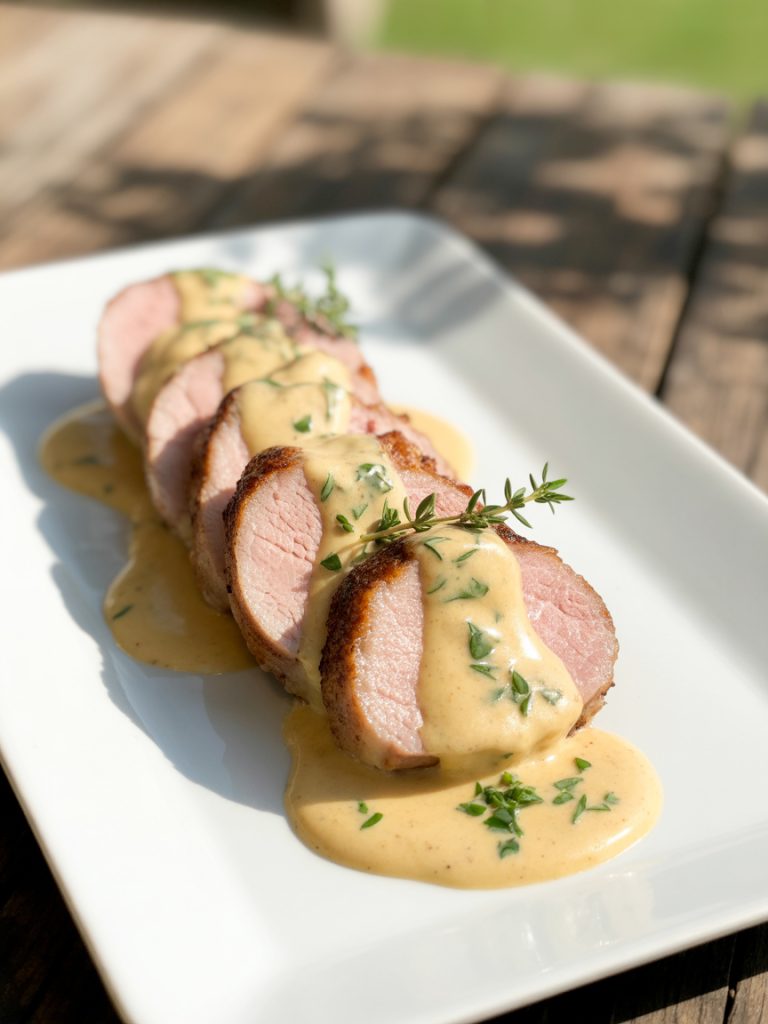
Slice the rested pork tenderloin into 1/2-inch thick medallions. They should be beautifully pink in the center with a golden crust on the outside.
Arrange the slices on a serving platter or individual plates. Spoon the warm Dijon cream sauce generously over the top. Garnish with fresh chopped parsley.
Serve immediately while everything is hot. Watch people's faces light up when they take that first bite.
This pork tenderloin with Dijon cream sauce pairs beautifully with so many sides:
With mashed potatoes – The creamy sauce is MADE for mashed potatoes. Make them buttery and smooth to soak up every drop of that Dijon goodness.
Over rice or pasta – Serve the pork sliced over rice pilaf, wild rice, or egg noodles. The sauce works beautifully as a coating for any starch.
With roasted vegetables – Roasted Brussels sprouts, green beans, asparagus, or carrots complement the rich pork perfectly. The vegetables add freshness and balance.
Alongside a salad – A simple arugula salad with lemon vinaigrette cuts through the richness and keeps the meal from feeling too heavy.
With crusty bread – You'll want something to mop up that incredible sauce. A baguette or sourdough works perfectly.
For special occasions – This is elegant enough for holidays, date nights, or dinner parties. Pair it with a nice white wine like Chardonnay or Pinot Grigio.
Refrigerator: Store leftover pork and sauce separately in airtight containers for up to 3 days. The sauce will thicken in the fridge, which is normal.
Freezing: The pork freezes well for up to 2 months. Slice it first, then freeze in portions. The cream sauce doesn't freeze as well—it can separate when thawed. Better to make fresh sauce when reheating.
Reheating pork: Slice the cold pork and reheat gently in a skillet over low heat with a splash of broth to keep it moist. Don't overheat or it'll dry out. You can also reheat in the microwave at 50% power in 30-second intervals.
Reheating sauce: Warm the sauce in a small saucepan over low heat, whisking frequently. If it's too thick, add a splash of cream or broth to thin it out. If it looks separated, whisk vigorously—it should come back together.
Make-ahead tip: You can season the pork up to 24 hours ahead. Store it covered in the fridge, then bring to room temp before cooking. Make the sauce fresh for best results.
Cut the raw tenderloin into 1-inch thick medallions before cooking. Season them the same way, then sear for 2-3 minutes per side. They'll cook faster—about 6-8 minutes total. Perfect when you want quicker cooking or a different presentation.
Increase the honey to 2 tablespoons for a sweeter sauce. You can also add 1 tablespoon of whole grain mustard for extra texture. This version is slightly less tangy and more kid-friendly.
This sauce works beautifully with bone-in or boneless pork chops. Cook the chops the same way (sear then roast) and make the sauce in the pan. Adjust cooking time based on thickness—thicker chops need longer.
The Dijon cream sauce is incredible on beef tenderloin too. Use the exact same method—sear and roast the beef to your preferred doneness (125°F for rare, 135°F for medium-rare), then make the sauce. Beef broth instead of chicken broth works great.
Swap the pork for chicken breasts or thighs. Pound the chicken to even thickness, season, sear, and roast until 165°F internal temp. The sauce is identical. It's just as delicious and slightly lighter.
Use full-fat coconut cream instead of heavy cream. The sauce will have a subtle coconut undertone, but it's still rich and creamy. Use olive oil instead of butter for sautéing the garlic.
Deglaze with 1/4 cup white wine (like Chardonnay) before adding the broth. Let it reduce by half, then proceed with the cream. This adds complexity and a subtle acidity that's really nice.
So there you have it—the pork dish that makes you look like a culinary genius while requiring minimal actual skill.
I love recipes like this. They're impressive enough to serve to guests but easy enough that I'm not stressed making them. And that Dijon cream sauce? I could literally drink it with a spoon (but I won't because that would be weird).
Give it a try the next time you want to elevate your dinner game. Your taste buds (and your dinner guests) will thank you.
Happy cooking!
Kip
This pork tenderloin with Dijon cream sauce is tender, juicy, and incredibly flavorful. The pork is perfectly seared and roasted, then topped with a rich, tangy cream sauce made with Dijon mustard, garlic, and herbs. It tastes like something from a fancy restaurant but comes together in just 30 minutes.