
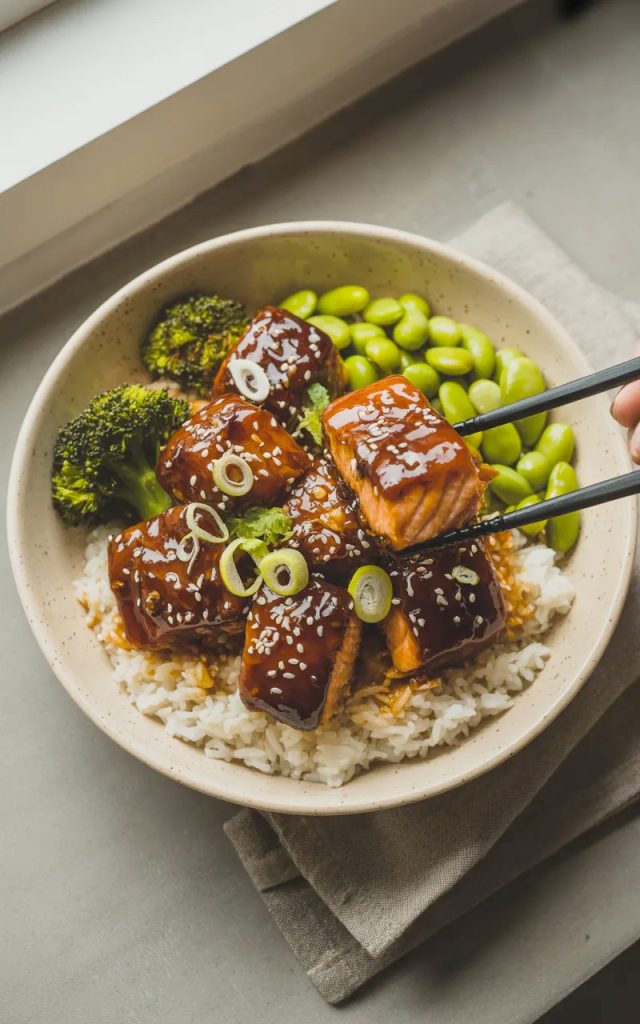
I used to order teriyaki salmon from the same Japanese restaurant every other week. Same order, same delivery fee, same slightly disappointing lukewarm bowl that arrived twenty minutes later than expected.
One evening the app told me the wait was going to be 75 minutes. Seventy-five minutes. I closed the app, looked at the salmon in my fridge, and decided to figure it out myself.
What came out of that pan thirty minutes later was genuinely better than anything I had been ordering. The teriyaki glaze was stickier, deeper in flavor, and had that glossy sheen that makes food look as good as it tastes.
The salmon was perfectly seared with golden edges that held up beautifully under the sauce. And the bowl — rice, broccoli, edamame, sesame seeds — came together so naturally that I could not believe I had been paying someone else to do this for me.
That was the last time I ordered teriyaki delivery. Not because I stopped loving it, but because making it at home is just better. And now you get to find out for yourself.
For the Salmon:
For the Homemade Teriyaki Sauce:
For the Bowl:
Whisk together the soy sauce, honey, mirin, rice vinegar, minced garlic, grated ginger, and the cornstarch slurry in a small bowl until fully combined. Set it aside. Making the sauce first means it is ready the moment you need it, which makes the whole cooking process smoother and more controlled.
Pat the salmon cubes completely dry with paper towels — this is the step that separates crispy seared salmon from steamed salmon. Season all sides with garlic powder, onion powder, salt, and black pepper. Make sure every piece is evenly coated before it goes anywhere near the hot pan.
Heat the cooking oil in a large non-stick or cast iron skillet over medium-high heat. Once the oil shimmers, add the salmon cubes in a single layer. Do not overcrowd — work in two batches if needed. Cook for 2 to 3 minutes without touching them until a golden crust forms on the bottom, then flip and cook for another 2 minutes. Remove the salmon from the pan and set aside on a plate.
Reduce the heat to medium. Pour the teriyaki sauce mixture into the same skillet. Stir constantly and let it simmer for 2 to 3 minutes until the sauce thickens into a glossy, sticky glaze. You will see it shift noticeably from thin and watery to a rich, dark sauce that coats the back of a spoon. Add the sesame oil and stir to combine.
Return the seared salmon bites to the skillet. Gently toss them in the teriyaki glaze until every piece is fully coated and glistening. The sauce should cling to the salmon and look deeply glossy. Remove from heat immediately — the residual heat will continue to cook the fish slightly, so do not linger.
Scoop warm jasmine rice into each bowl as the base. Arrange the teriyaki glazed salmon bites over one side of the rice. Add the steamed broccoli florets and edamame in sections around the salmon. Spoon any remaining teriyaki glaze from the pan over the salmon. Finish with sliced green onions and a generous scatter of sesame seeds. Serve immediately with extra teriyaki sauce on the side for anyone who wants more — and someone always wants more.
These teriyaki salmon bowls are endlessly adaptable. Here are some of the best ways to build and vary them:
Salmon: Store leftover teriyaki glazed salmon in an airtight container in the refrigerator for up to 2 days. The glaze continues to soak into the salmon as it sits, which deepens the flavor beautifully.
Rice: Store cooked jasmine rice separately in an airtight container for up to 4 days. Reheat with a small splash of water to restore its fluffy, non-clumpy texture.
Teriyaki Sauce: The sauce stores exceptionally well in a sealed jar in the refrigerator for up to 7 days. It thickens as it chills — just warm it gently in a small saucepan or microwave with a splash of water to bring it back to a pourable consistency.
Broccoli and Edamame: Store separately in airtight containers in the fridge for up to 3 days. Reheat quickly in the microwave or a dry pan before assembling the bowl.
Reheating: Reheat the salmon in a skillet over medium heat for 2 to 3 minutes. Add a small splash of soy sauce or water to loosen the glaze if it has thickened too much in the fridge. Assemble the bowl fresh with warmed components for best results.
Freezer: Cooked teriyaki salmon can be frozen for up to 1 month. Freeze in a single layer on a lined baking sheet before transferring to a freezer bag. Thaw overnight in the refrigerator and reheat in a skillet. Make a fresh batch of teriyaki sauce when serving from frozen for best flavor.
These teriyaki salmon bowls are everything a great weeknight dinner should be — fast, nourishing, deeply flavorful, and satisfying enough that everyone at the table goes back for the last few pieces of salmon. The kind of meal that makes you genuinely glad you cooked instead of ordered.
This is exactly the kind of recipe that cooking gave me when I needed it most — something simple that becomes something special the moment it hits the table. A bowl of rice, a beautiful glaze, and a little bit of care. That is all it takes.
Make these this week and come back and tell me how it went. Drop a comment below, save this to your Pinterest board, and share it with someone who needs a better answer to the question of what is for dinner tonight. Happy cooking — Kip.
These teriyaki salmon bowls are the answer to every weeknight dinner dilemma you have ever had. Bite-sized salmon pieces are seared until golden and then tossed in a deeply flavored homemade teriyaki glaze that is sticky, glossy, and bold in all the right ways. Served over fluffy white rice with steamed broccoli, edamame, sliced green onions, and a generous scatter of sesame seeds, this bowl delivers everything you love about Japanese-inspired takeout — except you made it yourself in 30 minutes for a fraction of the cost. Healthy, satisfying, and genuinely delicious in every single bite.