
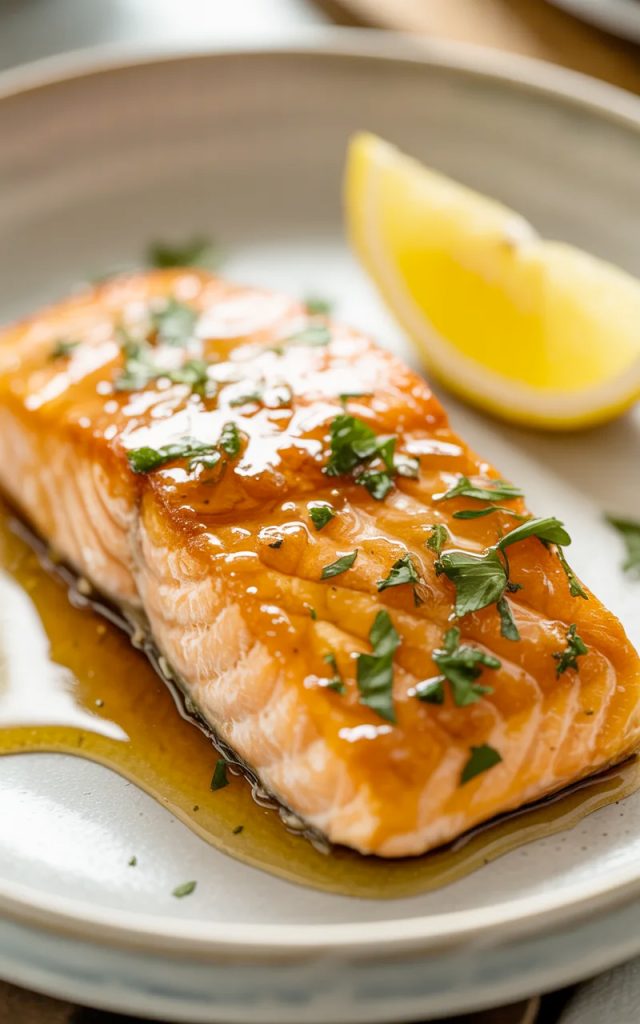
You know that feeling when you order salmon at a restaurant and it's so good you immediately start wondering how they made it? That's exactly what happened to me the first time I had the salmon at Texas Roadhouse. That deep, caramelized glaze. The way it flaked apart at the touch of a fork. I sat there thinking — I need to figure this out at home.
So I did what any self-taught cook obsessed with recreating great food would do. I went home, got into my kitchen, and started experimenting. A few tweaks here, a couple of failed attempts there, and eventually I landed on something that made my family go completely quiet at the dinner table. You know food is good when people stop talking.
The best part? This whole recipe comes together in under 30 minutes with ingredients you can grab at any grocery store. No fancy techniques, no chef training required — just great salmon, a killer glaze, and a little bit of patience. Let's get into it.
For the Salmon:
For the Glaze:
Key Notes:
Step 1 — Make the Glaze
In a small bowl, whisk together the honey, soy sauce, lemon juice, minced garlic, Dijon mustard, and red pepper flakes if using. Give it a taste — it should be a balance of sweet, savory, and tangy. Set it aside.
Step 2 — Season the Salmon
Pat your salmon fillets completely dry with a paper towel. This step matters more than people realize — dry fish sears, wet fish steams. Season both sides generously with salt, pepper, garlic powder, smoked paprika, and onion powder.
Step 3 — Sear the Salmon
Heat your olive oil in a large oven-safe skillet over medium-high heat. Once the oil is hot and shimmering, place your salmon fillets skin-side up in the pan. Sear for 3-4 minutes without moving them — you want a good golden crust to develop. Flip carefully.
Step 4 — Add the Glaze
Reduce the heat to medium. Pour the glaze directly over the salmon fillets. It will start to bubble and thicken almost immediately. Use a spoon to baste the fillets continuously for about 2 minutes, coating them in that sticky, caramelized glaze.
Step 5 — Finish in the Oven (Optional but Recommended)
If your fillets are on the thicker side, transfer the skillet to a preheated oven at 400 degrees F and bake for an additional 5-7 minutes until the salmon is cooked through. The internal temperature should reach 125-130 degrees F for medium or 145 degrees F for fully cooked.
Step 6 — Rest and Garnish
Remove from heat and let the salmon rest for 2 minutes. This helps the juices redistribute and keeps the fish moist. Finish with a generous handful of fresh chopped parsley and a squeeze of lemon juice right before serving.
This salmon pairs beautifully with so many sides. Here are some favorites that work really well:
IMO, the garlic mashed potato combo is unbeatable. That's the move right there.
Refrigerator: Store leftover salmon in an airtight container in the fridge for up to 3 days. Let it cool completely before storing.
Reheating: Reheat gently in a skillet over low heat with a tiny splash of water or lemon juice to keep it from drying out. The microwave works too but go low and slow — 30-second intervals at 50% power.
Freezer: You can freeze cooked salmon for up to 2 months. Wrap each fillet individually in plastic wrap, then place in a freezer-safe bag. Thaw overnight in the fridge before reheating.
Meal Prep Tip: The glaze can be made up to 5 days ahead and stored in the fridge. When you're ready to cook, the whole process becomes even faster.
There you have it — a Texas Roadhouse salmon copycat that you can pull off on a Tuesday night without breaking a sweat or your wallet. This recipe has become a regular in my kitchen, and once you make it, I have a feeling it'll become one in yours too.
If you try it, I'd love to hear how it turned out. Drop a comment below, share it on Pinterest, or tag me on Instagram — seeing your recreations honestly makes my day. Cooking is better when it's shared, and that's exactly why Recipes By Kip exists.
Now go make something delicious. You've got this.
With gratitude, Kip
This Texas Roadhouse Salmon Copycat recipe delivers everything you love about the restaurant version — that gorgeous caramelized glaze, tender flaky flesh, and herb-flecked finish — but made right in your own kitchen in under 30 minutes. It's healthier, cheaper, and honestly? Way more satisfying when you make it yourself.