

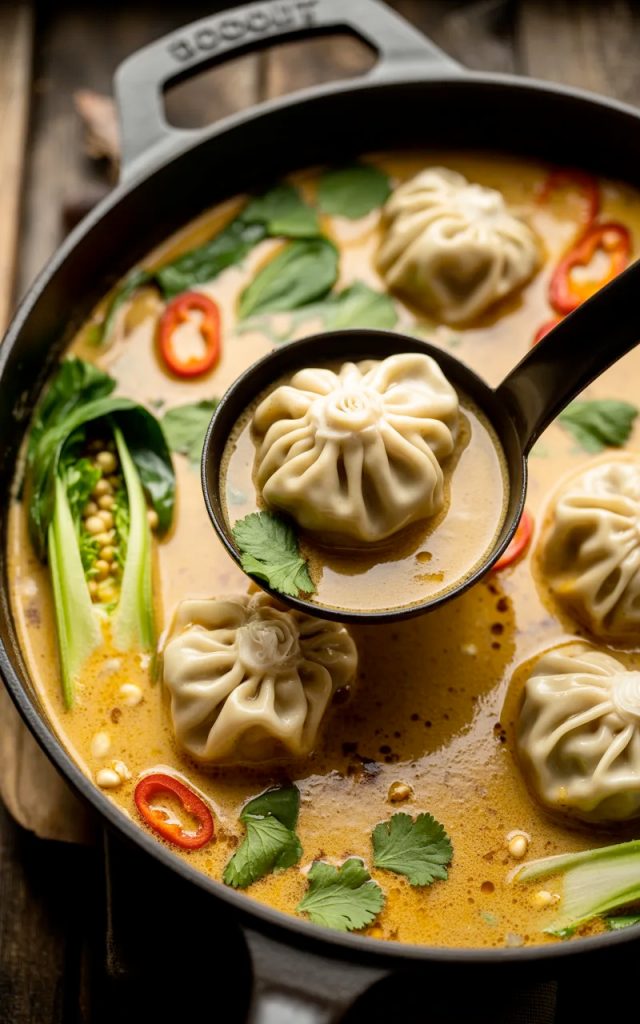

Sometimes the best recipes happen when you mash up two things that have no business being together. This soup? Perfect example. I had a package of frozen potstickers in my freezer and was craving something with those bright, bold Thai flavors—coconut, lime, lemongrass, all that good stuff.
Most people would’ve made the potstickers separately and the soup separately. I’m lazy. I threw them in the same pot and hoped for the best.
What came out was honestly way better than I expected. The potstickers soak up all that aromatic coconut broth while staying tender and delicious. The Thai flavors elevate humble dumplings into something that feels restaurant-worthy. And the whole thing takes like 30 minutes, which means it’s officially entered my weeknight rotation.
Why You’ll Love This Thai Potsticker Soup
Fusion magic – This soup combines the best of two Asian cuisines: Thai aromatics and Chinese dumplings. It’s like the culinary version of a mashup song that somehow works perfectly. You get those bold Thai flavors—coconut, lime, lemongrass—paired with comforting, pillowy dumplings.
Ridiculously quick – Thirty minutes from start to finish, and that’s being generous. Using store-bought potstickers is a total game-changer. No making dumpling wrappers from scratch, no folding tiny pleats for an hour. Just open the package, dump them in, done.
Flavor bomb – The coconut broth is seriously aromatic and packed with flavor. Ginger, garlic, lemongrass, lime—every spoonful hits different. It’s the kind of soup where you find yourself drinking the broth straight from the bowl when nobody’s looking.
Customizable heat level – Want it mild for the kids? Skip the chili. Want to feel your face tingle? Load up on Thai chili paste. This soup plays well with whatever spice level you’re comfortable with.
Impressive but easy – This looks and tastes like something you’d order at a trendy Asian fusion restaurant, but it’s actually super simple. Great for when you want to impress someone without actually working that hard. 🙂
Weeknight savior – When you’re too tired to cook but too broke (or health-conscious) for takeout, this soup has your back. Minimal prep, one pot, maximum flavor.
Ingredients You’ll Need
For the Thai Soup Base
- 1 tablespoon vegetable oil – Or coconut oil for extra Thai vibes
- 3 cloves garlic, minced – Fresh is essential
- 1 tablespoon fresh ginger, grated – Don’t use powdered; it’s not the same
- 2 stalks lemongrass – Bruised and cut into pieces
- 1 tablespoon Thai red curry paste – Adjust based on your heat preference
- 4 cups chicken broth – Or vegetable broth for vegetarian
- 1 can (13.5 oz) coconut milk – Full-fat for richness
- 2 tablespoons fish sauce – The secret umami ingredient
- 1 tablespoon soy sauce – Adds depth
- 1 tablespoon brown sugar – Balances the flavors
- Juice of 1 lime – Plus extra wedges for serving
Potstickers and Add-ins
- 20-24 frozen potstickers – Pork, chicken, or vegetable
- 1 red bell pepper, thinly sliced – Adds sweetness and color
- 2 cups baby bok choy – Or regular bok choy, chopped
- 1 cup mushrooms, sliced – Shiitake or button mushrooms
- Red chili flakes – To taste
Garnishes and Finishing Touches
- Fresh cilantro, chopped – Essential for that authentic flavor
- Green onions, sliced – Adds freshness
- Fresh Thai basil – If you can find it
- Lime wedges – For serving
- Sesame oil – A drizzle on top
Ingredient Notes & Substitutions
Potstickers: Any frozen potstickers work—pork, chicken, shrimp, or vegetable. I usually grab whatever’s on sale at the Asian grocery store. Trader Joe’s has good ones too. If you’re feeling ambitious, homemade dumplings are obviously amazing, but that defeats the whole “quick and easy” thing.
Lemongrass: Fresh lemongrass adds that signature Thai flavor. If you can’t find it, substitute with 2 teaspoons of lemongrass paste or skip it entirely (though you’ll miss out on some authentic Thai flavor). Don’t use lemongrass essential oil or anything weird like that.
Thai Red Curry Paste: This is where most of the heat comes from. Start with 1 tablespoon if you’re heat-sensitive, go up to 2-3 tablespoons if you like it spicy. Thai Kitchen brand is widely available and works great.
Fish Sauce: I know it smells funky straight from the bottle, but it adds incredible savory depth. For vegetarian/vegan versions, substitute with soy sauce or tamari, though the flavor will be slightly different.
Coconut Milk: Use full-fat coconut milk from a can, not the carton stuff meant for drinking. The full-fat version creates that rich, creamy broth. Light coconut milk works if you want fewer calories, but it won’t be as luxurious.
Vegetables: The bok choy, bell pepper, and mushrooms are my go-to, but feel free to add snap peas, baby corn, bamboo shoots, or whatever Asian vegetables you have on hand.
How to Make Thai Potsticker Soup (Step-by-Step)
Step 1: Prepare Your Ingredients
Get all your prep work done before you start cooking because this moves fast once you begin. Mince your garlic, grate your ginger, slice your vegetables, and chop your herbs.
For the lemongrass: trim off the woody ends and remove the tough outer layers. Bash the stalks with the back of your knife to bruise them (this releases the oils and flavor), then cut them into 2-3 inch pieces. You won’t eat the lemongrass—it’s just for flavor—so don’t worry about chopping it finely.
Take your potstickers out of the freezer. No need to thaw them; they’ll cook directly in the soup.
Step 2: Build the Aromatic Base
Heat the oil in a large pot or Dutch oven over medium heat. Once it’s shimmering, add your minced garlic and grated ginger.
Sauté for about 30-45 seconds, stirring constantly. Your kitchen should immediately smell incredible—that’s how you know you’re doing it right. Be careful not to burn the garlic; if it starts browning too fast, reduce the heat.
Add the bruised lemongrass stalks and Thai red curry paste. Stir everything together and cook for another minute. The curry paste needs a bit of heat to bloom and release all its aromatic oils. This step is crucial for building deep flavor.
Step 3: Create the Coconut Broth
Pour in the chicken broth and coconut milk. Stir everything together until the curry paste is fully dissolved and incorporated into the liquid. The broth should be a beautiful pale orange color.
Add the fish sauce, soy sauce, and brown sugar. Give it all a good stir. Bring the mixture to a gentle boil, then reduce the heat to medium-low and let it simmer for about 5 minutes. This gives all those flavors time to get acquainted and become friends.
Taste the broth at this point. It should be savory, slightly sweet, with a good depth of flavor and a little heat. Adjust as needed—more curry paste for heat, more brown sugar for sweetness, more fish sauce for umami.
Step 4: Cook the Potstickers
Add your sliced mushrooms and bell pepper to the simmering broth. Let them cook for about 3-4 minutes to soften slightly.
Now for the main event: carefully add your frozen potstickers to the soup. Don’t just dump them all at once and splash hot broth everywhere (learned that lesson the hard way). Add them gently, one at a time or in small batches.
Stir very gently to make sure they don’t stick to the bottom of the pot. Let the potstickers simmer for about 5-7 minutes. They’ll float to the surface when they’re done, and the wrappers will become tender and slightly translucent.
Add the bok choy during the last 2-3 minutes of cooking. You want it tender but still with a bit of crunch—not mushy and sad.
Step 5: Finish and Garnish
Remove the lemongrass stalks with tongs or a slotted spoon. You could leave them in for presentation, but warn people not to eat them—they’re like eating a stick.
Squeeze in the juice of one lime and give everything a final gentle stir. Taste one more time and adjust seasoning if needed. Sometimes you need a pinch more sugar or salt to balance everything out.
Ladle the soup into bowls, making sure everyone gets a good number of potstickers and vegetables. Garnish generously with fresh cilantro, sliced green onions, and Thai basil if you have it.
Serve with lime wedges on the side and maybe a drizzle of sesame oil on top for extra richness. If you like heat, sprinkle some red chili flakes or add a spoonful of chili oil.
Serving Suggestions
This soup is pretty much a complete meal, but here are some ways to round it out:
Jasmine rice – Serve the soup over a scoop of jasmine rice for extra heartiness. The rice soaks up that coconut broth beautifully.
Fresh spring rolls – Keep it light with some fresh spring rolls on the side. The crisp vegetables contrast nicely with the rich soup.
Crispy wonton strips – Top each bowl with some crispy wonton strips for textural contrast. You can buy them pre-made or make your own by frying wonton wrappers.
Extra potstickers – Honestly? Pan-fry some extra potstickers on the side and serve them crispy alongside the soup. Because more dumplings is always the answer.
Thai iced tea – Complete the Thai experience with some sweet, creamy Thai iced tea.
Steamed edamame – A simple side of steamed edamame with sea salt keeps things light and adds extra protein.
Storage and Reheating Tips
Refrigerator Storage
Here’s the thing about storing soup with dumplings: the potstickers will absorb liquid and get softer as they sit. Not necessarily bad, just different.
Store leftover soup in an airtight container in the fridge for up to 3 days. The flavors actually deepen overnight, which is nice, but the potsticker wrappers will continue to soften.
If you want to maintain the potsticker texture better, store the broth and potstickers separately if possible. Reheat the broth, then add the potstickers just before serving.
Freezer Storage
IMO, this soup doesn’t freeze great because of the potstickers and coconut milk. The dumpling wrappers can get mushy and weird when frozen and thawed, and coconut milk sometimes separates.
If you really want to freeze it, freeze just the broth base without the potstickers or vegetables. Then when you’re ready to eat, thaw the broth, reheat it, and add fresh potstickers and vegetables. This gives you better texture and quality.
Reheating Instructions
From the fridge: Reheat gently on the stovetop over medium-low heat, stirring occasionally. Don’t let it boil aggressively or the potstickers might fall apart. Takes about 5-7 minutes.
Microwave: Transfer to a microwave-safe bowl and heat in 90-second intervals, stirring gently between each, until hot throughout. Be gentle with stirring or you’ll tear up the potstickers.
Add a splash of coconut milk or broth if the soup has thickened too much. Finish with a squeeze of fresh lime juice to brighten everything back up.
Final Thoughts
Look, I’m not going to pretend this is some ancient, traditional Thai recipe passed down through generations. It’s fusion food—taking inspiration from different cuisines and mashing them together in a way that just works.
When I started cooking through tough times five years ago, I learned that some of the best meals come from experimenting and not taking yourself too seriously. This soup is proof of that. It’s what happens when you follow your cravings instead of rigid rules, when you prioritize flavor and convenience over authenticity.
Is it traditional Thai? Nope. Is it delicious? Absolutely. And sometimes that’s all that matters.
This Thai potsticker soup has become one of my go-to weeknight dinners when I want something that feels special without the effort. It’s the kind of recipe that makes people think you’re a better cook than you actually are. 🙂
Happy cooking!
– Kip
Thai Potsticker Soup (Asian Fusion Comfort in a Bowl)
Description
This Thai potsticker soup is what happens when you take the best parts of Thai cuisine—creamy coconut milk, aromatic lemongrass, spicy chili—and combine them with everyone's favorite dumplings. The result? A bowl of pure comfort that's exotic enough to feel special but easy enough for a Tuesday night. Store-bought potstickers make this ridiculously simple, while the Thai-inspired broth makes it taste like you ordered takeout from that fancy fusion restaurant downtown.
Ingredients
For the Thai Soup Base:
Potstickers and Add-ins:
Garnishes:
Instructions
-
Prep ingredients: Mince garlic, grate ginger, slice vegetables, and chop herbs. Bruise lemongrass stalks with the back of a knife and cut into pieces.
-
Build aromatic base: Heat oil in a large pot over medium heat. Add garlic and ginger; sauté 30-45 seconds until fragrant. Add lemongrass and curry paste; cook 1 minute more, stirring constantly.
-
Create broth: Pour in chicken broth and coconut milk. Stir until curry paste is fully dissolved. Add fish sauce, soy sauce, and brown sugar. Bring to a gentle boil, then reduce heat and simmer 5 minutes.
-
Add vegetables and potstickers: Add mushrooms and bell pepper; cook 3-4 minutes. Gently add frozen potstickers and stir carefully. Simmer 5-7 minutes until potstickers float and are cooked through. Add bok choy in the last 2-3 minutes.
-
Finish: Remove lemongrass stalks. Squeeze in lime juice and stir gently. Taste and adjust seasoning as needed.
-
Serve: Ladle into bowls, garnish with cilantro, green onions, and Thai basil. Serve with lime wedges and a drizzle of sesame oil.
Note
- Adjust curry paste amount based on desired spice level
- Use vegetable broth and vegetable potstickers for vegetarian version
- Substitute soy sauce for fish sauce to make it vegan
- Don't let soup boil aggressively or potstickers may fall apart
- Fresh herbs and lime juice are essential for authentic Thai flavor
- Potstickers will soften over time in leftover soup