

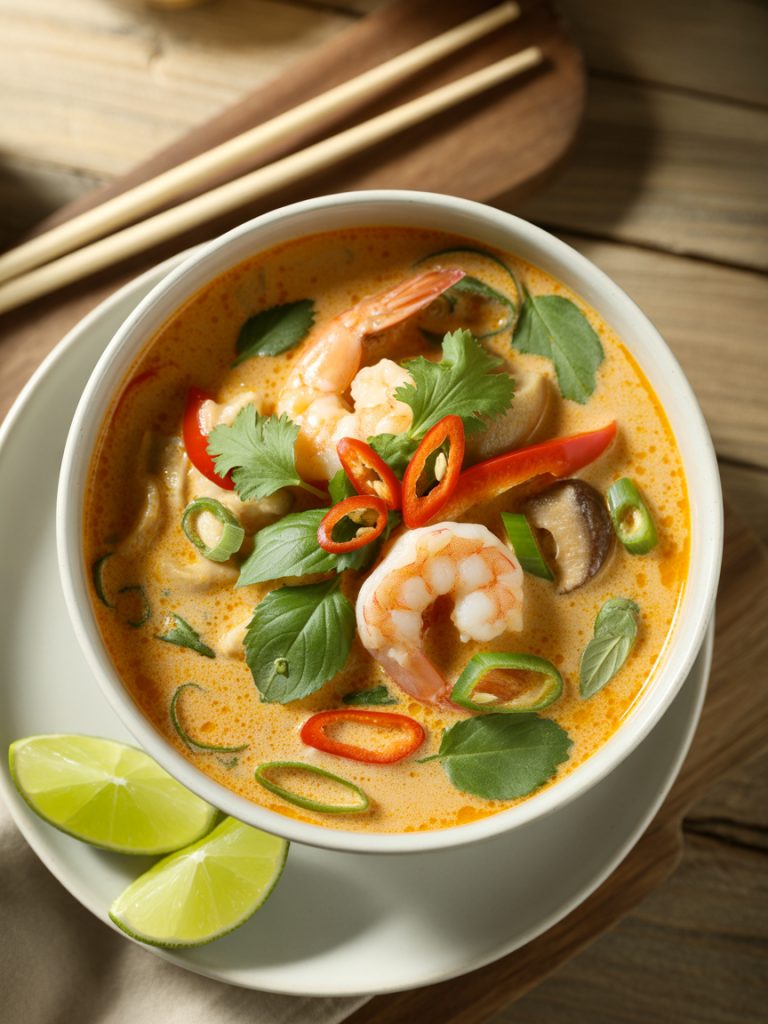

The first time I had Thai coconut curry soup at a restaurant, I was hooked immediately. That perfect balance of creamy coconut, warming spice, bright lime, and aromatic herbs—it was like my taste buds were experiencing something completely new.
For the longest time, I assumed it was too complicated to make at home. Thai food seemed like one of those cuisines that required special training or ingredients I’d never find. But then I actually tried making it, and I was shocked by how simple it was. The most “exotic” ingredient was curry paste, which I found at my regular grocery store.
Now I make this Thai Shrimp Coconut Curry Soup constantly because it checks every box: it’s quick (30 minutes!), incredibly flavorful, healthy, and impressive enough that people think you spent hours on it. The shrimp cook right in the soup, so everything comes together in one pot. This is the kind of recipe that makes you feel like a culinary genius. 🙂
Why You’ll Love This Recipe
Ready in 30 Minutes Start to Finish This is genuinely one of the fastest “impressive” dinners you can make. By the time you’d get takeout delivered, you could have homemade Thai soup on the table. The shrimp cook in just a few minutes, so most of the time is just simmering the broth.
Incredibly Flavorful and Aromatic Thai food is all about layering flavors—sweet, salty, sour, spicy, and umami all working together. This soup nails that balance. The aroma alone while it’s cooking is worth making it.
Customizable Spice Level Start with less curry paste and add more to taste. Thai food should have some heat, but you’re in control here. If you’re cooking for kids or people who don’t like spice, you can tone it down significantly and it’ll still taste amazing.
Perfect Balance of Creamy, Spicy, and Tangy The coconut milk makes it rich and creamy, the curry paste brings heat and depth, the lime adds brightness, and the fish sauce provides that savory umami backbone. Every spoonful is complex and satisfying.
Can Swap Shrimp for Chicken or Tofu Not a shrimp person? Use chicken, tofu, or even just load it up with vegetables. The soup base is so good that the protein is almost secondary. I’ve made vegetarian versions that were just as delicious.
One-Pot Meal That’s Actually Impressive Everything cooks in one pot, which means minimal cleanup. But when you serve this, people think you spent way more effort than you actually did. It’s restaurant-quality with weeknight ease.
Ingredients
For the Soup:
- 2 tablespoons coconut oil (or vegetable oil)
- 3 cloves fresh garlic, minced
- 1 tablespoon fresh ginger, minced (about 1-inch piece)
- 2-3 tablespoons Thai red curry paste (adjust to taste—start with 2)
- 1 can (14 oz) coconut milk (full-fat, not light!)
- 3 cups chicken broth (or vegetable broth for pescatarian)
- 1 tablespoon fish sauce (this is essential!)
- 1 tablespoon brown sugar (or palm sugar)
- 1 lb large shrimp, peeled and deveined
- 8 oz mushrooms, sliced (shiitake or button)
- 1 red bell pepper, thinly sliced
- Juice of 2 limes (about 3-4 tablespoons)
- Salt to taste
For Serving:
- Fresh cilantro, chopped
- Fresh basil leaves (Thai basil if you can find it)
- Lime wedges
- Sliced red chilies (optional, for heat)
- Green onions, sliced
- Cooked rice or rice noodles (optional)
Optional Add-Ins:
- Cherry tomatoes, halved
- Baby corn
- Snap peas or snow peas
- Bok choy
- Bamboo shoots
- Rice noodles or vermicelli
Key Ingredient Notes:
Full-Fat Coconut Milk is Essential: Don’t use light coconut milk—it’s watery and won’t give you that rich, creamy texture. Shake the can well before opening because the cream separates. Thai Kitchen and Chaokoh are good brands.
Thai Curry Paste: Red curry paste is most common and has medium heat. Yellow curry paste is milder and slightly sweeter. Green curry paste is the spiciest. I prefer red for this soup, but use what you like. Find it in the international aisle of most grocery stores.
Fish Sauce is Non-Negotiable: I know it smells funky straight from the bottle, but it’s what gives Thai food that savory depth. You can’t skip it or the soup will taste flat. A little goes a long way. Red Boat and Three Crabs are quality brands.
Fresh Shrimp: Use raw shrimp, not pre-cooked. They’ll cook in the soup in just 3-4 minutes. Frozen shrimp work great—just thaw them first under cold running water.
Fresh Ginger and Garlic: Don’t use dried or jarred here. Fresh aromatics are crucial for authentic Thai flavor. It’s worth the extra couple minutes of mincing.
Lime Juice: Always use fresh lime juice, never bottled. The bright, fresh acidity is what makes Thai soup sing.
Step-by-Step Instructions
Step 1: Build the Curry Base
Heat the coconut oil in a large pot or Dutch oven over medium heat. Add the minced garlic and ginger. Sauté for about 1-2 minutes, stirring constantly, until fragrant. Your kitchen should start smelling amazing.
Add the Thai curry paste and stir it into the oil, garlic, and ginger. Cook for another 1-2 minutes, stirring frequently. This “blooms” the curry paste and releases all those aromatic oils. The paste should become fragrant and slightly darker.
Step 2: Add Coconut Milk and Broth
Pour in the coconut milk and chicken broth. Stir everything together, making sure to scrape up any curry paste that’s stuck to the bottom of the pot. Those bits are flavor gold.
Add the fish sauce and brown sugar. Stir well. Bring the mixture to a gentle boil, then reduce heat to low and let it simmer for about 5 minutes. This allows all the flavors to meld together.
Step 3: Add Vegetables
Add the sliced mushrooms and red bell pepper to the soup. Let them simmer for about 5 minutes until they start to soften. If you’re adding other vegetables like bok choy or snap peas, add them now too.
Taste the broth at this point. It should be flavorful and aromatic. This is your chance to adjust before adding the shrimp.
Step 4: Cook the Shrimp Perfectly
Add the shrimp to the soup. They’ll cook quickly—just 3-4 minutes. You’ll know they’re done when they turn pink and opaque. Don’t overcook them or they’ll get rubbery. Shrimp are done the moment they turn pink all the way through.
Step 5: Balance the Flavors
This is the crucial step that makes your soup taste restaurant-quality. Remove the pot from heat and stir in the fresh lime juice. Taste the soup and adjust:
- Too bland? Add more fish sauce (start with ½ teaspoon at a time)
- Not spicy enough? Add more curry paste or fresh sliced chilies
- Too spicy? Add a bit more coconut milk or sugar
- Needs brightness? Add more lime juice
- Needs sweetness? Add a bit more brown sugar
The soup should taste balanced—creamy, spicy, tangy, and savory all at once. Thai food is all about that flavor balance.
Step 6: Garnish and Serve
Ladle the soup into bowls. Garnish generously with fresh cilantro, basil leaves, sliced green onions, and lime wedges. Add sliced red chilies if you want extra heat.
If serving over rice or noodles, place a scoop of cooked rice or noodles in the bottom of each bowl before adding the soup.
Serve immediately while hot. Encourage people to squeeze extra lime juice over their bowls—it makes a huge difference.
Serving Suggestions
Rice or Noodles Options Serve over jasmine rice (traditional), rice noodles, or ramen noodles for a more substantial meal. The noodles soak up all that delicious curry broth. You can also serve it as a soup without any starch—it’s filling enough on its own.
Fresh Garnishes That Elevate It Don’t skip the garnishes! Fresh herbs, lime, and chilies aren’t just decoration—they add brightness and complexity. Thai basil (if you can find it) is especially amazing. Regular basil works too.
Side Dishes That Complement Keep it simple with spring rolls or vegetable dumplings. You could also serve with Thai cucumber salad or papaya salad for a complete Thai meal. Crispy shrimp chips or prawn crackers are fun too.
Make it a Complete Thai Meal Start with Thai chicken satay with peanut sauce, serve this soup as the main course, and finish with mango sticky rice for dessert. Instant Thai restaurant experience at home.
Meal Prep Version Make a big batch of the soup base (without the shrimp) and store it in the fridge. When you want to eat, reheat the soup and add fresh shrimp—they’ll cook in minutes. This keeps the shrimp from getting overcooked in storage.
Lighter Option Use less coconut milk (1 can instead of full amount) and bulk up the vegetables. Add zucchini noodles or shirataki noodles for a lower-carb version.
Storage Tips
Refrigeration
Store leftover soup in an airtight container in the fridge for up to 3 days. The flavors actually deepen and improve overnight, so leftovers are delicious.
Pro tip: If possible, store the shrimp separately from the broth. Shrimp can get rubbery when reheated. When you want to eat leftovers, heat the broth and add the cooked shrimp at the end just to warm through.
Reheating Without Overcooking Seafood
Reheat the soup gently on the stovetop over medium-low heat. Don’t boil it—gentle heating prevents the coconut milk from separating and keeps the shrimp tender. If the shrimp are already in the soup, heat just until warm, not piping hot.
Microwave works but be careful not to overheat. Use 50% power and heat in 1-minute intervals, stirring between each.
Freezing Considerations
The soup base (without shrimp) freezes well for up to 2 months. The coconut milk might separate slightly when thawed, but whisking while reheating brings it back together.
Don’t freeze cooked shrimp in the soup—they get mushy and rubbery. Instead, freeze the broth, then add fresh or thawed raw shrimp when you reheat.
Make-Ahead Strategy
Make the entire soup base (through Step 3) up to 2 days ahead. Store in the fridge. When ready to serve, reheat the base, add fresh shrimp, and cook for 3-4 minutes. This is perfect for dinner parties—all the work is done ahead, but the shrimp are freshly cooked.
Final Thoughts
Here’s what I love about this Thai Shrimp Coconut Curry Soup: it makes you feel like you’re doing something adventurous and exciting, even though it’s actually really simple. Thai food has this reputation for being complicated, but once you make it a couple times, you realize it’s just about balancing flavors.
This soup has become one of my go-to recipes when I want something that feels special but doesn’t require a lot of time or effort. It’s comforting and warming, but also bright and fresh. It’s rich from the coconut milk but somehow still feels healthy. It just works.
I’ve made this for dinner parties, date nights, and random weeknights when I’m craving something more exciting than the usual rotation. Every single time, people are impressed. They assume I spent way more time and effort than I actually did. That’s the magic of good Thai cooking—complex flavors from simple techniques.
Give this a try and let me know what you think! Tag me on Instagram or Pinterest with your Thai cooking adventures. And if you come up with your own variations—different proteins, extra vegetables, creative garnishes—share them in the comments. Thai food is all about making it your own.
Now go make some aromatic, comforting, restaurant-quality Thai magic in your kitchen. Your taste buds are in for a treat.
Happy cooking!
— Kip
Thai Shrimp Coconut Curry Soup (30-Minute Comfort!)
Description
Thai Shrimp Coconut Curry Soup is a warming, aromatic bowl of comfort that's surprisingly easy to make at home. Tender shrimp swim in a rich coconut curry broth that's perfectly balanced—creamy from coconut milk, spicy from Thai curry paste, tangy from lime, and savory from fish sauce. Ready in just 30 minutes with one pot, this soup delivers complex Thai restaurant flavors without requiring special skills or hard-to-find ingredients. It's the kind of soup that makes you feel like you're treating yourself to something special, even on a busy weeknight.
Ingredients
Ingredients:
For Serving:
Instructions
-
Heat coconut oil in large pot over medium heat. Add garlic and ginger, sauté 1-2 minutes until fragrant.
-
Add curry paste and cook 1-2 minutes, stirring frequently, until fragrant and slightly darker.
-
Pour in coconut milk and chicken broth. Stir well, scraping bottom of pot. Add fish sauce and brown sugar. Bring to gentle boil, then reduce heat and simmer 5 minutes.
-
Add mushrooms and bell pepper. Simmer 5 minutes until vegetables soften.
-
Add shrimp and cook 3-4 minutes until pink and opaque throughout. Don't overcook.
-
Remove from heat. Stir in fresh lime juice. Taste and adjust flavors:
-
More fish sauce for saltiness
-
More curry paste for heat
-
More lime for brightness
-
More sugar for sweetness
-
Ladle into bowls. Garnish with cilantro, basil, green onions, lime wedges, and chilies. Serve over rice or noodles if desired.
Note
For Chicken Version: Replace shrimp with 1 lb chicken breast (cut into bite-sized pieces). Add chicken in Step 4 and simmer 8-10 minutes until cooked through (165°F).