

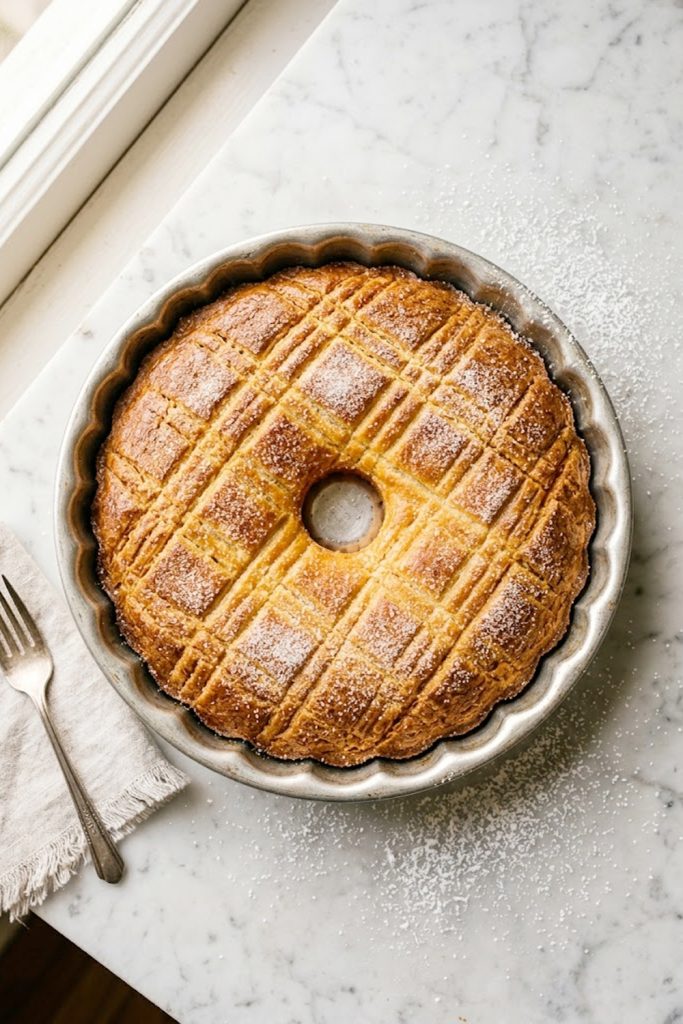

Some cakes demand attention. They need layers, frosting, elaborate decorations, and about three hours of your Saturday. And then there’s French butter cake — which asks for almost nothing and delivers everything.
This is the kind of cake that makes your kitchen smell like a Parisian bakery. Soft and tender on the inside, with a lightly crisp sugared crust on top that shatters just slightly when you press your fork into it. It’s rich, buttery, and completely unapologetic about it. And the best part? The ingredient list is embarrassingly short.
I stumbled onto this recipe looking for something to bring to a Sunday brunch and not wanting to spend my entire morning baking. One bowl, a handful of ingredients, and about an hour later — this golden beauty came out of the oven and absolutely stole the show. Nobody asked about anything else on that table. FYI, that’s exactly the kind of energy I cook for.
Why you’ll love this recipe
- Shockingly simple ingredients. Butter, sugar, eggs, flour, and vanilla. That’s essentially it. No fancy ingredients, no trips to a specialty store — just pantry staples doing extraordinary things.
- That crust though. The lightly sugared top bakes into this delicate, slightly crisp golden crust that contrasts beautifully with the soft, dense crumb underneath. It’s genuinely one of the best textures in baking.
- Perfect for any occasion. Brunch, afternoon coffee, a casual dinner party dessert, a Tuesday when you just need cake — this one works for all of it.
- Beginner friendly. If you can mix a bowl of ingredients and operate an oven, you can make this. No special techniques, no stand mixer required, no stress.
- It keeps really well. Unlike most cakes that go stale after a day, this one actually gets better as it sits. The flavor deepens and the texture becomes even more satisfying by day two.
- Naturally nut free. Great for baking when you’re cooking for a crowd and need something everyone can eat without worrying about allergens.
Ingredients with key notes
For the cake:
- 250g unsalted butter, softened at room temperature — and when I say butter is the star of this recipe, I genuinely mean it. Use the best quality butter you can find. It makes a noticeable difference here because there’s nowhere for inferior butter to hide
- 200g caster sugar — caster sugar dissolves more evenly than regular granulated sugar, giving you a smoother, more tender crumb
- 4 egg yolks — yolks only, no whites. This is what gives the cake its rich golden color and dense, almost shortbread-like texture
- 1 teaspoon pure vanilla extract — pure, not imitation. The flavor difference is real
- 300g all-purpose flour, sifted
- 1/2 teaspoon baking powder
- A pinch of salt — even in sweet baking, salt is not optional. It sharpens all the other flavors
For the top:
- 1 egg yolk mixed with 1 tablespoon milk — for the egg wash that gives the cake its signature golden sheen
- 2 tablespoons granulated sugar for dusting — this is what creates that beautiful crisp sugar crust on top
Step-by-step instructions
Step 1: Cream the butter and sugar
In a large mixing bowl, beat the softened butter and caster sugar together until the mixture is pale, light, and fluffy. This takes about 3 to 4 minutes of good mixing. If you’re doing this by hand, commit to it — this step builds the foundation of the whole cake. The more air you incorporate here, the better the final texture.
Step 2: Add the egg yolks and vanilla
Add the egg yolks one at a time, mixing well after each addition. Add the vanilla extract and mix until everything is smooth and well combined. The mixture should look rich, golden, and glossy at this point — which is exactly how it should look.
Step 3: Fold in the flour
Sift the flour, baking powder, and pinch of salt into the bowl. Fold everything together gently until a soft dough forms. Don’t overmix — once the flour is incorporated, stop. Overmixing develops the gluten and will make your cake tough instead of tender, and nobody wants that.
Step 4: Chill the dough
Shape the dough into a disc, wrap it in cling film, and refrigerate for 30 minutes. This step firms up the butter and makes the dough much easier to work with. It also helps the cake hold its shape in the oven rather than spreading out flat.
Step 5: Shape and prepare
Preheat your oven to 180 degrees Celsius (350 degrees Fahrenheit). Grease a round 22cm cake tin or tart pan generously with butter. Press the chilled dough evenly into the pan — it should be about 2 to 3cm thick. Use your fingers or the back of a spoon to smooth the surface as evenly as possible.
Step 6: Add the egg wash and score the top
Brush the top of the cake generously with the egg yolk and milk mixture. Then, using a fork or the tip of a knife, score a crosshatch pattern across the entire surface. This is the signature look of a Gâteau Breton and it’s not just decorative — the scoring helps the top bake evenly and creates those beautiful raised ridges. Dust generously with granulated sugar over the top.
Step 7: Bake
Bake in the preheated oven for 30 to 35 minutes until the top is deep golden and the sugar crust is set. The cake should be firm to the touch in the center and pull away slightly from the edges of the pan. Every oven is a little different, so start checking at the 28-minute mark.
Step 8: Cool and serve
Remove from the oven and let the cake cool in the pan for 15 minutes before turning it out onto a wire rack. Resist the urge to cut into it immediately — letting it cool properly allows the crumb to set and gives you cleaner slices. Dust with a little extra powdered sugar before serving if you want to make it look extra beautiful. Which, of course, you do.
Serving suggestions
- Serve it with coffee or tea. This is the classic French way and honestly the best way. A thick slice of this cake with a strong cup of coffee or a pot of Earl Grey is a genuinely perfect combination.
- Add a dollop of creme fraiche. The slight tang of creme fraiche against the richness of the butter cake is a contrast that just works. A spoonful on the side is all you need.
- Serve with fresh berries. Strawberries, raspberries, or blueberries alongside a slice brighten up the richness beautifully and make it feel a little more special for a brunch spread.
- Dust with powdered sugar before serving. Simple, elegant, and it makes the cake look like it came straight out of a French patisserie window.
- Try it slightly warm. Just 10 seconds in the microwave and the butter in the cake softens slightly, making each bite even more indulgent. It is, in a word, dangerous.
- Pair it with vanilla ice cream for dessert. A warm slice with a scoop of good vanilla ice cream on the side turns this simple cake into a proper dessert worth talking about.
Storage tips
Room temperature: This cake stores beautifully at room temperature. Wrap it tightly in cling film or store in an airtight container and it will keep for up to 4 days. As mentioned, it actually tastes better on day two once the flavors have had time to settle.
Refrigerator: If your kitchen runs warm, store it in the fridge wrapped well. Take it out about 20 minutes before serving to let it come back to room temperature — cold butter cake straight from the fridge is noticeably denser.
Freezing: French butter cake freezes really well. Slice it first, wrap each slice individually in cling film, and freeze for up to 2 months. Thaw at room temperature for about an hour before eating. This is a great make-ahead option if you’re baking for a brunch or gathering.
Make-ahead tip: You can make the dough up to 2 days ahead and keep it wrapped in the fridge. Just take it out 10 minutes before you want to press it into the pan so it softens slightly and is easier to work with.
Closing
And there you have it — a French butter cake that is simple enough to make on a quiet morning and impressive enough to put on any table you want to feel special. Six ingredients, one bowl, and under an hour of active effort. That’s the kind of baking I genuinely love.
What I find most beautiful about this recipe is how it proves that restraint in the kitchen can produce something extraordinary. No layers, no frosting, no fuss — just really good butter doing what really good butter does best.
Bake it, share it, and if you try any variations on the base recipe, tell me about it in the comments. I’m always looking for a reason to make this one again.
With love from my kitchen to yours — Kip.
French butter cake recipe (soft, golden, and impossibly good)
Description
French butter cake, known in France as Gâteau Breton, is a traditional Breton pastry with a dense, tender crumb and a lightly crisp sugar-dusted crust. Made with just butter, sugar, eggs, flour, and a touch of vanilla, it is one of those rare recipes where simplicity produces something truly extraordinary. Perfect for coffee breaks, brunches, or an afternoon treat.
Ingredients
Instructions
-
Beat softened butter and caster sugar together until pale and fluffy, about 3 to 4 minutes.
-
Add egg yolks one at a time, mixing well after each. Add vanilla and mix until smooth.
-
Fold in sifted flour, baking powder, and salt until a soft dough forms. Do not overmix.
-
Wrap dough in cling film and refrigerate for 30 minutes.
-
Preheat oven to 180 degrees Celsius (350 degrees Fahrenheit). Grease a 22cm round cake tin.
-
Press dough evenly into the tin. Brush with egg wash, score a crosshatch pattern on top, and dust with granulated sugar.
-
Bake for 30 to 35 minutes until deep golden and firm to the touch.
-
Cool in the pan for 15 minutes before turning out. Dust with powdered sugar and serve.